Vendors & EquipmentQualcommSpacex5g InfrastructureMassive Mimo
Qualcomm Wins SpaceX Contract for Nationwide 5G Build-Out
Qualcomm will supply 64T64R 5G radio and baseband technology for a SpaceX build-out starting in 2027, backed by $17 billion of spectrum and a hybrid satellite plan.
 Vendors & Equipment
Why it matters
- Qualcomm-powered SpaceX 5G installations begin in 2027 across tens of thousands of US macro cell sites.
- The 64T64R Massive MIMO design has eight times the transmit and receive paths of an 8T8R configuration.
- Under the FCC-approved May 2026 deal, SpaceX will buy 65 MHz for $17 billion and AT&T approximately 50 MHz for $23 billion.
- SpaceX reported more than 11,000 satellites in orbit in October 2026 and targets up to 15,000 direct-to-cell satellites, subject to approval.
- Industry analyst Joe Madden estimates the combined satellite and terrestrial strategy requires at least $100 billion.
The story
By Daniel Okafor
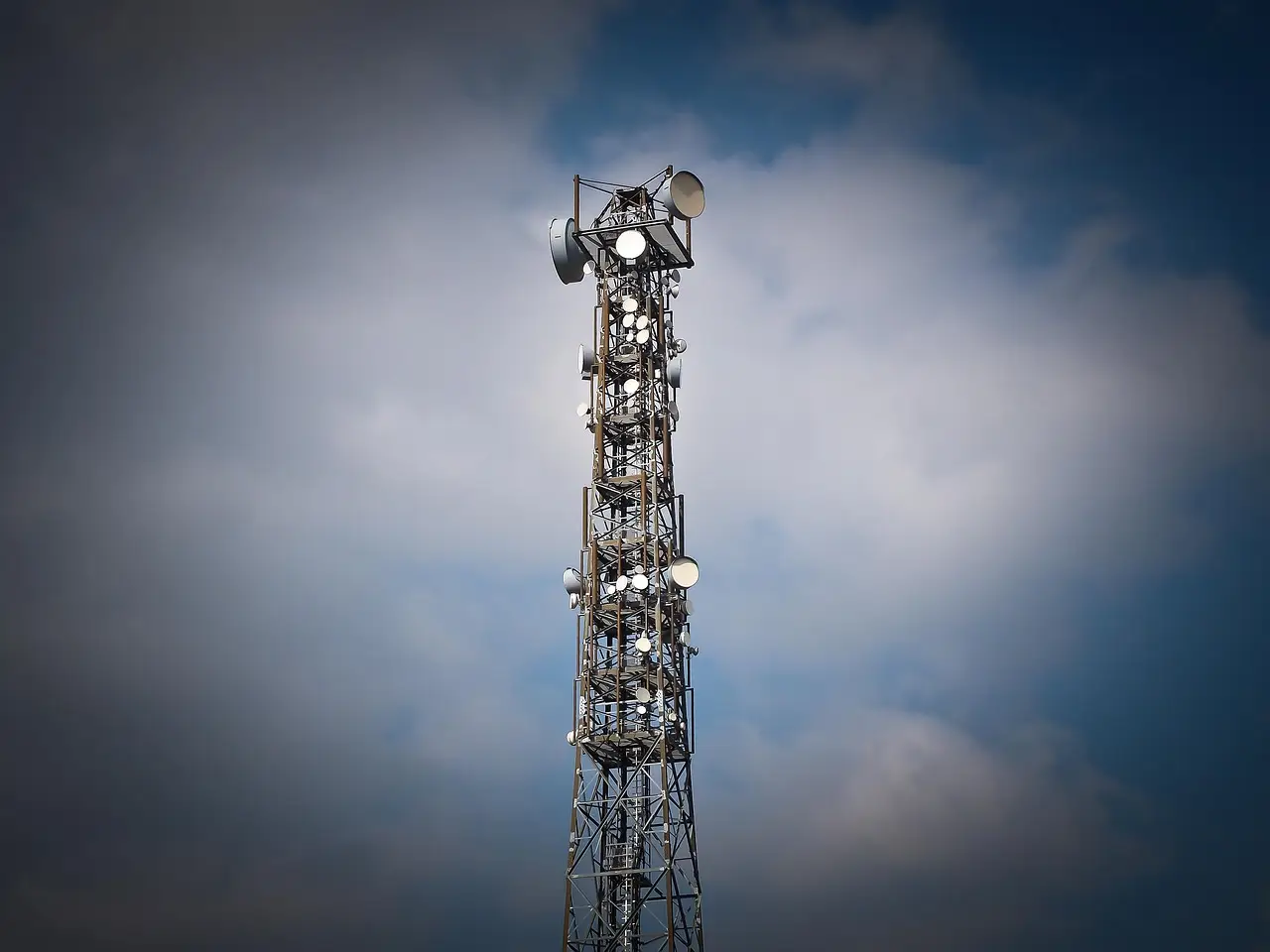
Qualcomm Technologies has secured a multi-year 5G infrastructure agreement with SpaceX for tens of thousands of US macro cell sites, with equipment installations scheduled to begin in 2027.
Qualcomm described the SpaceX agreement as its “biggest 5G deal yet.” Neither company disclosed the contract value, and the announcement set no subscriber, coverage or throughput target.
SpaceX plans to combine its satellite network with a terrestrial 5G layer, aiming to challenge Verizon, AT&T and T-Mobile through one nationwide service spanning both technologies.
What hardware will Qualcomm supply?
Qualcomm will supply advanced radio-processing platforms, baseband technology and commercial-grade Layer 1 software for the network. Deployments will use its Dragonwing QRU100 and QDU100 platforms, designed for high-capacity Massive MIMO radios and energy-efficient baseband processing.
- The QRU100 will handle processing for Massive MIMO radio units.
- The QDU100 will manage latency-sensitive Layer 1 processing within distributed units.
The terrestrial design uses 64-transmit, 64-receive antennas, or 64T64R Massive MIMO. That gives operators eight times as many transmit and receive paths as an 8T8R configuration. Actual capacity gains still depend on spectrum bandwidth, propagation conditions, user density and network configuration.
The design aims to improve network performance per watt. SpaceX expects that efficiency to help control electricity consumption and operating expenses as its terrestrial infrastructure expands.
Why does the contract matter to Qualcomm?
Qualcomm already participates in 5G infrastructure deployments in Japan and Vietnam. The SpaceX agreement opens a larger US telecom-equipment opportunity and supports its effort to diversify beyond smartphone processors.
Broadcom, Marvell and Intel also supply semiconductor technology used across telecommunications infrastructure. Qualcomm will therefore compete more directly with those vendors for a greater share of the radio-access market.
Unlike turnkey network vendors, Qualcomm will not supply a complete radio access network. It provides processing technology and software that SpaceX will integrate into its own base-station architecture. The deal extends Qualcomm's reach into radio access networks, distributed computing and future AI-enabled wireless infrastructure.
What could the network cost?
A nationwide build requires spending on cell towers, radio equipment, baseband systems, spectrum integration, fiber connectivity, power infrastructure and network operations. Final costs depend on site numbers, spectrum bands, geographic targets and reuse of existing towers.
Illustrative economics produce a wide range:
- 20,000 sites: $3 billion at $150,000 per site; $6 billion at $300,000 per site.
- 30,000 sites: $4.5 billion at $150,000 per site; $9 billion at $300,000 per site.
- 40,000 sites: $6 billion at $150,000 per site; $12 billion at $300,000 per site.
These are illustrative calculations, not SpaceX investment plans or supplier quotations. They exclude spectrum acquisitions and other significant network costs, so they do not constitute a capital budget. The ranges nevertheless illustrate SpaceX's financing challenge against the incumbent operators' scale.
What does the FCC spectrum deal change?
In May 2026, the FCC approved an approximately $40 billion spectrum transaction involving EchoStar, SpaceX and AT&T. SpaceX agreed to buy 65 MHz for $17 billion. AT&T agreed to buy approximately 50 MHz for $23 billion.
The FCC also granted SpaceX regulatory flexibility for terrestrial, satellite and hybrid wireless operations. That flexibility strengthens its ability to develop an integrated network and could reduce its reliance on traditional mobile operators over time.
Spectrum ownership alone will not create competitive nationwide coverage. SpaceX still needs tower locations, radio equipment, backhaul connectivity and network-operations capabilities before it can challenge the three established carriers.
How does the space network fit?
SpaceX's October 2026 update described Starlink as one of the world's largest satellite communications networks and placed more than 11,000 satellites in low-Earth orbit. The company had also deployed its first 26 Starlink V3 satellites at the end of September 2026. V3 targets higher capacity and additional broadband demand.
The terrestrial 5G layer would let customers use conventional cellular coverage in populated areas and satellite service where terrestrial networks do not reach. SpaceX also plans to expand direct-to-cell service from approximately 650 satellites toward a second-generation constellation potentially reaching 15,000, subject to regulatory approval.
Can SpaceX become a fourth national operator?
The Qualcomm contract could eventually position SpaceX as a fourth major nationwide US wireless competitor. Verizon, AT&T and T-Mobile already operate nationwide radio access networks, extensive spectrum portfolios, large subscriber bases and substantial annual infrastructure budgets.
SpaceX must develop its own customer-acquisition, billing, network-management and distribution capabilities. Industry analyst Joe Madden estimates at least $100 billion for the combined satellite and terrestrial strategy, including spectrum purchases. That figure is an external estimate, not an approved SpaceX capital-expenditure budget.
T-Mobile already works with Starlink on satellite connectivity. SpaceX's terrestrial expansion could turn that partnership into a more direct competitive relationship, even as the two companies remain partners.
What does 6G add?
Qualcomm and SpaceX position the 5G agreement as a foundation for AI-native 6G infrastructure. Dragonwing supports multi-band deployments that can proceed in phases and accept upgrades as connectivity requirements change.
Future AI functions could improve radio-resource allocation, traffic management, network optimization and energy efficiency. Those capabilities remain prospective. The initial deployment remains terrestrial 5G, with no commercial 6G launch date or quantified financial benefit announced.
For practitioners, the decisive measures are practical rather than architectural: sites activated from 2027, actual coverage, capital expenditure, subscriber acquisition and network quality and pricing. The investment case will become clearer when SpaceX discloses site counts and spending as construction starts; until then, Qualcomm's largest 5G contract remains a technology commitment, not proof of a national service.
Also reported
Source: Google News: 5G network
More from Daniel Okafor
Show full bio
Senior reporter covering regulation, policy and their impact on Carrier business, 5G and 6G, fiber and broadband at Telecom Gazette.
462 articles