Carriers & OperatorsIotTelefonicaSmart Water MetersEnterprise Iot
Telefonica Tech turns water meters into managed IoT data platform
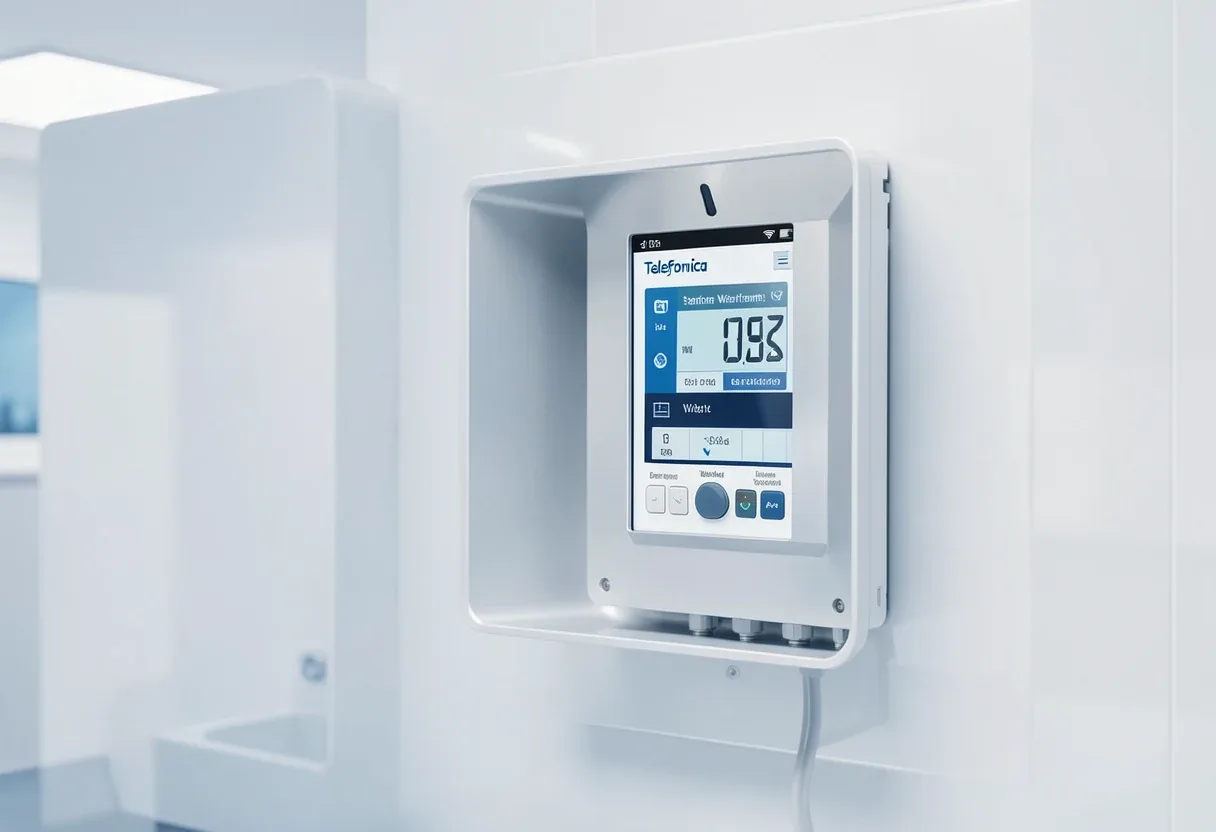
Telefonica Tech has launched an in-house smart water meter platform built on its Kite IoT connectivity layer, targeting utilities and local authorities with billing and leak-detection analytics.
 Carriers & Operators
Why it matters
- Telefonica Tech launched an in-house smart water meter platform targeting local authorities and utility customers
- The platform integrates with Kite, Telefonica's IoT connectivity platform, and supports deployments of thousands of geographically distributed meters
- The system is compatible with meters from a range of manufacturers
- Telefonica has prior water-sector IoT projects in Spain and a 5G slicing project with Siemens in Germany
- A GSMA Intelligence study from April 2026 cited smart utilities as a main growth sector for enterprise IoT connections to 2030
The story
Telefonica Tech has launched an in-house smart water meter platform, betting that utility billing and leak detection will become a durable enterprise IoT revenue line alongside its consumer and connectivity businesses.
The platform targets local authorities and water management companies. It collects data from installed meters, analyses consumption trends and remotely monitors device status. Telefonica positions the system around two concrete commercial benefits: more accurate billing and earlier detection of irregularities such as leaks or tampering.
What does the platform actually do?
The system is developed internally rather than licensed from a third-party metering vendor. That matters for buyers. It means Telefonica controls the software roadmap and can bundle the application layer with connectivity in a single contract.
Functionally, the platform delivers three capabilities:
- Data collection and analysis from deployed water meters
- Identification of usage trends across the meter estate
- Remote monitoring of device status and health
The company stated the platform is compatible with meters from a range of manufacturers. For utilities, that removes the usual lock-in fear. A council or water operator does not need to replace existing heterogeneous meter stock to adopt the service.
The platform also integrates with Kite, Telefonica's IoT connectivity platform. Kite handles security and automation for what the operator described as "deployments involving thousands of geographically distributed meters." That scale reference is the key figure in the announcement. It signals Telefonica is selling to large municipal estates, not individual household installations.
What is the commercial logic?
Dario Cesena, director of IoT at Telefonica, framed the launch as a response to how utilities actually operate day to day. He said: "The digitalisation of the water sector requires tools that are simple, efficient and capable of transforming data into useful information for day-to-day management."
Cesena added that with the launch the company was "taking another step forward in our mission to be the best gateway to digital technologies by helping water management companies and public authorities to optimise resources and move towards smarter and more sustainable water management."
Strip out the mission language and the pitch is straightforward. Telefonica wants to sit between meter hardware, whatever its maker, and the utility's operational systems, charging for transport, hosting and analytics. For an operator group facing flat core telecom revenue, utility IoT is a growth channel that uses assets it already owns.
The launch is not Telefonica's first move in water. The group has already run projects with water companies in Spain, and in Germany it has worked with Siemens on floating 5G network slicing for water utilities. That German work is notable because it ties water management to 5G slicing capability, a far more advanced network proposition than simple meter connectivity. The new platform extends the same customer segment downmarket, toward authorities that need metering analytics without a bespoke network project.
How big is the market?
GSMA Intelligence published a study in April 2026 that cited smart utilities as one of the main sectors expected to drive growth in enterprise IoT connections through to 2030. The study placed utilities alongside smart building deployments and manufacturing as primary contributors to that growth.
That forecast frame explains the timing. If enterprise IoT connections scale toward the end of the decade, metering is one of the few applications with a clear, countable device base. Every household connection is a meter. Every meter is a recurring SIM or connection fee. Water utilities, unlike consumer IoT buyers, sign multi-year managed contracts.
There is a marketing-versus-reality gap to watch. Telefonica's claims about billing accuracy and irregularity detection describe capabilities, not yet published results. No rollout figures, customer names or deployment counts accompanied the launch. The Spain and Germany projects show the operator can land utility contracts, but the new platform's commercial traction remains unproven until Telefonica discloses its first deployments or customer counts.
What happens next?
Expect Telefonica Tech to pitch the platform first at its existing Spanish utility relationships, where Kite is already deployed and reference cases exist. The company's stated direction is continued expansion of digital services for water management companies and public authorities, with GSMA Intelligence's 2030 horizon giving it several years to convert the platform from a launch into a measurable revenue stream.
Also reported
Source: Mobile World Live
More from Daniel Okafor
Show full bio
Senior reporter covering regulation, policy and their impact on Carrier business, 5G and 6G, fiber and broadband at Telecom Gazette.
344 articles