Vendors & EquipmentIotGnssEsimSmart Agriculture
Quectel, Acceleronix and iBOI Launch GPS Ear Tag for Brazilian Cattle
Quectel, Acceleronix and Brazil's iBOI launched a GPS cattle ear tag with eSIM connectivity, LwM2M management and virtual fencing, built so animals can serve as credit collateral.
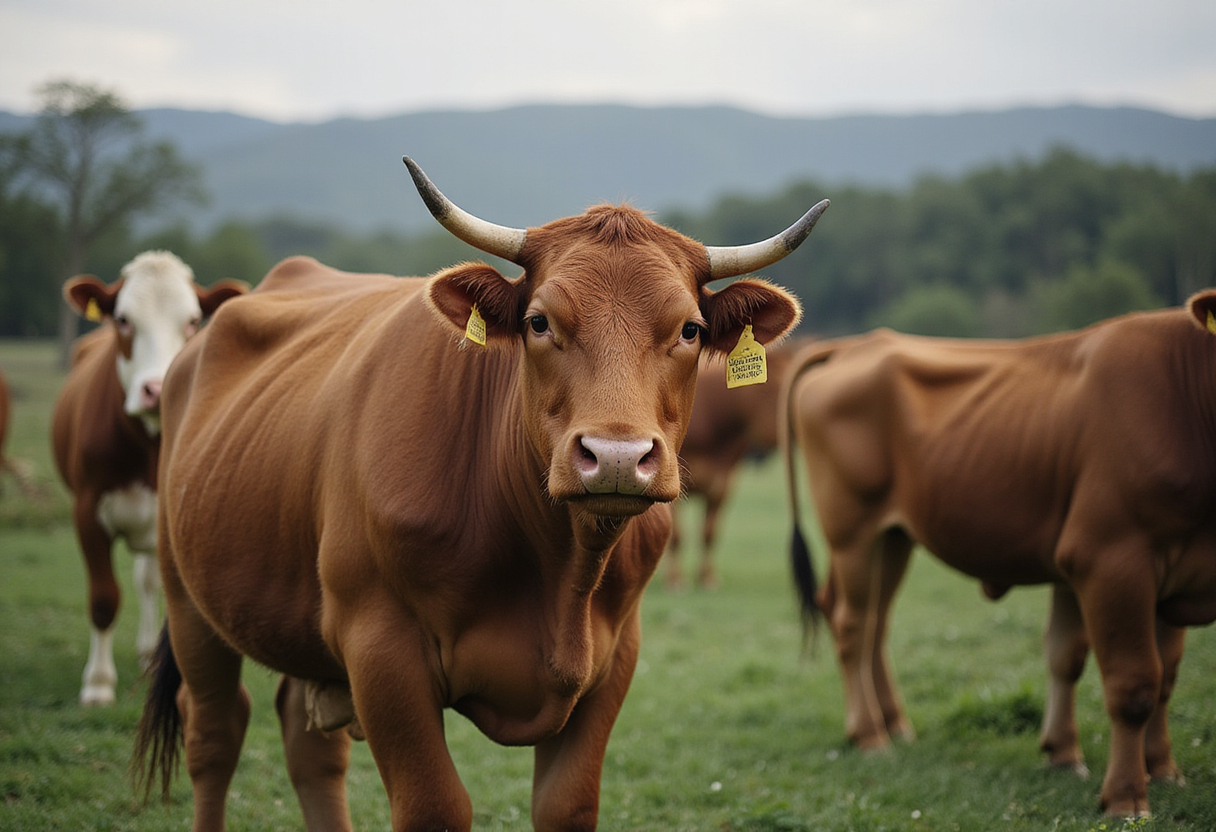 Vendors & Equipment
Why it matters
- Quectel, Acceleronix and iBOI announced the GPS cattle ear tag partnership last week
- The tag carries a temperature sensor, step counter, RFID and GNSS positioning
- Acceleronix provides eSIM connectivity and lifecycle management via its ACX Core platform
- The device uses LwM2M to minimize transmissions and preserve battery over long field deployments
- Integrated herd data lets farmers use animals as collateral in credit operations
The story
A new-generation GPS ear tag for real-time cattle monitoring went public last week, the product of a three-way partnership between IoT module maker Quectel, connectivity provider Acceleronix and Brazilian agro hardtech company iBOI — a combination its backers say can turn individual animals into collateral for credit operations.
The device integrates with iBOI's herd and animal health management platform, linking per-animal monitoring to whole-herd economics. That connection is what makes the credit use case possible: with continuous, verified data on inventory, weight progression and health, cattle become assets a lender can size up.
Who does what in the value chain?
The partners position the collaboration as a break from the usual pattern, in which device hardware, connectivity and application platforms are sourced separately. Each company covers one layer:
- Quectel designed and manufactured the GPS ear tag as a turnkey project, drawing on its cellular and GNSS expertise to fit connectivity and positioning into a form factor sized for livestock.
- Acceleronix supplies eSIM connectivity for production, integration and the initial field deployment, plus IoT middleware and device lifecycle management via its ACX Core platform for the life of the product.
- iBOI runs the management platform, delivering real-time animal inventory and full lot management — entries and exits, movement history, transfers between paddocks and pastures, and time spent in each.
The platform consolidates herd statements, weight progression, average daily gain (ADG), body condition score and herd performance and health indicators, giving farmers both individual and lot-level views of their animals.
What is inside the tag?
Quectel built the tag around three sensing functions: a temperature sensor, a step counter and RFID. The company describes the project as a turnkey design and manufacturing effort that applied its positioning expertise to squeeze cellular connectivity and GNSS into a compact enclosure.
A cattle tag operates under constraints that a consumer tracker does not face. It must stay within hard limits on size and power, and it has to survive in the field for extended periods without maintenance. To manage that, the device uses lightweight M2M (LwM2M), a protocol for device communication, monitoring and remote management over cellular networks.
The protocol choice matters commercially as much as technically. LwM2M keeps transmissions to a minimum — protecting battery life — while still giving operators clear visibility of device health, connectivity and battery status over the deployment's lifetime.
How does the platform turn data into fences?
iBOI is integrating its management SaaS with Acceleronix's ACX Core through the platform's standard interfaces. Acceleronix designed ACX Core to work independently of the underlying connectivity provider, which matters for a device expected to stay in service for years across different network conditions.
The integration converts location data into virtual fences. Users define management areas, see how animals are distributed across them, and identify exits from defined perimeters, with alerts for escapes, breakouts and unauthorized movements. Monitoring extends beyond geofencing:
- Alerts for lack of movement and abnormal behaviour
- Alerts for location anomalies
- Alerts for temperature changes
For iBOI, the arrangement also shifts the division of labour: the integration lets the company concentrate on the services it delivers to livestock farmers rather than on infrastructure.
Why Brazil first?
The partners developed the solution specifically for the realities of Brazilian livestock farming, where extensive pasture-based operations, large herds and long production cycles create demand for remote, low-maintenance monitoring. Brazil runs one of the largest commercial cattle herds in the world, and per-head visibility — weight gain, health status, movement — has historically been hard to capture at scale.
The credit angle is notable. By consolidating verified data on inventory, average daily gain and body condition into herd statements, the platform gives financial institutions a documented basis for using animals as collateral in credit operations — a financing route that depends on trustworthy, continuous records.
Quectel's role also reflects a broader shift in the IoT module business: rather than selling components, module vendors increasingly take on complete design-and-manufacture projects for vertical applications. A livestock ear tag is far from the automotive or asset-tracking deployments that dominate module volumes, but it shows how far the model extends.
What comes next?
The tag is designed to scale internationally, according to the partners, who frame Brazil as the proving ground rather than the endpoint. The initial deployment runs on Acceleronix eSIM connectivity, with ACX Core carrying device management for the product's full lifecycle — meaning the real test will be field performance and battery endurance over seasons of continuous operation.
Also reported
Source: Developing Telecoms
More from James Calloway
Show full bio
Staff writer covering companies, deals and strategy in Carrier business, 5G and 6G, fiber and broadband at Telecom Gazette.
160 articles