Networks & InfrastructureSpace ComputingSatellite ConstellationsEdge ComputingOrbital Data Centers
Sophia Space runs orbital OS across Kepler satellites in first space deployment
Sophia Space has run its SOOS software on Kepler satellites in the first orbital deployment of its operating system, backed by $22m raised and up to $300m in asset financing.
 Networks & Infrastructure
Why it matters
- Sophia Space deployed SOOS on multiple Kepler satellites, a first for its orbital operating system.
- Total funding exceeds $22 million after a $10 million February pre-seed and $3.5 million in May.
- The company holds an asset financing agreement with SLI for up to $300 million.
- TILE compute modules can run Qualcomm Snapdragon 865/Cloud 100 or Nvidia Jetson/Blackwell hardware.
- CEO Rob DeMillo says the ODC conversation has shifted from feasibility to scaling and commercial viability.
The story
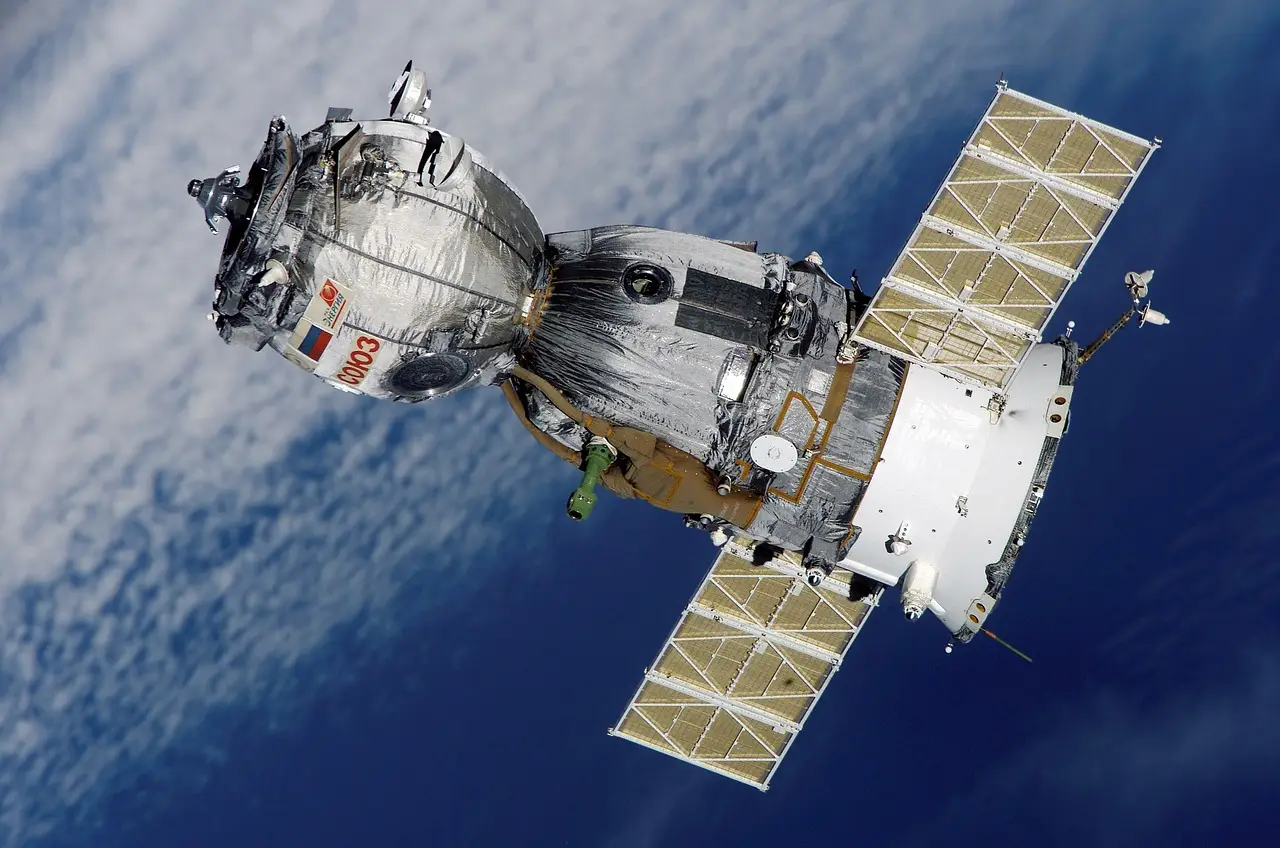
Sophia Space has deployed its Sophia Orbital Operating System (SOOS) on multiple Kepler satellites, completing the first in-space operation of its software across tranche 1 of Kepler's optical data relay constellation. The Pasadena, California company, which builds orbital data centers, confirmed the milestone alongside word that its current funding round is oversubscribed and total capital raised now exceeds $22 million.
The figure marks rapid progress for a young venture. Sophia Space closed a $10 million pre-seed round in February, led by Alpha Funds, the KDDI Green Partners Fund and Unlock Venture Partners, then added another $3.5 million in May. CEO Rob DeMillo says the latest allotment came in oversubscribed, and the company also holds an asset financing agreement with SLI worth up to $300 million.
"This is an important milestone in moving from architectural design and ground-based testing to actual on-orbit operations," DeMillo told DCD exclusively. "This is no longer just a theoretical architecture. We've established the connection and demonstrated that the underlying approach works in space."
What comes next for the orbital software?
The roadmap DeMillo lays out has three parts: expand SOOS capabilities, demonstrate increasingly sophisticated distributed workloads, and integrate Sophia's purpose-built TILE computing hardware as it reaches orbit. The solid-state TILE compute modules are passively cooled with patented technology, are vendor-agnostic, and can be configured with either Qualcomm Snapdragon 865 and Cloud 100 silicon or Nvidia Jetson and Blackwell hardware — each configuration paired with its own dedicated solar panel.
Cooling remains the central engineering puzzle. "Here's the irony of putting data centers in space: you're surrounded by an environment that's effectively a vacuum, and getting rid of heat is one of your biggest engineering challenges," DeMillo said. "The key is moving heat efficiently from the processors to surfaces that can radiate it into space, without relying on the complex active cooling systems traditionally associated with high-performance computing."
The company has previously expressed interest in Nvidia's Space-1 Vera Rubin GPU-CPU compute module, built specifically for orbital operation, though its latest statement made no mention of Nvidia.
Which workloads is SOOS aiming at?
Sophia lists a defense- and government-heavy application set, including:
- missile warning
- space domain awareness
- maritime awareness
- disaster response
- atmospheric monitoring and weather intelligence
- in-space manufacturing
SOOS supports these applications with triple redundancy. The current tests are designed to show how modular computing infrastructure can scale while opening partnership opportunities. Sophia has its own cooling solution and methodology, but sees downlink — returning data to Earth — as a task for partners.
"We see ourselves working with communications providers rather than trying to build every component of the network ourselves," DeMillo said. "But the breakthrough right now isn't just getting data back to Earth faster. It's making sure we don't have to send all of it back in the first place."
Is the orbital data center debate moving on?
DeMillo's framing signals a shift in the wider conversation around orbital data centers. Last year the question was whether the concept was feasible at all; now, he agrees, the discussion has moved to scaling, timelines and commercially viable infrastructure — a change the Kepler deployment is intended to evidence.
The immediate next marker will be the arrival of TILE hardware in orbit, followed by demonstrations of more complex distributed workloads as Sophia works to convert its $300 million financing headroom into deployed compute capacity.
Also reported
Source: datacenterdynamics.com
More from Elena Vasquez
Show full bio
Market editor covering companies, deals and strategy in Carrier business, 5G and 6G, fiber and broadband at Telecom Gazette.
578 articles