Networks & InfrastructureOrbital ComputingEdge ComputingSatellitesData Centers
Voters in 10 States Restrict Data Centers; Satellite Industry Pushes Compute to Orbit
Voters in 10 states restricted data centers on Nov. 3. Satellite executives in New Orleans pitched orbital compute, but cooling panels, launch costs and 600ms GEO latency cap what can move up.
 Networks & Infrastructure
Why it matters
- Voters in 10 states approved data center restrictions on Nov. 3, 2026; 40 of 41 local ballot measures nationally favored limits.
- SpaceX applied to the FCC in January to operate up to one million data center satellites, about 59 times the 16,910 satellites then in orbit.
- Cooling 1 MW of orbital computing requires about 13,000 square feet of radiator panel, per SatNews.
- A Vulcan failure on Nov. 15 destroyed 40 Amazon Leo satellites; Falcon 9 Florida launches paused at least six weeks from Oct. 20.
- GEO round-trip latency runs 600 ms or more, versus 25 to 60 ms in low Earth orbit.
The story
Voters in 10 states approved restrictions on data center development on Nov. 3, and satellite executives now argue the rebuke strengthens the case for moving computing hardware into orbit.
Speaking at the Broadband Nation Expo and Data Center Excellence event in New Orleans on Wednesday, industry figures mapped out what orbital compute could realistically deliver. The near-term picture is modest: small onboard processors, not orbiting gigawatt campuses.
What can actually run in orbit today?
Rick Ward, founder and CTO of OrbitsEdge, a Central Florida startup building small computers for other companies' satellites, said the first constraint is physics. Satellites collect more imagery than their radio links can send to Earth. Processing that imagery in orbit and transmitting only the results bypasses the bottleneck.
The customer wants insight, not pixels. "They need the information, not necessarily the pictures," Ward said of agricultural users. Defense agencies are the likely early buyers, he added, and builders cannot start with gigawatt-scale facilities. Early tasks have to be small enough that onboard processing pays for itself.
Early warning is one such task. A satellite that analyzes its own sensor data can send an alert instead of raw imagery. "If you're doing something like Starshield, you need early warning protection first," Ward said, referring to SpaceX's government satellite line.
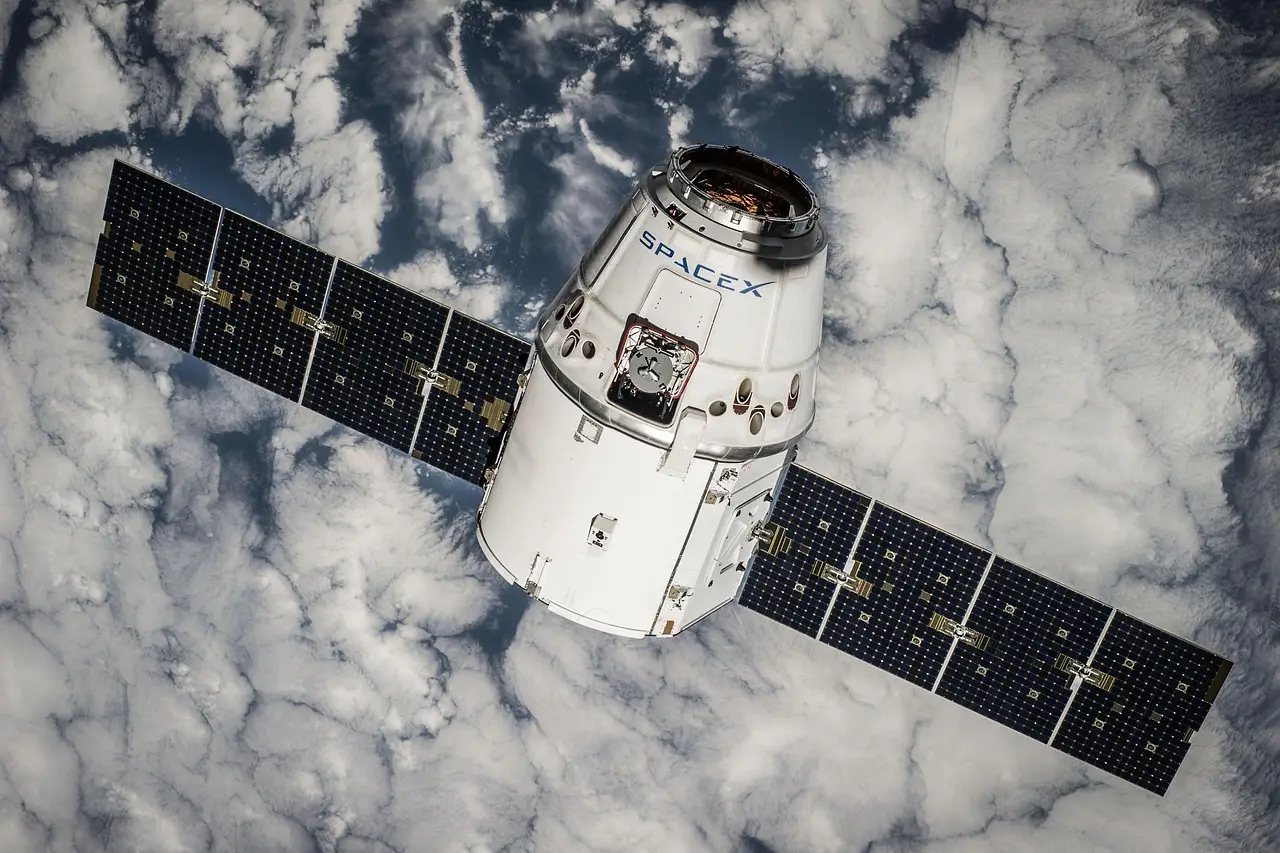
OrbitsEdge's Edge1 computer weighed under 4.4 pounds and drew 10 watts from its host satellite, Payload reported in June 2025. At the other end of the scale, SpaceX applied to the Federal Communications Commission in January to operate up to one million data center satellites — about 59 times the 16,910 satellites the European Space Agency counted in orbit at the time.
Why the local politics matter
A data center delivers modest value to its host town even when its national value is large, Ward said. That mismatch made the facilities a hard sell locally, and it is the core argument for orbit.
Power is the second terrestrial constraint. A data center goes up in roughly two years, Ward said, while two nuclear reactors can take close to 20. Georgia Power's two reactors at Plant Vogtle took 15 years and $36.8 billion before entering service in 2024 — about $18.4 billion per unit. Until new plants arrive, ground-based facilities lean on gas turbines and large solar arrays while electricity demand keeps climbing.
What limits the size of an orbital machine?
Cooling is the hardest cap. Ground servers shed heat through conduction, convection and radiation; a spacecraft has radiation alone, and uses no local water. Cooling 1 megawatt of computing takes about 13,000 square feet of radiator panel, nearly a quarter of a football field, according to SatNews. Terrestrial campuses reach a gigawatt — 1,000 times more.
Launch sets the price of entry, and supply just tightened. A Vulcan rocket failed on Nov. 15, destroying 40 Amazon Leo satellites, and could stay grounded for months. Falcon 9 launches from Florida paused for at least six weeks after Oct. 20 to make room for Starship. Ward argued orbital compute is still a closed-loop bet economically: launch is a one-time bill, and hardware with few moving parts can run for decades, because "it's just mass."
Does latency rule out some workloads?
Altitude decides which tasks can move up at all. A round trip to a geostationary satellite, about 22,236 miles up, runs 600 milliseconds or more. Low Earth orbit cuts that to 25 to 60 milliseconds. The gap matters for TCP, the protocol behind most internet traffic. "There's no TCP-based network application that works better with more latency," said Grant Kirkwood, CEO of Contrivian, which routes traffic across satellite and ground networks.
Who governs the traffic overhead?
Regulation is shifting as the technology outruns policy. The FCC licenses satellites while civil traffic coordination moves from the Defense Department to the Commerce Department, said Tom Stroup, president of the Satellite Industry Association. A 2022 FCC rule already requires low Earth orbit satellites to deorbit within five years of mission end, replacing a 25-year guideline.
Launch scarcity also raises competition questions. SpaceX can sell room on a rocket or fill it with its own satellites, and orbital compute could easily absorb all available capacity, Stroup said. Some critics have called for breaking up SpaceX, which builds both rockets and satellites. Ward countered that the vertical model works and that the pieces would still be each other's customers.
New members of Congress take office in January. With that turnover, Stroup said, policymakers will arrive with a lot of questions about an industry now competing for both launch capacity and the computing workloads that voters on the ground just rejected.
Also reported
Original: news.ballotpedia.org
More from Daniel Okafor
Show full bio
Senior reporter covering regulation, policy and their impact on Carrier business, 5G and 6G, fiber and broadband at Telecom Gazette.
582 articles