Fiber & BroadbandVerizonFixed Wireless AccessMmwaveSpectrum
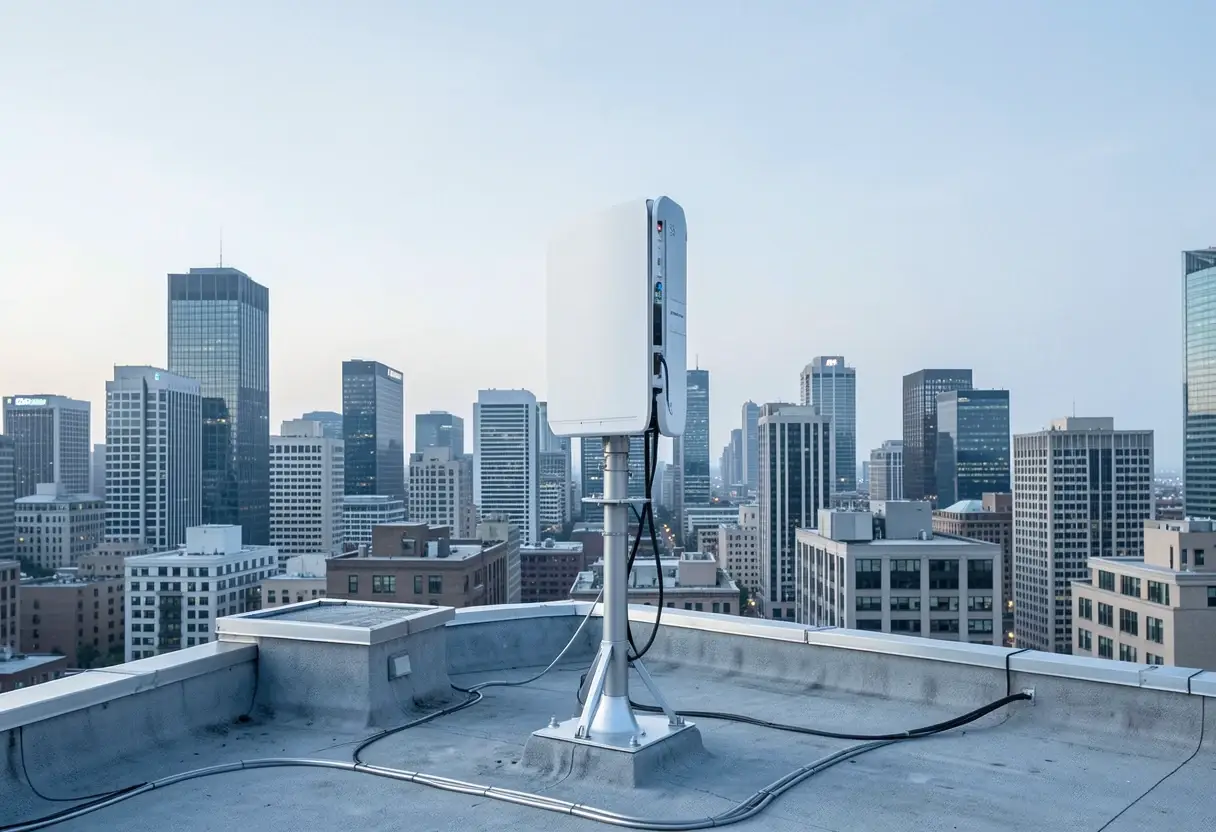
Verizon Targets 10-15 Million More Premises with 1Gbit/s mmWave FWA
Verizon is using 1,700MHz of largely idle millimeter wave spectrum to push 1Gbit/s FWA in metros, adding 10-15 million premises on top of its 40-50 million fiber target.
 Fiber & Broadband
Why it matters
- Verizon targets 10-15 million additional premises with 1Gbit/s mmWave FWA, on top of 40-50 million premises passed.
- Q3 FWA net adds fell 40% year-over-year to 159,000; fiber net adds rose 154% to 155,000.
- Verizon raised 2026 guidance to 1.1-1.2 million postpaid phone net adds after 406,000 Q3 additions.
- New AI deals include $2 billion with AWS for dark fiber and $4 billion in signed edge/inference contracts.
- CEO Dan Schulman rules out any MVNO deal with satellite providers, including SpaceX.
The story
By Amara Osei
Verizon plans to reach an extra 10 to 15 million premises with 1Gbit/s fixed wireless access built on millimeter wave spectrum, on top of its existing target of 40 to 50 million premises passed. CEO Dan Schulman unveiled the revamp on the operator's third-quarter earnings call, describing it as "a more sophisticated, segmented approach to FWA."
The service starts rolling out this quarter and runs through 2027. It uses 1,700MHz of mmWave frequencies that Schulman admitted were "largely underutilized" — spectrum the carrier has now turned into what he calls "a competitive and differentiated advantage."
What does mmWave actually change?
The engineering logic is straightforward. Pushing fixed broadband onto millimeter wave frees up C-band capacity for mobile, which matters as FWA subscriber growth was starting to strain the midband. "It makes our entire network more efficient. It offloads C band capacity, it gives our network more capacity and runway, and it significantly alters our spectrum positioning," Schulman said.
The carrier pitches the product as matching fiber speeds in metro areas, complementing rather than replacing its fiber builds. Verizon expects to pass more than 32 million fiber premises by the end of this year and is scaling a multi-dwelling unit program to deliver "fiber-like speeds" over FWA. A gig over mmWave in dense areas — vendors have promised this for years. Deploying it at scale is the part nobody has finished.
Was the old FWA product a problem?
Schulman's comments suggest as much. He framed the shift in broadband mix toward fiber as a "deliberate choice" and was blunt about quality: "If a customer needs a gig of speed and we can only offer them 300 meg, we shouldn't sell the service. It's just going to be something that disappoints a customer."
The numbers back him up. Verizon added 314,000 broadband customers in Q3 across fiber and FWA, but FWA net additions fell 40% year-over-year to 159,000 — a decline running since Q4 last year. Fiber took the lead: 155,000 net fiber connections, up 154% year-over-year but flat sequentially, bringing the total to 11.07 million. AT&T, for comparison, added 442,000 fiber connections in the same quarter including the acquired Lumen areas, for 13.31 million total.
With a genuine 1-Gig FWA product in hand, Schulman said Verizon will likely go well beyond its 8 to 9 million FWA subscriber target for 2028.
How strong was the quarter?
Wireless carried the day. Verizon posted its best Q3 for net additions in five years: 406,000 retail postpaid phone connections, up 120% from 184,000 in Q2 and up 822% from 44,000 a year ago. Prepaid told a softer story, with 52,000 retail core prepaid phone losses.
The carrier added 137,000 postpaid accounts, its best in over a decade, for 34.5 million total. Postpaid phone churn improved 4 percentage points year-over-year to 0.94%; consumer churn improved by the same margin to 0.87%. Verizon raised 2026 guidance, now expecting 1.1 million to 1.2 million postpaid phone net adds, up from the upper half of 750,000 to 1 million.
The growth came with discipline, Schulman stressed, and "no free lines." Promotion and acquisition costs fell 41%; retention costs dropped 30% year-over-year.
What about AI revenue and SpaceX?
One year into the job — after declaring the carrier needed a "full reboot" and cutting more than 13,000 jobs — Schulman lined up new revenue streams. Verizon signed a $2 billion deal with AWS to supply dark fiber for its AI data centers, following a $1 billion Google AI infrastructure deal last quarter. It claims a pipeline of hyperscalers, neocloud providers and enterprises for dark or lit fiber, plus $4 billion in signed contracts for AI inference and edge computing at its network sites.
SpaceX's mobile ambitions hang over the sector. Schulman said he operates on the assumption SpaceX "will execute flawlessly," then listed the cost and time obstacles to matching Verizon's footprint. "It's very hard to throw a punch against something that doesn't exist. But once they come into the market, we will be ferociously competitive," he said. On satellite MVNOs, the door stays shut: "I see absolutely no benefit whatsoever to extending an MVNO deal to any satellite provider."
The mmWave FWA rollout continues through 2027, with the first markets live this quarter.
Also reported
Source: Light Reading
More from Amara Osei
Show full bio
News editor covering technology and product news in Carrier business, 5G and 6G, fiber and broadband at Telecom Gazette.
442 articles