Networks & InfrastructureVerizonBosch MotorsportIotPrivate Networks
Verizon takes Bosch race-car IoT from Detroit worldwide
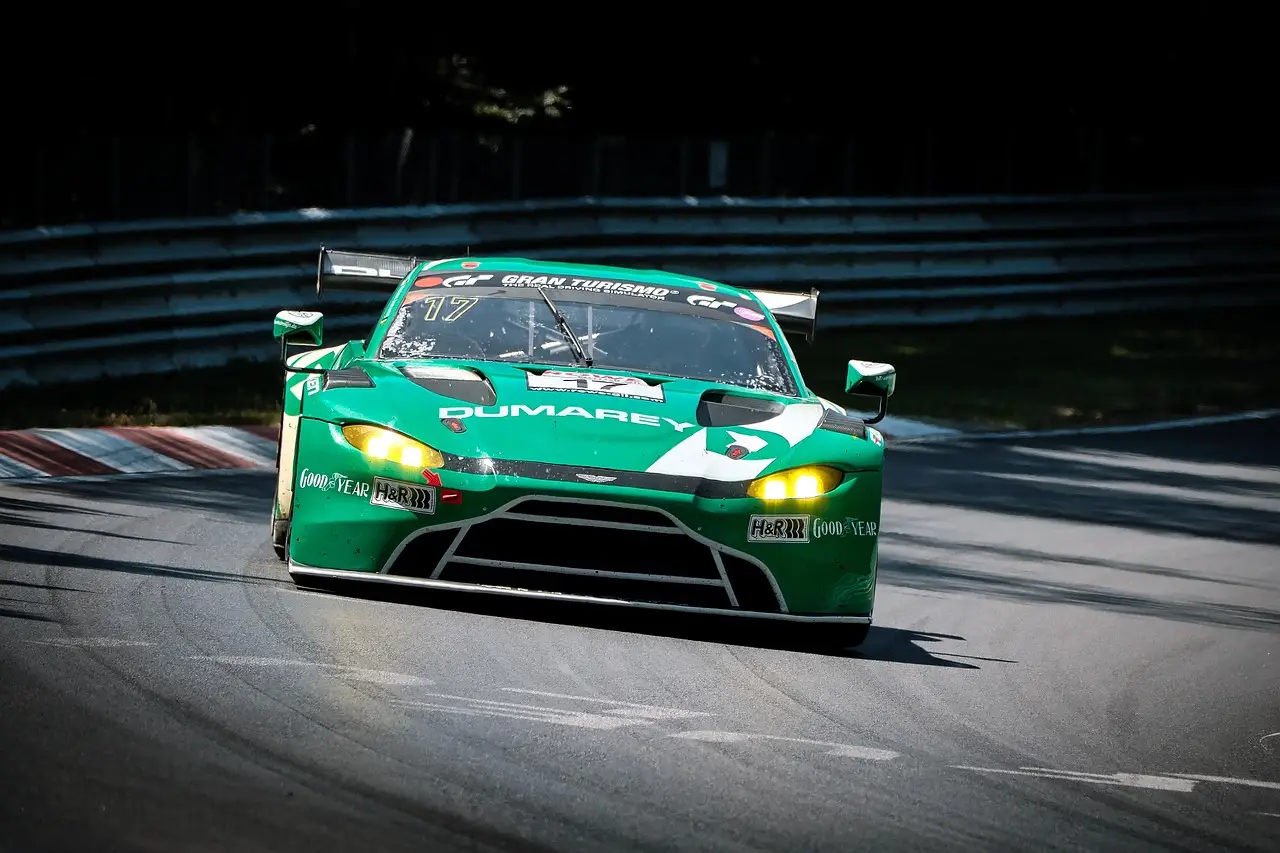
Bosch Motorsport is using Verizon's Global IoT Orchestration and ThingSpace to carry 400 data channels per car at more than 200 mph, following deployments at Detroit and Motul Petit Le Mans.
 Networks & Infrastructure
Why it matters
- Verizon Business signed Bosch Motorsport to Global IoT Orchestration and ThingSpace.
- A YouTube video describes 400 data channels per car at speeds above 200 mph.
- Detroit used cellular trucks, distributed antennas and a mobile private network to isolate race telemetry.
- Remote eSIM profiles let gateways connect across more than 140 countries without an APN change.
- Bosch used the setup at Motul Petit Le Mans and will continue at IMSA's Rolex 24 at Daytona and Mobil 1 Twelve Hours of Sebring.
The story
By Rebecca Stone
Verizon Business has signed Bosch Motorsport to Global IoT Orchestration and ThingSpace, taking a Detroit Grand Prix IoT deployment to international races with 400 data channels per car at speeds above 200 mph, according to a YouTube video. The deployment is designed to send operational and condition data to the cloud in near real time, even while cars are racing.
Bosch Motorsport uses Verizon's Global IoT Orchestration service and ThingSpace platform to connect and manage its RaceConnect smart sensors. The sensors support race marshalling: the increasingly digital work of tracking rules compliance, performance and safety on the track and in the cars.
What did Bosch deploy in Detroit?
At the Detroit Grand Prix in Michigan, Bosch first tried Verizon's Cell on Wheels, Cell on Light Trucks, distributed antenna systems and a mobile private network. Verizon said the arrangement kept mission-critical telemetry separate from spectator traffic and allowed race authorities to enforce rules in real time. The company added that engineers could use low-latency data to adjust vehicles.
The 400 channels cover engine parameters, engine RPM, vehicle speed, lateral acceleration and suspension movement. According to the video, teams in large cities previously struggled with concrete-and-steel skyscrapers and dead zones that could cut off car data for up to two minutes.
That two-minute failure mode matters more than the channel count: race teams need continuous telemetry, not merely abundant data. Bosch executive Jacob Bergenske later said teams cannot accept one second of downtime, making a two-minute interruption 120 times the stated tolerance. The announcement offers no measured end-to-end latency, packet-loss rate or independent 200-mph test.
How does the service preserve one APN?
ThingSpace acts as the central hub for Bosch's sensor fleet. Bosch uses platform APIs to manage each device from activation through suspension and to feed telemetry into its RaceConnect private cloud. A single dashboard gives teams and officials the same view wherever the race takes place, according to the deployment description.
Verizon said international IoT rollouts usually require manual reconfiguration or a different access point name, or APN, for every local operator. Global IoT Orchestration automatically configures certified devices onto local networks under a private, custom APN that, in Verizon's description, never changes. Verizon said users and devices need not notice a network switch.
For Bosch's Connected Gateway 3.2, the connection mechanism is a remote eSIM profile. When the gateway arrives in any of the more than 140 countries Verizon supports, ThingSpace connects it through that profile without requiring an APN change.
Orchestration removes a configuration task; it does not prove that every local radio network performs identically. The announcement supplies no country-by-country coverage map, service-level agreement or independent latency comparison. Its regulatory detail is also limited to references to certified devices, with no local approvals, spectrum arrangements, cross-border data handling or cellular technology generation.
Which races come next?
Since Detroit, Bosch Motorsport has used the setup at the Motul Petit Le Mans. Bosch says it will continue at domestic and international races where the company supplies technical inspection and compliance systems. Named events include IMSA's Rolex 24 at Daytona and Mobil 1 Twelve Hours of Sebring.
The expansion places a commercial claim under race-day pressure. Jacob Bergenske, director of Bosch Motorsport, North America, said: “In professional racing, where vehicles move at 200mph, we cannot afford a single second of downtime.” He said the platform simplifies global device manufacturing and quality assurance, so teams can focus on race-day objectives.
Verizon's executive was more promotional. Shamik Basu, vice president of strategic connectivity and IoT at Verizon Business, said the operator had “evolved beyond a connectivity provider to become an integrated engineering collaborator” for Bosch Motorsport in the US and abroad. That description implies a wider vendor role than a basic connectivity sale.
What will prove the service at scale?
The next test is operational rather than demonstrative: whether the remote eSIM and constant private APN reduce setup work at the Rolex 24 at Daytona and Mobil 1 Twelve Hours of Sebring, and whether the model expands to additional Bosch-supplied races.
With no disclosed contract value, deployment target, investment figure or rollout schedule, measured latency, coverage and setup times at the named events will show whether the arrangement becomes a repeatable multi-market service.
Also reported
Source: Mobile World Live
More from Rebecca Stone
Show full bio
Correspondent covering technology and product news in Carrier business, 5G and 6G, fiber and broadband at Telecom Gazette.
539 articles