Networks & InfrastructureStarshieldSpacexSatellite CommunicationsMilitary Drones
Ukraine Says Starshield Again Cuts Drone Links Above 160 km/h
Zelenskyy says Starlink-based Starshield again drops links for drones above 160 km/h, days before U.S. envoys reached Moscow. Neither SpaceX nor Washington has commented.
 Networks & Infrastructure
Why it matters
- Zelenskyy reported on Nov. 12 that Starshield links cut out for drones above 160 km/h
- The disruption has lasted several days and coincided with U.S. envoys arriving in Moscow
- A similar October outage lasted about a week and a half before connectivity was restored
- Fixed command posts and slower ground vehicles retain access under the limits
- Neither SpaceX nor the U.S. government has issued an official comment
The story
Ukrainian drone units flying faster than 160 kilometers per hour are again losing their Starshield satellite links, President Volodymyr Zelenskyy reported on Nov. 12. The disruption has persisted for several days. Neither SpaceX nor the U.S. government has commented.
The timing is, to put it mildly, awkward. The service restrictions coincided with the arrival of U.S. envoys in Moscow. Kyiv's tactical satellite access now appears to move in step with diplomatic traffic between Washington and the Kremlin. Nobody has confirmed that link. Nobody has denied it either.
What exactly is being throttled?
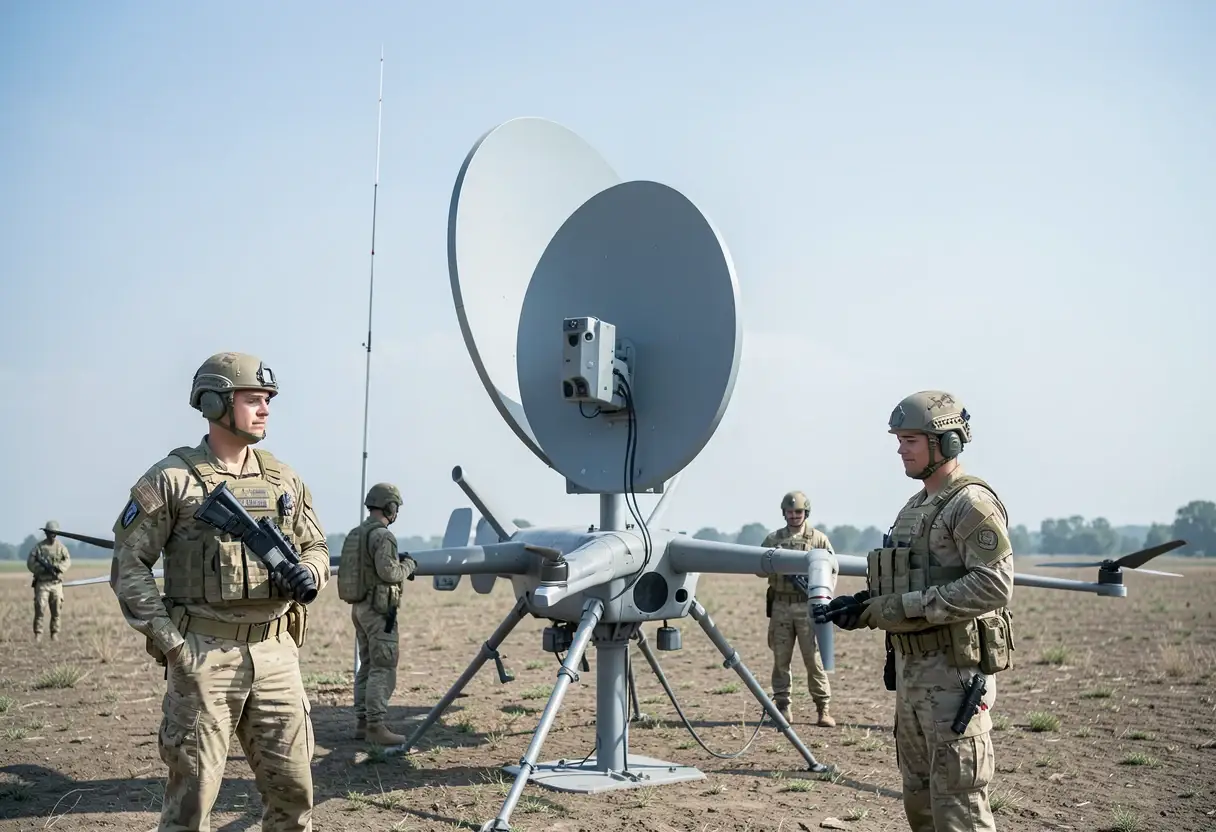
Starshield is the militarized, encrypted variant of SpaceX's low Earth orbit constellation, built for government and defense users. Under the parameters Kyiv reported, transceivers on Starshield drop their satellite connection once a platform's velocity exceeds 160 kilometers per hour.
Fixed command posts keep their access. Slower ground vehicles keep theirs too. What loses connectivity is the fast mover — the UAV that needs continuous telemetry and command links in flight. For drone operators running high-speed aerial missions, that ceiling effectively grounds the tactic.
Is this the first time?
No. A similar Starshield disruption hit in October and ran roughly a week and a half before full connectivity returned. That outage imposed comparable velocity limits and disrupted high-speed unmanned missions across active combat sectors. It also prompted uncomfortable questions about who actually holds operational control of the network.
Those questions never got answered. The October limits simply lifted. Now, weeks later, the same ceiling is back — and the pattern looks less like an anomaly and more like a lever.
Who decides, and does anyone say so?
That is the core of the problem. SpaceX has issued no official statement. Washington has issued no official statement. Ukraine, meanwhile, is reporting systematic disruption of a service its forces depend on at the front, with no explanation of the mechanism or the authority behind it.
The regulatory and commercial context matters here. Starshield is a defense product sold to governments, not a consumer service with published terms. That means no regulator sets throughput rules, no service-level agreement is public, and the operator can change access parameters without notice. When a private company controls a wartime communications backbone, an unexplained speed cutoff is a policy event, not just an engineering one.
Until Washington or SpaceX clarifies the status of the restriction, Ukrainian drone operators face ongoing constraints on high-speed aerial missions. Slower platforms and ground users can keep working. The fast attack profile cannot.
Also reported
Source: satnews.com
More from Amara Osei
Show full bio
News editor covering technology and product news in Carrier business, 5G and 6G, fiber and broadband at Telecom Gazette.
527 articles