Networks & InfrastructureSoftbankSceyeHapsNon Terrestrial Networks
SoftBank signs five-year deal for 40 Sceye HAPS airships over Japan
SoftBank and Sceye sign a five-year deal for at least 40 stratospheric airships to deliver broadband over Japan, targeting commercial HAPS services by 2027.
 Networks & Infrastructure
Why it matters
- SoftBank signed a five-year master service agreement with Sceye for a fleet of at least 40 HAPS airships.
- Sceye's airships cruise at roughly 20 km altitude and reach it in under 30 minutes using lifting gas.
- SoftBank targets commercial HAPS service launch in 2027.
- A Sceye aircraft completed a roundtrip flight from Roswell, New Mexico, to Japan under satellite control.
- The initial fleet will provide nationwide mobile broadband plus a stratospheric free space optical network.
The story
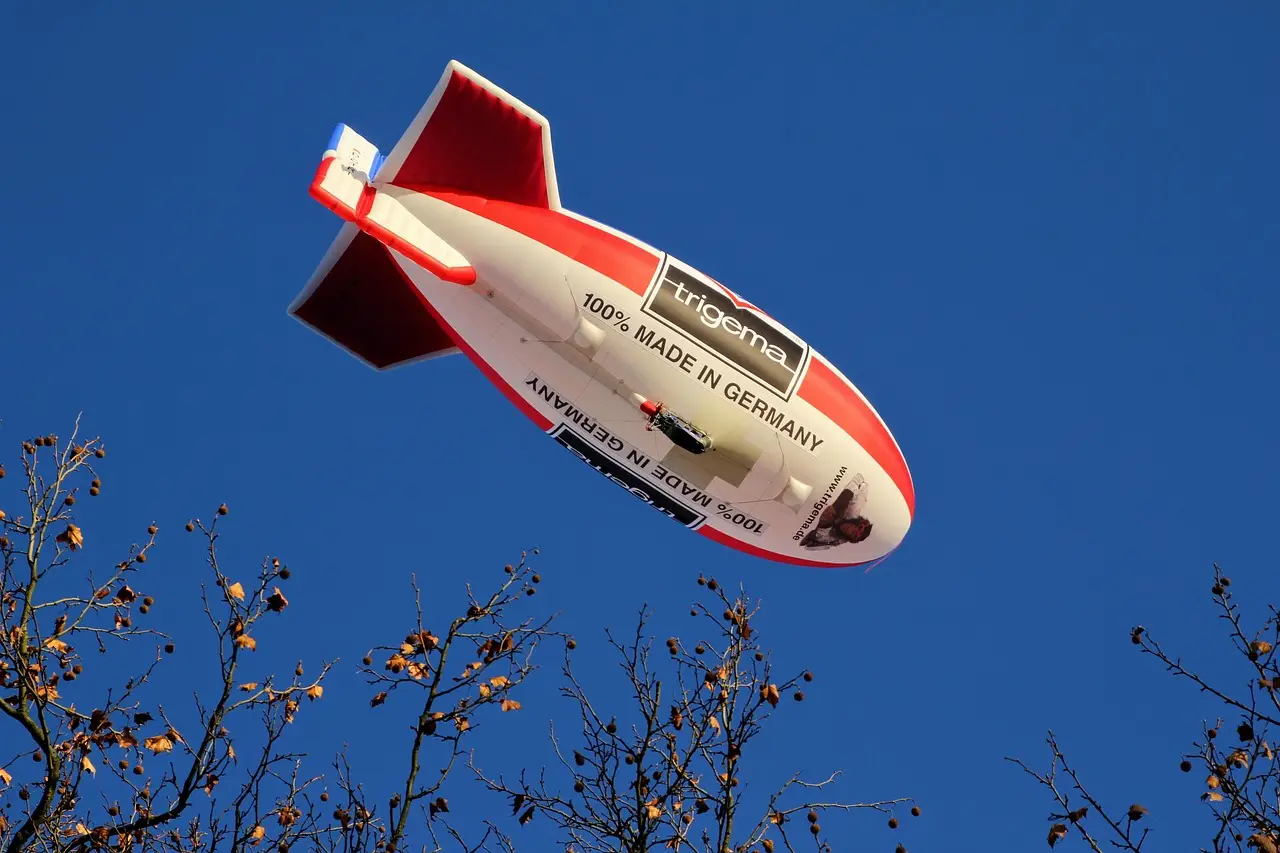
SoftBank has signed a five-year master service agreement with US aerospace company Sceye covering a fleet of at least 40 solar-powered airships that will operate as basestations in the stratosphere, roughly 20 km above Japan.
The contract, announced this week, commits Sceye to manufacturing, launching and operating the lighter-than-air (LTA) fleet over five years. The majority of the initial airships will deliver mobile broadband across Japan, while a subset will build a free space optical (FSO) network linking platforms in the stratosphere.
For context, 40 airships cruising at 20 km would form a persistent aerial layer that SoftBank positions between its ground towers and its satellite interests — wider coverage than terrestrial cells, cheaper and faster to field than rocket-launched constellations.
What does the agreement actually commit to?
The deal converts a partnership built on flight demonstrations into a commercial framework. Two months ago SoftBank stated its intention to launch commercial HAPS services in 2027, and this agreement is the contractual scaffolding for that timeline.
What it does not do is publish financial terms, per-airship pricing, coverage targets in square kilometres, or capacity figures. The subscriber numbers, throughput figures and spectrum arrangements that would let analysts judge commercial viability against terrestrial 5G remain undisclosed.
Masayuki Kamimura, senior director of SoftBank's Ubiquitous Network Planning Division, framed the deal as the moment HAPS stops being experimental.
"This agreement represents the commercialization of HAPS and the realization of our vision for Ubiquitous Transformation," Kamimura said in a statement. "By combining Sceye's advanced HAPS technology with SoftBank's telecommunications expertise, we aim to create a resilient, three-dimensional communications network that will strengthen disaster preparedness and enable new possibilities in the 6G era."
What did the Roswell-to-Japan trial prove?
The agreement follows a trial service that SoftBank considers successful. A Sceye aircraft completed a roundtrip flight under satellite control from Roswell, New Mexico, across the Pacific to Japan and back.
While stationed over Japan's Shikoku Island, the platform demonstrated:
- text messaging and voice calls
- video streaming
- indoor connectivity
- remote drone control
- low-latency edge computing
Those are service-level demonstrations, not scale evidence. A single aircraft proving connectivity over Shikoku — the smallest of Japan's four main islands — is a different proposition from 40 airships sustaining nationwide broadband through typhoons, seasonal winds and years of continuous stratospheric operation.
Why the airship rather than the rocket?
The technical pitch rests on deployment economics. Traditional satellites require rocket launches; Sceye's airships use lifting gas to climb to their 20 km cruising altitude in under 30 minutes. That ascent time — comparable with a long airport commute — is the operational contrast SoftBank and Sceye emphasize.
The platforms are solar-powered, which in principle supports long-duration loitering, though neither company has stated mission endurance limits for the commercial fleet in this announcement.
Where does this fit in SoftBank's network strategy?
The deployments align with SoftBank's stated vision of a "next-generation, three-dimensional communications network" that integrates satellite, HAPS and terrestrial networks seamlessly. Beyond 6G, the operator expects the architecture to support future workloads in AI, IoT, aerial communication and edge computing.
Disaster preparedness is the most concrete use case named. Japan's geography and seismic exposure give a genuine policy rationale: stratospheric basestations could restore coverage after earthquakes or typhoons knock out terrestrial infrastructure. Kamimura's reference to resilience, however, comes without published availability targets or recovery-time commitments.
The standards context matters here. HAPS is being written into international spectrum and 6G discussions as a recognized non-terrestrial network layer, which gives operators a regulatory path to the model SoftBank is pursuing. A five-year commercial agreement — rather than another trial extension — signals SoftBank intends to be deploying through that window, not watching it.
The first test of that seriousness will come in 2027, when SoftBank has said commercial HAPS services must actually launch.
Also reported
Original: payloadspace.com
More from Rebecca Stone
Show full bio
Correspondent covering technology and product news in Carrier business, 5G and 6G, fiber and broadband at Telecom Gazette.
442 articles