Telecom BusinessSabey Data CentersGreasewood Solar FarmVirtual Power Purchase AgreementSolar Energy
Sabey Signs 43.5MW Texas Solar Deal to Power Net-Zero Push
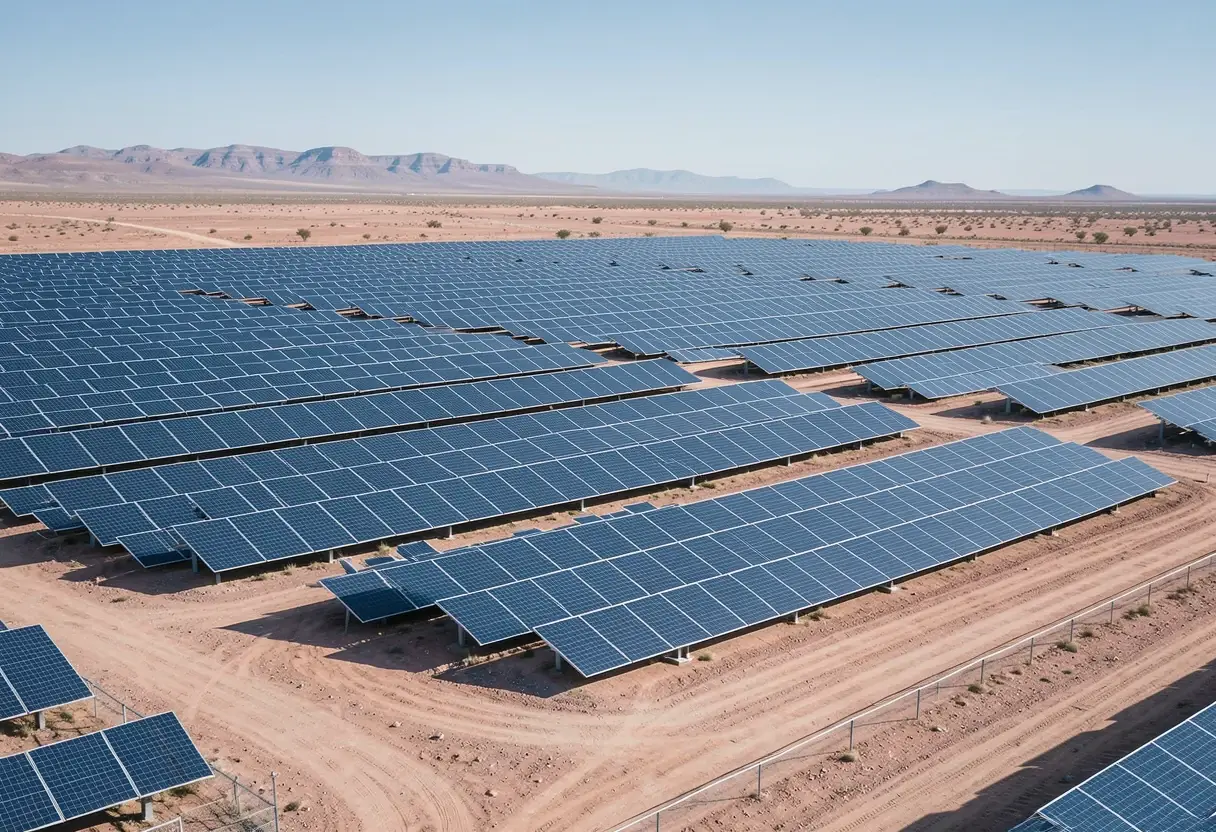
Sabey Data Centers has signed a ten-year vPPA for 43.5MW of solar capacity at the Greasewood farm in Pecos County, Texas, covering roughly 1.3TWh over the term as it targets net-zero by 2029.
 Telecom Business
Why it matters
- Sabey signed a ten-year virtual PPA for 43.5MW of solar capacity at the Greasewood solar project in Girvin, Pecos County, Texas.
- The agreement represents an estimated 130GWh of annual generation, or approximately 1.3TWh over ten years.
- Greasewood Solar Farm is owned by Copenhagen Infrastructure Partners and has been operational since 2021.
- Sabey targets net-zero Scope 1 and Scope 2 emissions by 2029.
- Sabey operates data centers in Washington, New York, Texas, Oregon, Indiana and Virginia.
The story
Sabey Data Centers has signed a ten-year virtual power purchase agreement covering 43.5MW of solar capacity at an operating farm in West Texas, the company announced this week.
The agreement, a vPPA with the Greasewood solar project in Girvin, Pecos County, ties the data center operator to an estimated 130GWh of generation annually. Over the full ten-year term, the contract represents approximately 1.3TWh of renewable energy.
Greasewood Solar Farm is an operating photovoltaic installation owned by Copenhagen Infrastructure Partners. It entered service in 2021.
Why a ten-year commitment?
The deal anchors a corporate climate target. Sabey is aiming for net-zero Scope 1 and Scope 2 emissions by 2029, a timeline that sits well ahead of the 2030 and 2050 targets common among large hyperscale operators.
"Our 2029 net-zero goal requires us to think beyond simply buying renewable energy year to year," said Casey Mason, director of energy & sustainability at Sabey Data Centers. "This agreement is a long-term commitment that supports renewable generation on the grid and moves us meaningfully closer to where we want to be."
The structure matters as much as the size. A virtual PPA does not physically route electrons from Pecos County to Sabey's facilities. Instead, the operator takes the financial position — the renewable attributes and the price exposure — while the power itself flows into the Texas grid. This is the standard instrument US data center operators use to match consumption with clean generation across geographically dispersed portfolios.
What does this change for Sabey?
It converts a year-to-year procurement habit into a decade-long fixed position. For a company with a 2029 deadline, locking in 43.5MW of attributed solar output removes a recurring sourcing decision and hedges the portfolio against price and availability swings in voluntary renewable markets.
Sabey operates data centers across the United States. Its sites, in operation or development, span:
- Quincy, Seattle, and East Wenatchee, Washington
- New York City
- Austin, Texas
- Umatilla, Oregon
- Indianapolis, Indiana
- Ashburn, Virginia
That footprint concentrates in the country's most established data center markets. Ashburn in Virginia remains the largest concentration of data center capacity in the world, while Quincy and Wenatchee in Washington have long drawn operators with access to hydroelectric power.
Context: energy is the industry's binding constraint
The agreement lands as power availability, not land or capital, increasingly dictates where and how fast data centers get built. US operators face interconnection queues measured in years and utility contracts that must scale with AI-driven demand. Long-tenor PPAs of the kind Sabey has signed have become the primary tool for reconciling that demand growth with corporate emissions commitments, because they add attributed renewable capacity to the grid at a scale individual yearly purchases cannot match.
The deal also gives Copenhagen Infrastructure Partners, a fund manager with a growing renewables portfolio, a creditworthy counterparty locked in through the early 2030s.
Sabey has not disclosed additional solar or wind contracts beyond Greasewood, and the company has not said whether further vPPAs will follow before the 2029 net-zero deadline. The ten-year term of this agreement runs past that date, leaving the operator to close any remaining gap in its Scope 1 and Scope 2 accounts within the next five years.
Also reported
Source: datacenterdynamics.com
More from James Calloway
Show full bio
Staff writer covering companies, deals and strategy in Carrier business, 5G and 6G, fiber and broadband at Telecom Gazette.
499 articles