Telecom BusinessAirtrunkEuropean Energy AustraliaData Center EnergyRenewable Energy
AirTrunk signs 1GW Hunter renewable energy agreement
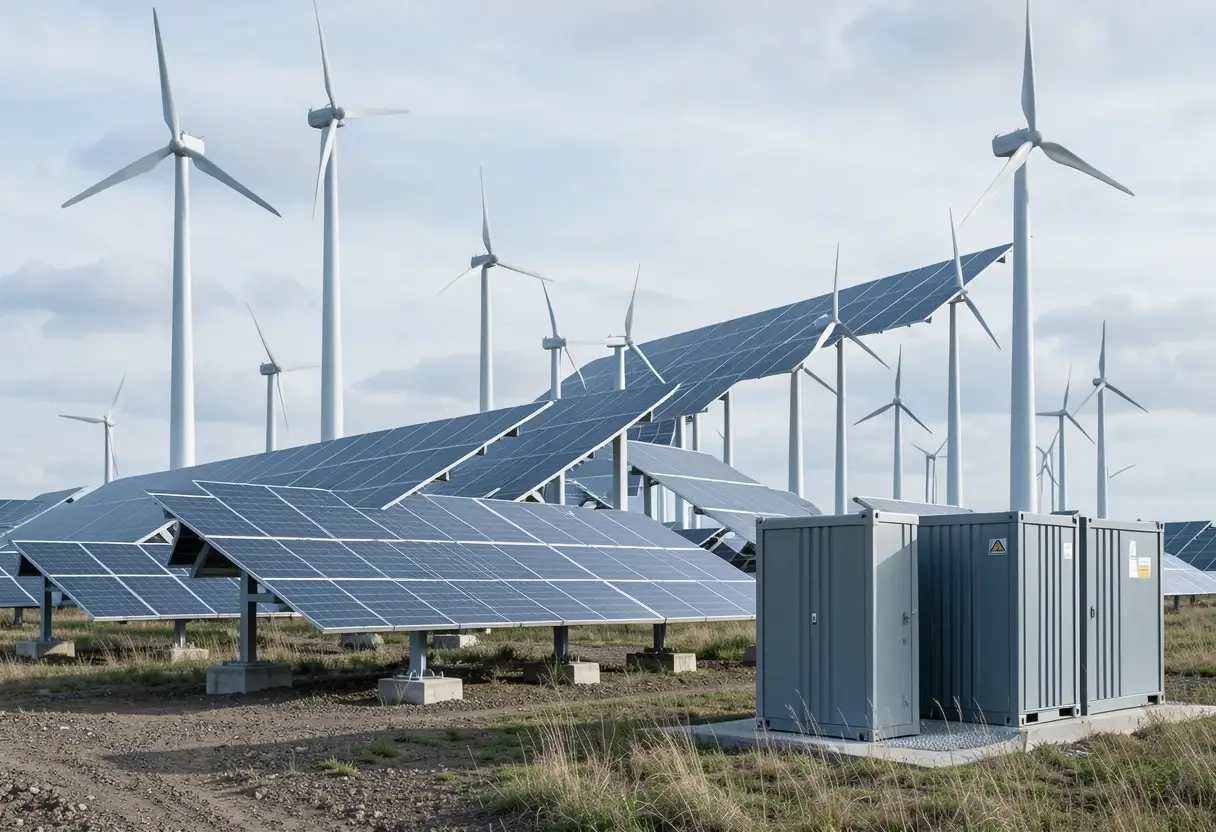
AirTrunk and European Energy Australia plan Hunter solar, battery and wind projects for 2030-2032, after opening the 31MW Mulwala Solar Farm with a 100MWh battery in NSW.
 Telecom Business
Why it matters
- AirTrunk signed a 1GW Hunter agreement covering 260MW solar, an 800MWh-plus battery and up to 350MW of wind.
- The companies target solar and battery operations for 2030 and wind operations for 2032.
- Construction of the 31MW Mulwala Solar Farm began in September 2025; it opened this week with a 100MWh battery and more than 25,000 panels.
- AirTrunk reported 73% renewable electricity matching in FY26 and targets 100% by 2030.
- Blackstone and CPP acquired AirTrunk for US$16.1bn in 2024.
The story
By Elena Vasquez
AirTrunk has signed a 1GW energy deal with European Energy Australia covering a 260MW solar farm, an 800MWh-plus battery and a wind project of up to 350MW in New South Wales.
The agreement gives the companies exclusivity to progress two proposed developments in the Hunter-Central Coast Renewable Energy Zone. Both remained proposals at announcement.
The announcement comes alongside the 31MW Mulwala Solar Farm, on which the two companies previously partnered. The New South Wales project officially opened this week and includes a 100MWh battery and more than 25,000 panels; construction began in September 2025.
What are the Hunter projects?
The first scheme combines the 260MW solar farm with the 800MWh-plus battery, while the second covers up to 350MW of wind. AirTrunk and European Energy Australia expect the solar and battery to begin operating in 2030, with wind following in 2032.
The agreement gives AirTrunk exclusive access to progress the Hunter schemes with European Energy Australia. The announcement disclosed no contract price, financing structure or final investment decision, so the 2030 and 2032 dates remain development targets.
AirTrunk founder and CEO Robin Khuda said: “Digital growth must bring new energy with it. The Australian government’s expectations and NSW’s guidelines set a high bar for the industry.” He called the partnership an important step toward meeting that commitment, although the announcement identified no permit or compliance milestone tied to the federal expectations or NSW guidelines.
European Energy Australia managing director Catriona McLeod said partnerships like this can bring more renewables online and add more energy to the grid. She also said the deal reflected wider renewable-energy adoption by the technology sector.
What does Mulwala already show?
At 31MW, Mulwala is the partnership’s operating project, rather than another proposal. McLeod said last week: “Having Mulwala operating at full output is an important step for our activities in Australia. We’ve taken the project through development, construction, energization and commissioning, and we are now delivering renewable electricity in New South Wales.”
The announcement supplied no generation, capacity-factor or annual-output figures to quantify that performance. In commercial terms, Mulwala is the only scheme described as operating, while the Hunter assets remain proposals for 2030 and 2032.
The 31MW project gives AirTrunk and European Energy Australia an operating reference, but it does not establish that the Hunter timetable is secured. The proposed 260MW Hunter solar farm would have more than eight times Mulwala’s generating capacity.
How much of AirTrunk’s electricity is renewable?
AirTrunk has committed to matching 100 percent of its electricity use with renewable energy by 2030 under its Net Zero 2030 target. The company said around 73 percent of electricity use was matched with renewable energy across its portfolio in FY26.
The FY26 figure applies across the portfolio and does not identify how much matching came from individual Australian sites. It also cannot include generation from the Hunter projects, which remained proposals at announcement.
How does this fit AirTrunk’s expansion?
Founded in 2018, AirTrunk operates and develops data-center campuses in Sydney and Melbourne, Singapore, Hong Kong, Johor in Malaysia, Tokyo and Osaka. Earlier this year, it acquired Indian operator Lumina CloudInfra, officially marking its entry into India.
Blackstone and the Canadian Pension Plan (CPP) bought AirTrunk for US$16.1bn in 2024. At the time, it counted as the largest-ever deal in the data-center space.
The energy agreement links that expansion to future renewable supply, although it specifies no electricity price or contract term. Both Hunter projects remain proposals rather than operating assets until their stated start dates.
Denmark-based European Energy, founded in 2004, develops solar and wind farms. It has more than 2GW of projects in operation and development across Australia; European Energy Australia is the local company signing the Hunter agreement.
The next checkpoint is whether the Hunter plans move from an exclusivity agreement into construction in time for solar and battery operations in 2030. AirTrunk must also lift reported portfolio renewable matching from around 73 percent in FY26 to its 100 percent target by 2030, while the wind schedule extends to 2032.
Also reported
Source: datacenterdynamics.com
More from Elena Vasquez
Show full bio
Market editor covering companies, deals and strategy in Carrier business, 5G and 6G, fiber and broadband at Telecom Gazette.
513 articles