5G & 6GQualcommStarlinkSpacex5g Networks
Qualcomm Chosen for Starlink's Planned US 5G Ground Build
SpaceX chose Qualcomm for a US 5G build due in 2027, covering tens of thousands of sites with 64T64R radios, mid-band and 800MHz spectrum beside direct-to-cell satellites.
 5G & 6G
Why it matters
- SpaceX plans tens of thousands of US 5G cell sites from 2027 under a multi-year agreement announced November 4.
- Qualcomm's Dragonwing Massive MIMO units provide 64 transmit and 64 receive paths.
- Spectrum comes from about 65 MHz of EchoStar mid-band and up to 14 MHz of Grain Management 800 MHz spectrum.
- Starlink reported 13,096 satellites launched, 11,214 on orbit and 11,200 working as of November 2, 2026.
- SOCRATES lists 10 Starlink conjunctions, while four satellites have active reentry predictions.
The story
By Daniel Okafor
SpaceX plans to deploy tens of thousands of Qualcomm-powered 5G cell sites across the United States starting in 2027. The multi-year agreement was announced on November 4.
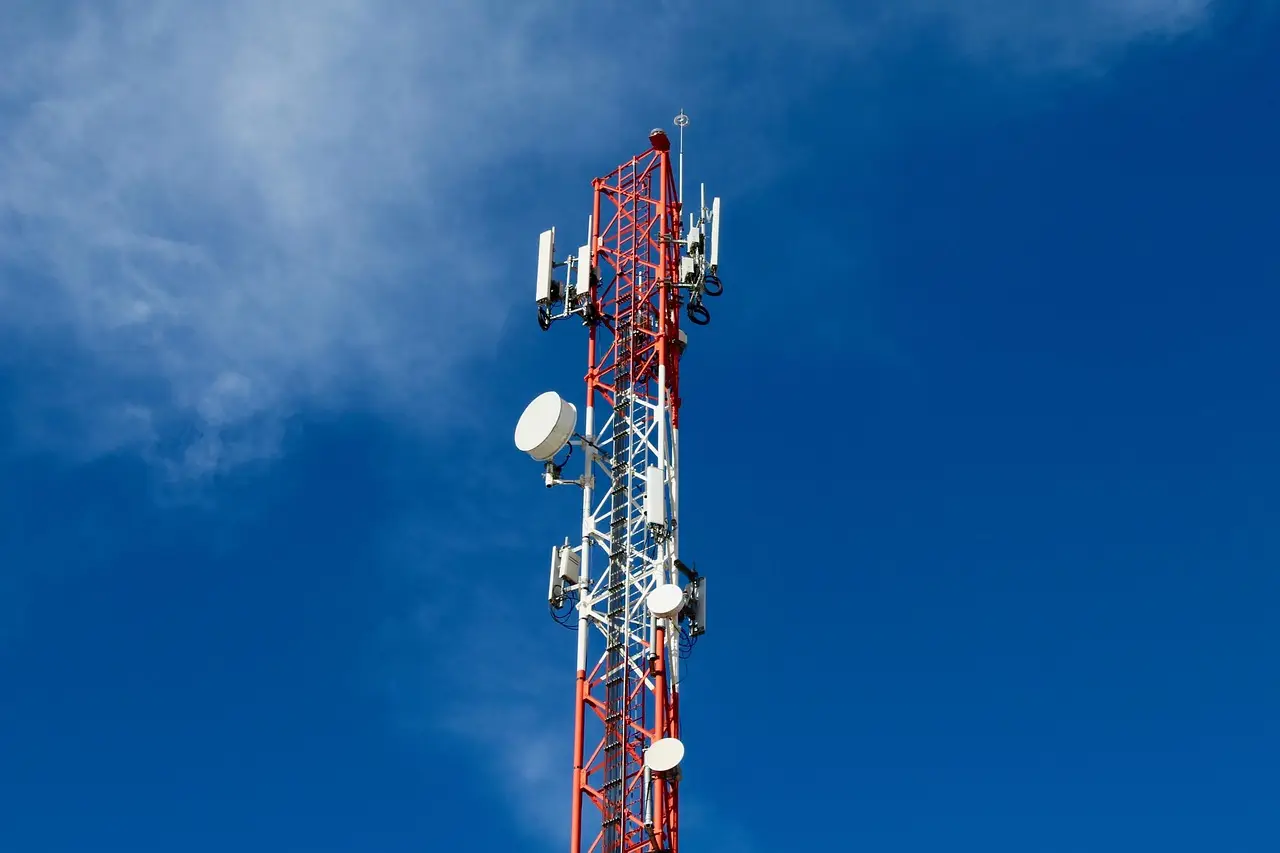
Qualcomm will supply the radios, baseband units and Layer 1 software for Starlink Mobile's planned terrestrial 5G network. The hardware uses the company's Dragonwing QRU100 and QDU100 platforms. Its Massive MIMO radio units provide 64 transmit and 64 receive paths. SpaceX will run the ground network alongside Starlink's direct-to-cell satellites, not as a replacement.
Qualcomm called the agreement “its largest 5G deal to date.” That is a vendor claim. The source gives no contract value, subscriber target, coverage footprint or throughput. The commercial commitment is narrower but concrete. Qualcomm supplies three core network elements, and SpaceX plans cell sites from 2027.
What spectrum changes for Starlink Mobile?
SpaceX has assembled spectrum through two transactions. EchoStar provides roughly 65 MHz of mid-band spectrum. Grain Management supplies up to 14 MHz in the 800 MHz low band. Together, the stated holdings could reach about 79 MHz, subject to the low-band cap. Low band improves range and indoor penetration; mid-band adds capacity.
SpaceX President Gwynne Shotwell described “a hybrid design” in which satellites cover outdoor dead zones and terrestrial nodes add capacity where demand is highest. Earlier comments pointed to small cells or femtocells co-located with Starlink terminals on roofs. Later filings also reference conventional antennas on towers.
The source does not settle which form factor will dominate, although both point to integration with the satellite service. The announcement identifies the spectrum source but gives no approval dates, site permits or final network limits. The 2027 start is the firmest schedule in the source, not a promise of completed nationwide coverage.
How large is the supporting constellation?
As of November 2, 2026, Starlink had launched 13,096 satellites. Of those, 11,214 remained in orbit and 11,200 were working. The remaining 1,882 had decayed, leaving 14 in orbit not counted as working. Roughly 86% of launched satellites remained operational, with no change since the previous check.
The constellation supplies direct-to-cell service alongside the planned ground layer.
How much political risk now surrounds SpaceX?
After Tuesday's elections, Democrats won both chambers of Congress and the Texas governorship. Gina Hinojosa unseated Governor Greg Abbott, while James Talarico defeated Ken Paxton.
Tesla traded down 2.32% at about $389.30 around 1:45 p.m. Eastern time on Wednesday. SpaceX also declined, and both lagged a broader market that had turned positive.
Musk's political spending was estimated at $450 million to $474 million for the cycle. The estimate assigned roughly $224 million to Texas. Hinojosa campaigned against certain corporate subsidies and floated a moratorium on new data-center construction. Such a moratorium could affect AI compute expansion.
Democratic control of key federal committees also opens closer scrutiny of Tesla's autonomous-driving record, federal incentives and the national-security implications of any Tesla-SpaceX combination.
SpaceX's Texas exposure has grown since Musk moved there in 2020. He focused the Starship program in South Texas in 2021. A Starlink terminal factory east of Austin followed in 2023. In July 2024, he announced the corporate headquarters' move from Hawthorne, California, to Starbase. He cited California's regulatory and political environment.
This summer, SpaceX announced Terafab, a chip-building project in Grimes County, alongside a planned vertically integrated factory exceeding 100 million square feet. Ars Technica described that footprint as 15 Pentagons. These plans now sit in a state whose voters removed Republican leaders who had courted Musk, including Governor Greg Abbott.
The election does not automatically cancel those projects. It does put incentives, data-center rules and political support closer to Starlink's execution risk.
What does the conjunction data show?
SOCRATES lists 10 upcoming Starlink conjunctions among its top-probability events. It rates none as high risk. The table labels one event HIGH and nine MODERATE, with every object operational. The HIGH event carries a 100% probability but is flagged suspect. Physically implausible upstream numbers make a stale or erroneous report more likely than a real close approach.
- Nov 5, 21:05 UTC: STARLINK-3859 and STARLINK-37805; 0.053 km (53 m), 0.45 km/s, 12.48% maximum probability.
- Nov 5, 22:35 UTC: STARLINK-1506 and STARLINK-31098; 0.022 km (22 m), 2.749 km/s, 43.78%.
- Nov 6, 19:04 UTC: STARLINK-31602 and STARLINK-37805; 0.044 km (44 m), 6.858 km/s, 16.01%.
- Nov 8, 02:58 UTC: STARLINK-6344 and GAOFEN-9 02; 0.022 km (22 m), 14.274 km/s, 12.45%.
- Nov 8, 04:37 UTC: STARLINK-37050 and STARLINK-37832; 0.032 km (32 m), 15.133 km/s, 15.65%.
- Nov 9, 02:22 UTC: STARLINK-37312 and STARLINK-38095; 0.055 km (55 m), 3.544 km/s, 11.48%.
- Nov 9, 15:41 UTC: STARLINK-4660 and STARLINK-37693; 0.047 km (47 m), 6.981 km/s, 14.53%.
- Nov 10, 15:34 UTC: STARLINK-38225 and STARLINK-38264; 0.009 km (9 m), 2.932 km/s, 100% and flagged suspect.
- Nov 10, 19:52 UTC: STARLINK-34682 and STARLINK-38255; 0.034 km (34 m), 15.017 km/s, 13.65%.
- Nov 11, 01:00 UTC: STARLINK-37158 and STARLINK-37684; 0.044 km (44 m), 11.808 km/s, 13.38%.
Separately, four Starlink satellites carry active reentry predictions:
- STARLINK-36253, NORAD 68028: predicted decay Nov 5, 13:58 UTC; 480-minute window; 97.3° inclination; 30.6° latitude, 3.3° longitude.
- STARLINK-1420, NORAD 45695: predicted decay Nov 6, 11:42 UTC; 660-minute window; 53° inclination; 18.3° latitude, 201.1° longitude.
- STARLINK-1730, NORAD 46563: predicted decay Nov 7, 21:04 UTC; 1,140-minute window; 53° inclination; 23.7° latitude, 160.6° longitude.
- STARLINK-1338, NORAD 45532: predicted decay Nov 8, 09:32 UTC; 1,080-minute window; 53° inclination; 52.1° latitude, 191.8° longitude.
What other development matters?
Two astronauts are scheduled to complete the International Space Station's solar-array upgrades during a spacewalk on the report date. Space.com carried a live viewing guide, and earlier coverage had flagged the work in advance.
The next checkpoints are the first 2027 cell sites, construction detail for Terafab, and policy decisions under Texas and federal Democratic control. None has a stated completion date in the source, so operators still face schedule and policy uncertainty.
Also reported
Source: Google News: 5G network
More from Daniel Okafor
Show full bio
Senior reporter covering regulation, policy and their impact on Carrier business, 5G and 6G, fiber and broadband at Telecom Gazette.
444 articles