Networks & InfrastructureMaxlinearDocsis 4 0Puma 9Broadband Cpe
MaxLinear's Puma 9 Chip Cuts DOCSIS CPE Costs by Up to 50%
MaxLinear claims its ARM-based Puma 9 cuts DOCSIS CPE costs 30-50%, spans D3.1 to D4.0, adds Wi-Fi 8 and DDR5. Devices expected in 2027.
 Networks & Infrastructure
Why it matters
- MaxLinear claims the Puma 9 cuts CPE costs by 30-50% versus its predecessor and supports DOCSIS 3.1, D3.1+ and 4.0 plus Wi-Fi 8.
- The chip moves to ARM architecture and adds DDR5 memory support; Puma 9 devices are expected to become available in 2027.
- Dell'Oro estimates Broadcom holds about 60% of the DOCSIS chipset market versus MaxLinear's 40%, with DOCSIS 4.0 units at about 8% of CPE shipments.
The story
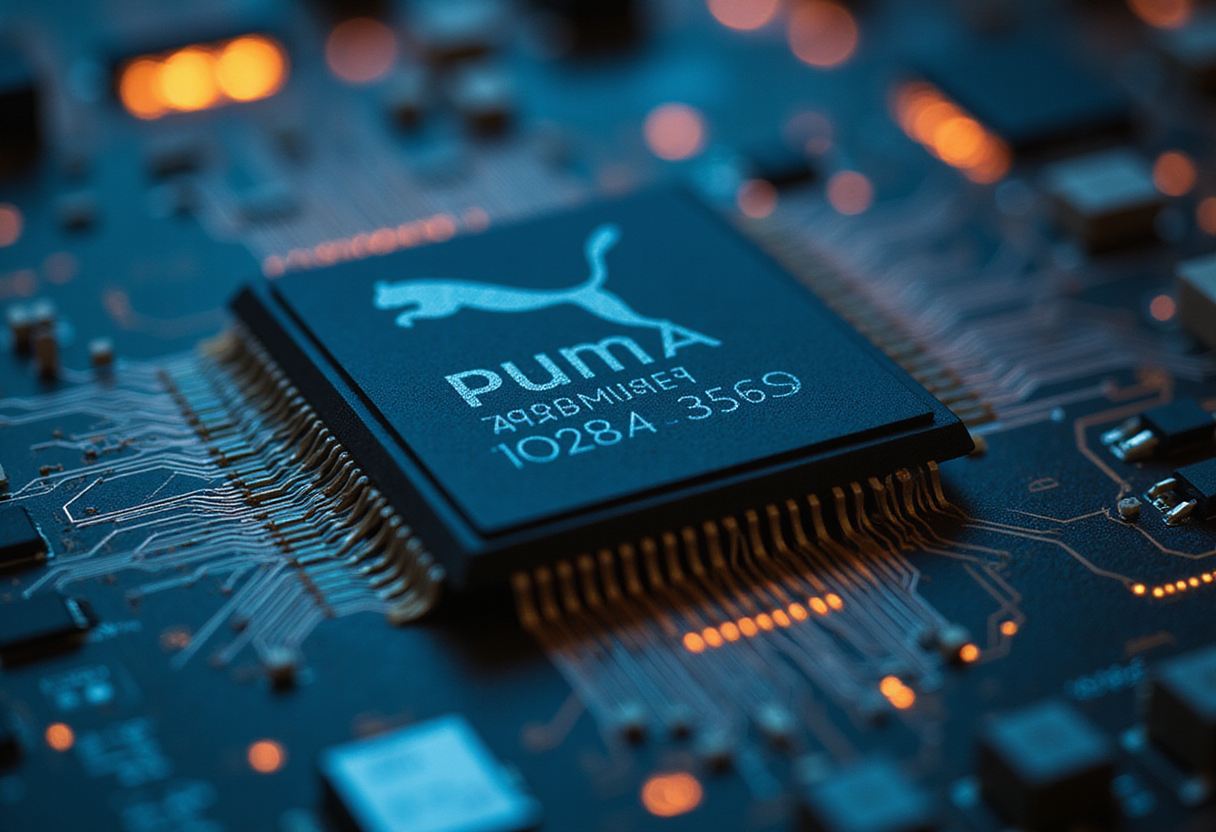
MaxLinear says its new Puma 9 chip for DOCSIS modems and gateways cuts customer premises equipment costs by 30% to 50% compared with its predecessor, while covering DOCSIS 3.1, DOCSIS 3.1+ and DOCSIS 4.0 on a single baseline platform with added support for Wi-Fi 8.
The chipmaker expects Puma 9-based modems and gateways to start becoming available in 2027. Puneet Sethi, SVP and GM of MaxLinear's network infrastructure and carrier business unit, said the company has already secured "multiple commitments" for the chip. The announcement names CPE partners Askey, Fritz! GmbH and Gemtek, along with support from Australian broadband operator NBN Co.
The Puma 9 succeeds the Puma 8, introduced in 2023, which also supports DOCSIS 4.0 and DOCSIS 3.1+. The performance gap between the two DOCSIS variants matters commercially: DOCSIS 3.1+ typically delivers downstream speeds around 8 Gbit/s using five OFDM channels, while full DOCSIS 4.0 specs enable symmetrical multi-gigabit service — roughly 12 Gbit/s downstream and 7 Gbit/s upstream — giving cable operators a counter to passive optical networking competition. MaxLinear claims the Puma 9's D3.1+ configuration can also push downstream speeds to 12 Gbit/s. Recent DOCSIS 4.0 interops at CableLabs have reached around 14 Gbit/s downstream.
A notable architectural shift sits under the hood. MaxLinear confirmed the Puma 9 is based on ARM rather than the Intel x86 platform that runs earlier Puma generations. MaxLinear acquired Intel's DOCSIS silicon line through its 2020 purchase of Intel's Home Gateway Platform unit and will support both architectures going forward.
"We continue to support x86-based products and consider both architectures for our future products," a company official said in a statement. Both the Puma 8 and Puma 9 support the Reference Design Kit (RDK), an open source software platform the official said makes "the underlying CPU architecture largely transparent to customers."
An industry source familiar with MaxLinear's DOCSIS silicon said the move to ARM will reduce the chip's power draw and some licensing costs.
The Puma 9 also introduces new memory options. Amid shortages and supply chain pressure on DDR4, the chip adds support for DDR5, which offers greater capacity and efficiency.
"As manufacturers are incentivized to move their capacity to DDR5, we think the DDR5 ecosystem and pricing and supply will become more relaxed than the stress that we see with DDR4," Sethi explained.
Jeff Heynen, VP of broadband access and home networking at Dell'Oro Group, said the memory shift tracks broader trends in broadband CPE. "I believe most vendors will move to DDR5 for more advanced Wi-Fi 8 units because of the additional onboard memory potentially required for apps and additional diagnostic features," he said.
Like the Puma 8, the Puma 9 supports the Extended Spectrum DOCSIS (ESD) flavor of DOCSIS 4.0, which carries upstream and downstream traffic in separate, dedicated spectrum. Broadcom's rival "unified" chips for modems, amplifiers and nodes also support Full Duplex (FDX), a D4.0 variant favored by Comcast that runs upstream or downstream traffic in a shared block of spectrum. MaxLinear, which is locked in an FDX-related lawsuit with Comcast, has not announced plans for an FDX-capable unified chip.
Sethi said operators increasingly justify DOCSIS 4.0 or D3.1+ migrations on improved economics, not just faster speeds. "The conversation with operators is changing. It is not [only] about technology-readiness," he said, arguing the Puma 9 will essentially match the cost of a legacy DOCSIS 3.1 device.
The unified software baseline removes the need for operators to invest in multiple hardware qualifications, which Sethi estimated can run into the tens of millions of dollars per operator. "That cost goes away," he said, noting multiple SKUs will share the same baseline silicon. The front end of a Puma 9 device will still require different hardware configurations for D3.1+ versus D4.0, but operators can pre-provision modems with the front-end components and memory needed for D4.0 and activate the capability later via software update — rather than a costly truck roll — once the hybrid fiber/coax network is upgraded.
"The main thrust [with the Puma 9] is cost," said an executive at a broadband CPE supplier that uses Puma silicon, adding that this will help MaxLinear maintain a price advantage over Broadcom.
Heynen agreed that cost and memory flexibility rank among the chip's biggest benefits. "Thus far, Broadcom has pushed CPE manufacturers and operators to either a fully-integrated DOCSIS 4.0 gateway or to DOCSIS 3.1+ on a separate chip," he said, referring to Broadcom's D4.0 unified chips and its BCM3392 for D3.1+ modems. "Operators want to have some more flexibility, particularly in the current market where they will want to shop around for the best prices on DRAM and other components that are in high demand and short supply."
He does not expect the Puma 9 to accelerate DOCSIS 4.0 network upgrades, since those investments extend well beyond CPE. But operators can seed their networks with D4.0-capable devices ahead of upgrades because the modems also run on DOCSIS 3.1 networks. Heynen estimates DOCSIS 4.0 units account for about 8% of total DOCSIS CPE shipments, and that Broadcom holds roughly 60% of the overall DOCSIS chipset market to MaxLinear's 40%.
MaxLinear will continue to supply and support the Puma 7, a DOCSIS 3.1 modem chip, and the Puma 8, configurable for either DOCSIS 4.0 or D3.1+, as operators wait for Puma 9 devices to reach the market in 2027.
Also reported
Source: Light Reading
More from Rebecca Stone
Show full bio
Correspondent covering media and advertising at Telecom Gazette.
63 articles