Networks & InfrastructureCo Packaged OpticsNvidia PhotonicsLambdaAI Data Centers
Lambda Runs Nvidia's Co-Packaged Optics at 10,000-GPU Scale in Quebec
Lambda deployed Nvidia Photonics CPO switches linking over 10,000 GB300 NVL72 GPUs at QScale's Quebec campus, cutting latency up to 10 percent at pod scale in what it calls a world-first at scale.
 Networks & Infrastructure
Why it matters
- Lambda deployed Nvidia Photonics CPO switches connecting more than 10,000 GB300 NVL72 GPUs at QScale's Lévis, Quebec data center.
- Tests showed latency down roughly 4 percent at rack scale and up to 10 percent at pod scale.
- Each switch has 144 ports at 800Gbps and runs optics at 36°C versus 51°C for pluggable optics.
- QScale's campus offers 142MW, nearly 100 percent renewable energy, and free-cooling up to 80 percent of the year, with 60MW under construction since June 2026.
- Nvidia claims up to 15x higher reliability than pluggable optics; Lambda calls it the first large-scale CPO deployment.
The story
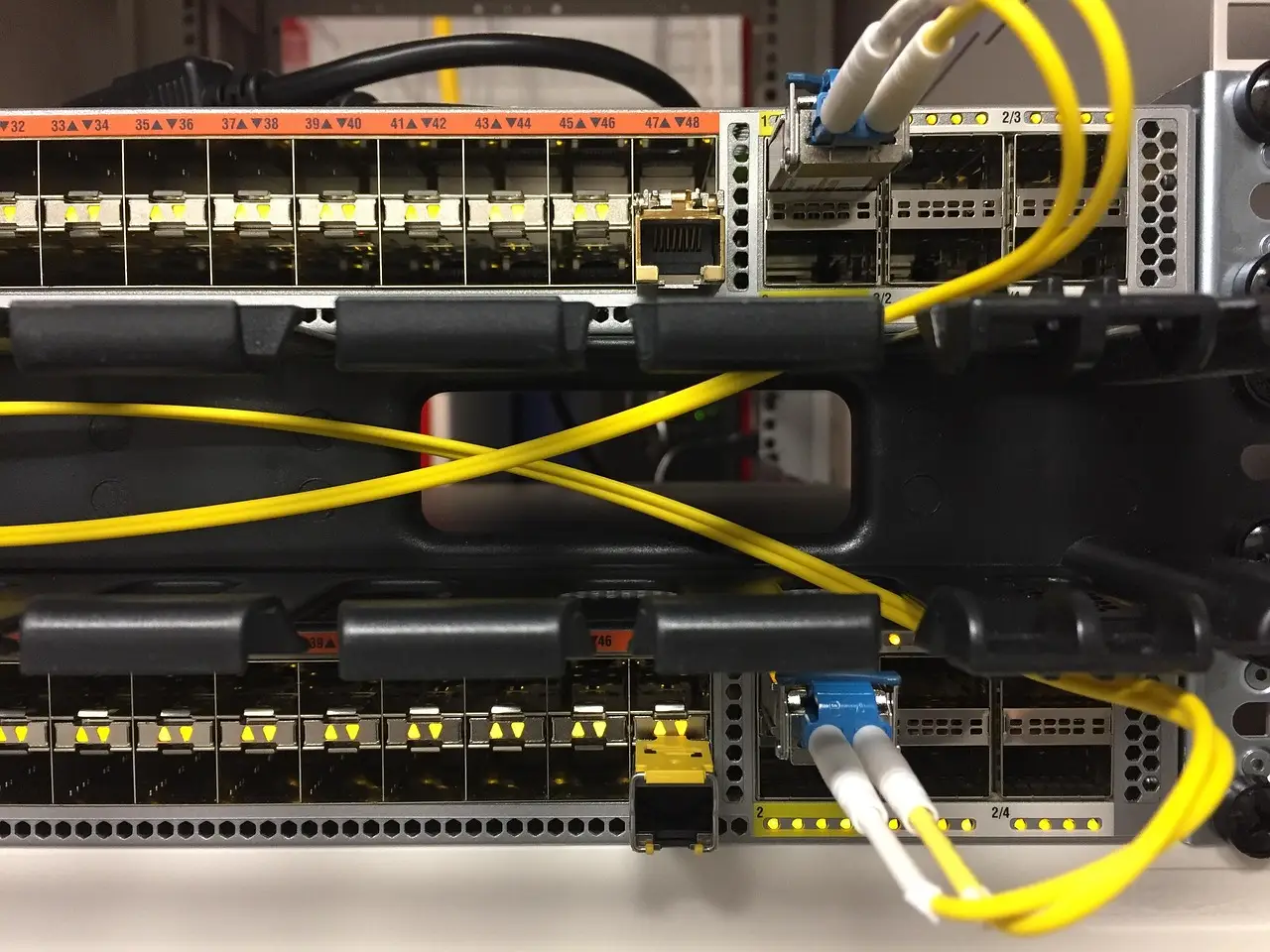
Lambda has deployed Nvidia Photonics co-packaged optics switches linking more than 10,000 GPUs at a QScale data center in Lévis, Quebec, in what the GPU cloud operator calls the world's first large-scale deployment of CPO networking.
The switches connect racks of Nvidia GB300 NVL72 systems, the current top-end rack-scale AI platform. Each switch carries 144 ports running at 800Gbps and is liquid-cooled, holding the optics at a medium temperature of 36°C (96.8°F) against 51°C (123.8°F) for conventional pluggable optics. That 15-degree gap matters for operators: cooler optics mean lower failure rates and less cooling overhead per rack.
For network engineers, the technical change is physical. Conventional pluggable optics convert electrical signals to light at the switch front panel. CPO instead places optical engines directly beside the switch ASIC, shortening the electrical path from inches to millimeters. Lambda's tests found network latency dropped by around four percent at rack scale and up to ten percent at pod scale.
QScale confirmed its role in a LinkedIn post: "QScale is proud to support Nvidia and Lambda in deploying state-of-the-art, liquid-cooled photonics switches for the next generation of AI factories. Built for AI at scale, right here in Québec."
What does the deployment change for operators?
Dave Ward, president of cloud services at Lambda, framed the move as an infrastructure prerequisite rather than a marketing exercise. "Networking has to keep pace with the demands of increasingly large AI clusters," he said. "Bringing co-packaged optics into a deployment of this scale is an important step toward building the infrastructure needed to support the next generation of AI."
Nvidia's claims go further, and buyers should separate the measured from the asserted. The latency figures come from Lambda's own tests. The reliability claim — up to 15 times higher than pluggable optics — comes from Nvidia without published test detail.
Gilad Shainer, SVP of networking at Nvidia, said: "In an AI factory, the network is a business accelerator. Every interruption stalls the job, and every watt counts. Nvidia Photonics cuts network power, improves resiliency and delivers up to 15x higher reliability, so Lambda's customers get more productive GPU hours from their investment."
The commercial logic is straightforward for GPU cloud providers. AI clusters sit idle whenever the network interrupts a training job, so every recovered percentage point of latency and uptime translates directly into billable GPU hours across a 10,000-GPU estate.
Why Quebec, and why QScale?
The choice of site is notable because Lambda's public cloud documents do not currently list Canada among its regions. The operator advertises capacity across the US — Virginia, Washington DC, Illinois, Texas, California, Arizona, Utah and Southern California — plus regions in Europe and APAC.
QScale's campus economics explain the fit. The site operates with 142MW of capacity, runs on almost 100 percent renewable energy, and uses free-cooling for up to 80 percent of the year — a meaningful operating-cost lever for liquid-cooled, high-density AI hardware. Construction on the first campus, Q01, began in 2021, with phase two starting in September 2022. In June 2026, QScale said work had started on another data center on the campus, adding 60MW.
QScale was reported in August 2025 to be planning a further data center in Toronto. The company is a portfolio company of Infrastructure at Goldman Sachs Alternatives, giving it institutional backing as AI-factory demand accelerates in Canada.
If Lambda's latency and temperature results hold at further scale, expect CPO to move from showcase to standard specification for hyperscale AI backbones — with QScale's expanding 200MW-plus campus positioning Quebec as a serious contender for that buildout.
Also reported
Source: datacenterdynamics.com
More from Daniel Okafor
Show full bio
Senior reporter covering regulation, policy and their impact on Carrier business, 5G and 6G, fiber and broadband at Telecom Gazette.
603 articles