Networks & InfrastructureGoogleBlue OriginProject SuncatcherAI Satellites
Google Books Blue Origin for First Dedicated AI Satellite Launch in 2029
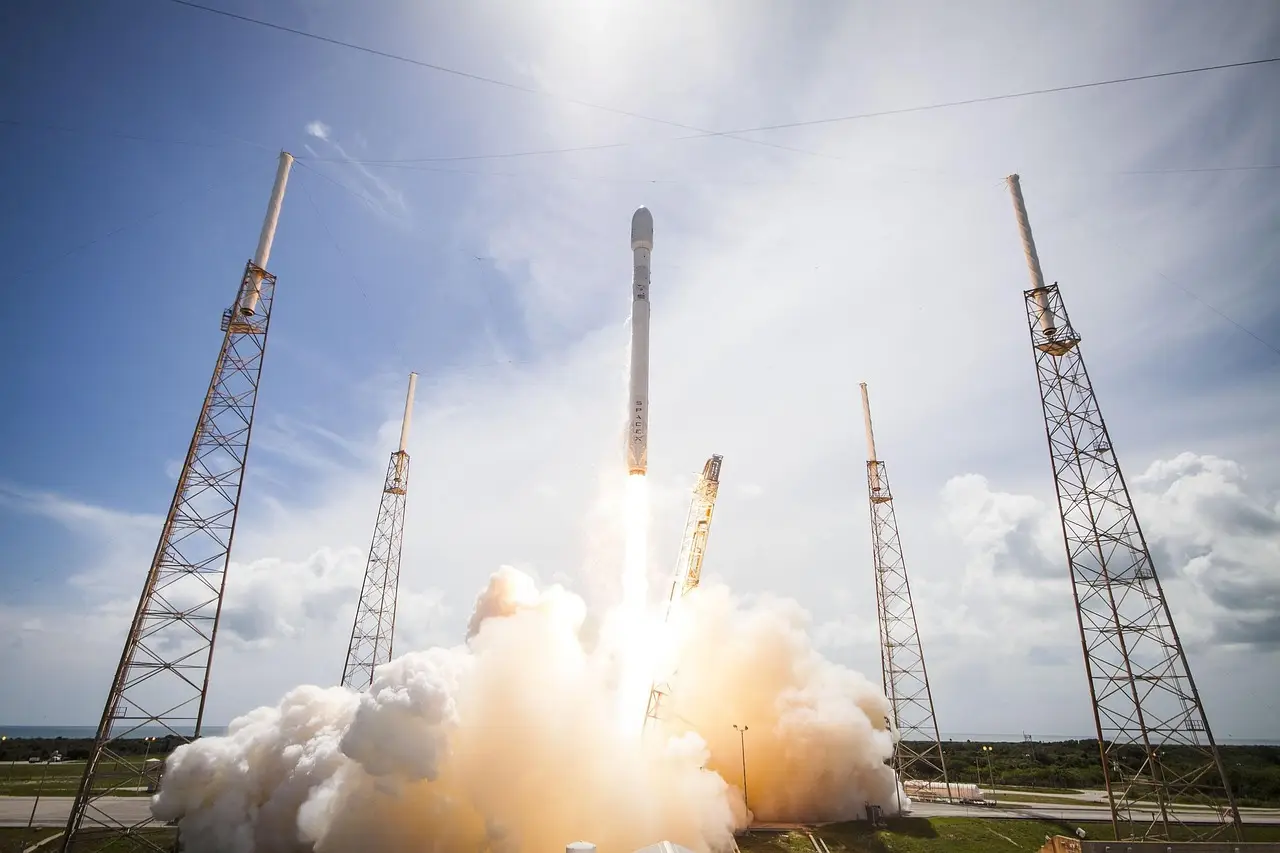
Google has picked Blue Origin for its first dedicated heavy-lift launch for Project Suncatcher, targeting Q1 2029 to put TPU-powered satellites with rack-scale compute into orbit.
 Networks & Infrastructure
Why it matters
- Google targets Q1 2029 for its first dedicated heavy-lift launch with Blue Origin under Project Suncatcher
- Each satellite will carry computing capacity roughly equal to one data centre rack, using Google TPU chips in sun-synchronous orbit
- Blue Origin committed more than $300 million in the prior month to upgrade US launch facilities, aiming for multiple flights per week by decade's end
- SpaceX is pursuing a rival orbital data centre initiative for AI workloads
The story
Google has signed Blue Origin for its first dedicated heavy-lift launch under Project Suncatcher, with liftoff targeted for the first quarter of 2029 — a date that puts the technology giant's space-based AI compute ambitions at least three years away from a first real-world test.
Blue Origin, the rocket and spacecraft company owned by Jeff Bezos, described the agreement as Google's first dedicated heavy-lift launch for the project, which sits under Google's Moonshot portfolio of long-term technology bets. The mission will deploy satellites carrying Google's Tensor Processing Units (TPUs) — the custom AI chips the company already uses in its terrestrial data centres — into sun-synchronous orbit.
The scale of each spacecraft matters more than the number of them. Blue Origin said each satellite will carry computing capacity roughly equivalent to one data centre rack. That is a modest starting point: a single rack is a fraction of the capacity a hyperscale facility holds, and Google operates hundreds of thousands of racks worldwide. The launch, in other words, is a research probe, not a deployment of orbital infrastructure at commercial scale.
What is Project Suncatcher actually testing?
The initiative is examining whether an interconnected network of solar-powered satellites equipped with TPUs could run AI workloads from space. The core commercial logic is energy. AI training and inference consume enormous amounts of electricity, and terrestrial data centres face power constraints, grid queues and land costs. Orbit offers what Travis Beals, senior director of Project Suncatcher at Google, called the "abundant solar power in orbit" — continuous sunlight without night-time interruption or terrestrial grid dependence.
"This dedicated launch with Blue Origin represents a crucial milestone on our roadmap as we expand the boundaries of what's possible for the future of compute," Beals said.
What Google has not said is how many satellites the 2029 launch will carry, what the project costs, or what throughput and latency targets the constellation must hit before space-based compute becomes economically competitive with ground-based alternatives. Radiation hardening, thermal management and the difficulty of servicing hardware at orbital altitude also remain unaddressed in the announcement — all factors that have historically made computing in space far more expensive per unit of performance than on the ground.
Who is building the ride to orbit?
Blue Origin manufactures and operates rocket engines and satellite engines, and its New Glenn heavy-lift vehicle is the system at the centre of the deal. Jordan Charles, senior vice president of New Glenn at Blue Origin, positioned the mission squarely within the launcher's design envelope.
"Its heavy-lift capacity and large payload volume give customers the flexibility to bring new capabilities to orbit. We're proud to work with Google to explore space-based computing and its potential to expand the space economy," Charles said.
The Google contract lands amid a broader infrastructure push at Blue Origin. Last month the company committed more than $300 million to upgrade launch facilities in the US, as part of plans to support multiple flights per week by the end of the decade — a cadence target that, if reached, would roughly equate to launching a heavy-lift mission every few days rather than a handful per year.
Is this a two-horse race?
Google is not alone in chasing orbital data centres. Elon Musk's SpaceX is pursuing a similar initiative, as cloud and AI providers look for ways to expand computing capacity beyond constrained terrestrial infrastructure. The two efforts share a thesis — that compute demand for AI services will outstrip what ground-based data centres and power grids can economically supply — but differ in execution, with Google pairing its own TPUs with Blue Origin's launch capacity rather than keeping the stack vertically integrated as SpaceX tends to do.
For satellite and launch-market watchers, the significance is as much in the customer as the cargo. Google's commitment to a dedicated heavy-lift mission — rather than rideshare slots — signals a belief that AI-in-space research has graduated from paper studies to funded flight hardware. For telecom and cloud operators, the project is an early data point on whether future AI capacity planning could extend beyond terrestrial data centres altogether.
The caveat is timing. Nothing launches before early 2029, no satellite count, capacity total or budget has been disclosed, and the stated goal remains research into scaling machine learning compute in space rather than operational service delivery. Whether Project Suncatcher becomes infrastructure or stays a Moonshot will depend on what the first satellites prove — and Google has given itself at least three years before anyone finds out.
Also reported
Source: Mobile World Live
More from Rebecca Stone
Show full bio
Correspondent covering technology and product news in Carrier business, 5G and 6G, fiber and broadband at Telecom Gazette.
562 articles