Telecom BusinessFingermotionBlueflare SnapModular Data CentersAI Infrastructure
FingerMotion's BlueFlare Snap Targets UAE Heat With Modular AI Halls
FingerMotion unveils BlueFlare Snap, a factory-built AI data center designed for Gulf heat, targeting the UAE as first market after an 80-20 merger with Canada's BlueFlare.
 Telecom Business
Why it matters
- BlueFlare and its shareholders will hold an 80 percent stake in the merged company under a non-binding term sheet signed last month.
- The UAE is the target first market, with grid-connected sites under evaluation.
- BlueFlare Snap draws on a 9.9MW modular project in Alberta, Canada, paired with on-site natural gas generation.
- FingerMotion pivoted from China-based mobile services to AI data centers in July, relocating to Singapore.
The story
FingerMotion wants its first modular AI data center operating in the United Arab Emirates, a market it says is growing fast enough to absorb capacity built in a factory and bolted together on site.
The Singapore-based company has unveiled BlueFlare Snap, a modular data center concept designed and built by BlueFlare, a Calgary developer of behind-the-meter power generation and modular facilities. The two firms signed a non-binding term sheet last month to merge, with BlueFlare and its shareholders taking an 80 percent stake in the combined company. FingerMotion moved its operations from China to Singapore after pivoting into the AI data center sector in July, when it signed a Memorandum of Understanding with BlueFlare over a site in Alberta.
The concept remains in the early stages of design. That caveat matters.
What does Snap actually offer?
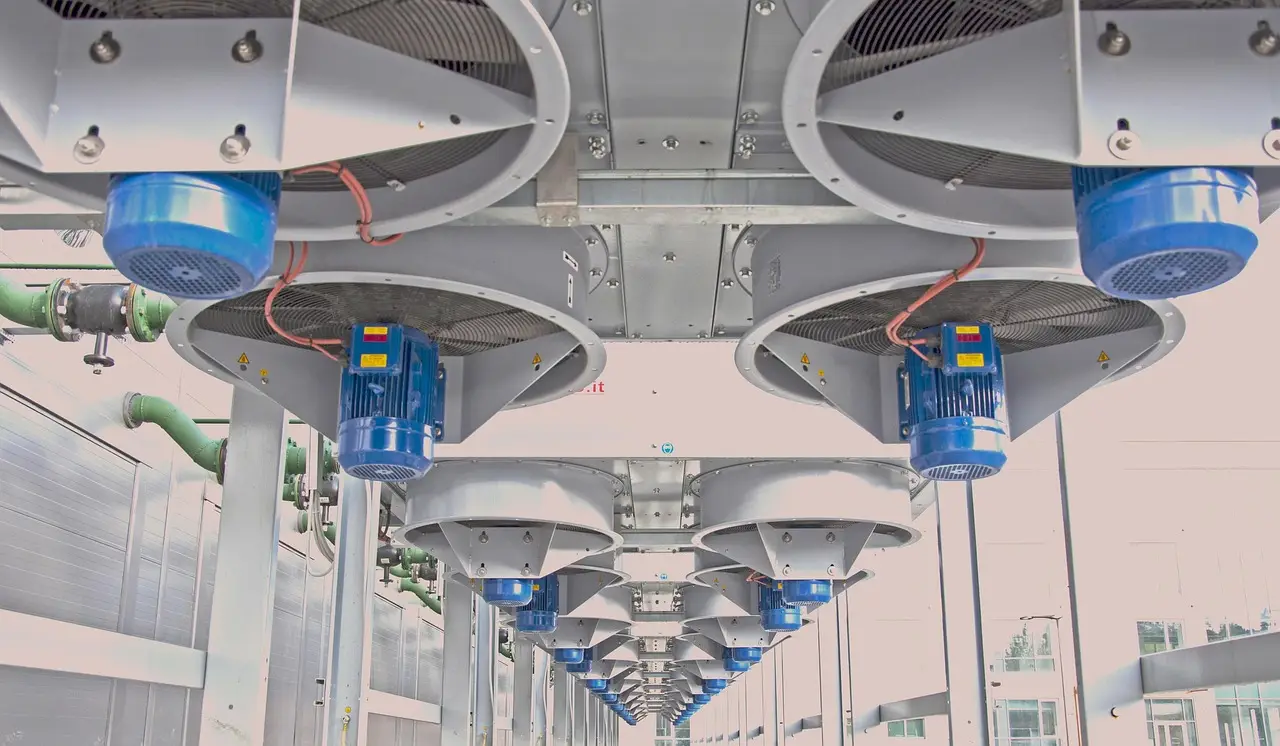
BlueFlare says each unit is factory-manufactured, shipped to site and assembled there. Because assembly can run in parallel with site preparation, the pitch is speed: capacity arrives faster than a conventional build. BlueFlare would act as the single point of responsibility, self-performing design, procurement, construction and commissioning.
The division of labor is deliberately narrow. Compute clients bring their own hardware. BlueFlare supplies the power, the cooling and the white space — the shell, in plain terms. The company claims the unit is engineered to manage extreme temperatures, which in the Gulf means sustained heat that punishes conventional cooling budgets.
Where will it land first?
The companies have targeted the UAE as the first deployment market and are currently evaluating grid-connected site options there. FingerMotion CEO Jolie Kahn framed the opportunity in measured terms rather than grand ones.
"The UAE's data center market is growing rapidly, with substantial large-scale capacity already in place and more under development. Modular solutions that can be deployed quickly and that are engineered for extreme heat represent a practical complement for many use cases," Kahn said.
She added: "BlueFlare Snap is designed to deliver AI capacity that can be brought online in stages and located where it is needed, while standing up to the region's climate conditions."
That's a complement, not a replacement — worth noting in a market where hyperscale campuses already anchor capacity.
Does the model have a track record?
Partially. BlueFlare Snap draws on a development model the Calgary firm is already applying in Alberta, Canada, where a 9.9MW project pairs modular data center capacity with on-site natural gas generation. That project sits behind the July MoU that pulled FingerMotion out of mobile services — its previous business, centered on China — and into data centers.
The Alberta build gives BlueFlare a working reference for the factory-to-site approach. The Gulf climate, however, is a different engineering problem from Alberta's, and Snap's extreme-temperature claims have yet to meet a 50-degree Emirati summer.
What happens next?
The immediate milestones are procedural: the merger term sheet is non-binding, the Snap design is unfinished, and UAE site selection is still at the evaluation stage. Grid-connected locations are the stated preference, which suggests the companies want utility power rather than the gas-fired route used in Alberta.
Until a site is picked and a customer signs for compute, Snap is a concept with a name. The next concrete signal to watch is a UAE site commitment — or a first Snap order — before the design work firms up into steel.
Also reported
Source: datacenterdynamics.com
More from Amara Osei
Show full bio
News editor covering technology and product news in Carrier business, 5G and 6G, fiber and broadband at Telecom Gazette.
572 articles