Networks & InfrastructureEutelsatOnewebLeo SatelliteRail Connectivity
Eutelsat Completes First OneWeb LEO Rail Trial on PKP Intercity Trains
Eutelsat carried live OneWeb LEO traffic on a PKP Intercity train at up to 160 km/h, using Kymeta's TÜV-certified Kestrel u5 terminal on routes from Kozlow to Warsaw and Tczew.
 Networks & Infrastructure
Why it matters
- Eutelsat completed its first OneWeb LEO rail connectivity trial in Poland on a PKP Intercity train travelling at up to 160 km/h on routes linking Kozlow, Warsaw and Tczew.
- The trial used Kymeta's Kestrel u5 flat-panel terminal, certified by TÜV Rheinland, with an IP69K rating and average power consumption under 100W.
- ACO Solutions led as systems integrator, with HispaSat as distribution partner; Eutelsat previously partnered with Airtel Gabon for train Wi-Fi in Gabon.
The story
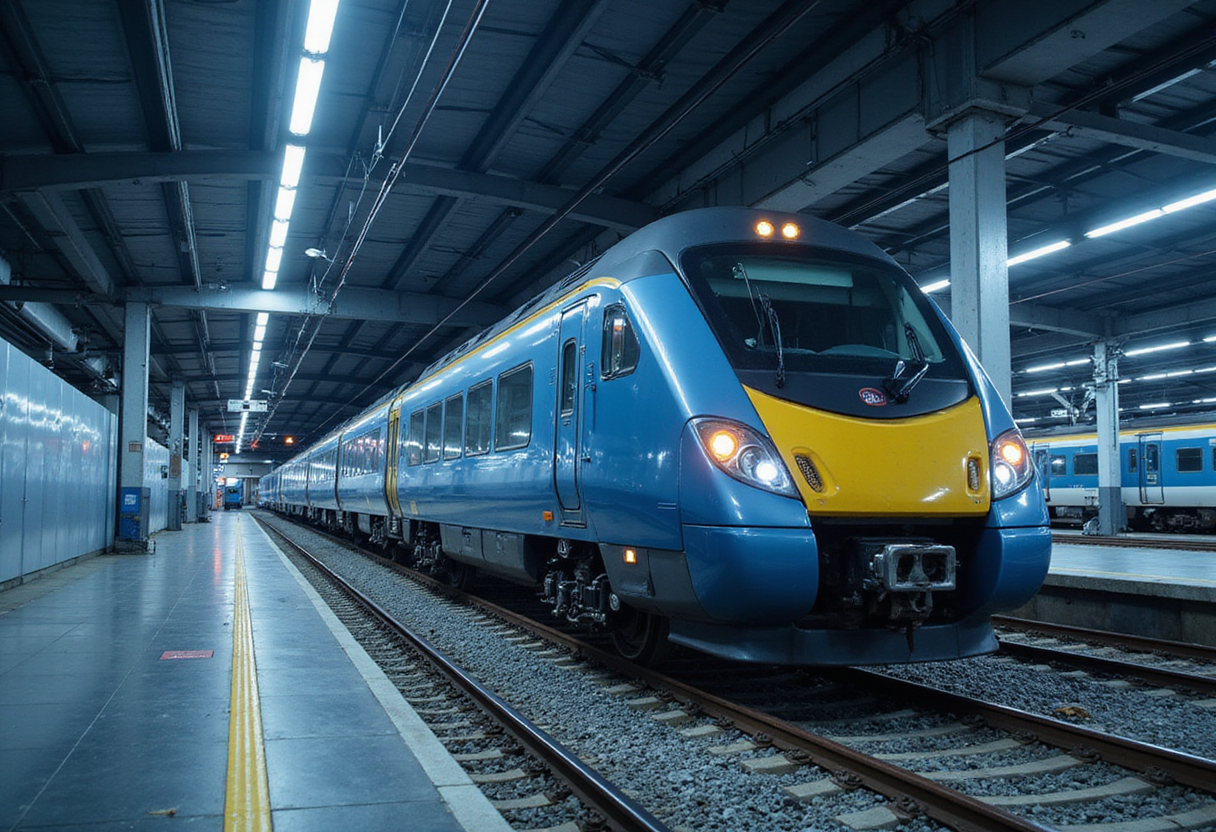
Eutelsat has completed its first rail connectivity trial in Poland, carrying live OneWeb LEO satellite traffic aboard a PKP Intercity long-distance train running at speeds of up to 160 kilometres per hour.
The trial covered routes connecting Kozlow in the south of Poland to the capital Warsaw and on to Tczew in the north. It marks the first time Eutelsat has tested its OneWeb low-earth-orbit connectivity on a live rail network in Poland, gathering performance data and assessing how seamlessly the system switches between satellite and terrestrial links during a journey.
Polish network solutions company ACO Solutions led the project as systems integrator, with Spanish satellite operator HispaSat acting as distribution partner alongside Eutelsat.
The onboard hardware was Kymeta's Kestrel u5 terminal, which Eutelsat describes as engineered for the demanding rail environment. The flat-panel terminal recently received safety and quality certification from TÜV Rheinland, the independent German testing organisation. It is a lightweight, compact and rugged unit aimed at rail and unmanned vehicle applications, with an IP69K ingress protection rating and power consumption averaging under 100 watts — a relevant constraint for mobile platforms where onboard power budgets are limited.
Eutelsat pitches its rail solution as a hybrid: OneWeb LEO satellite connectivity combined with existing rail communications infrastructure to serve passenger Wi-Fi, operational communications and data services. The system interfaces with both onboard and trackside equipment, which the operator says lets rail operators strengthen field communications while staying linked to operations centres across their networks. The design targets both passenger and freight operations.
Eva Bisgaard, President of Eutelsat's Connectivity Business Unit, framed the offering around operational flexibility. "Our solution gives rail operators the flexibility to prioritise different connectivity needs and evolve as passenger expectations and operational requirements change," she said in a statement.
That claim rests on a genuine architectural point: because the satellite layer complements rather than replaces rail's existing communications systems, operators can in principle allocate bandwidth between passenger services and operational data as demand shifts. Whether that translates into commercial deployments on PKP Intercity or other European networks remains unproven — this was a trial, and no contract, coverage commitment or rollout timeline accompanied the announcement.
The Polish test is not Eutelsat's only rail move. Late last year the operator partnered with Airtel Gabon to deliver OneWeb LEO connectivity to passenger trains in Gabon, supporting onboard Wi-Fi services. That deployment, in a market with far thinner terrestrial coverage than Poland, points to the dual commercial logic behind satellite rail connectivity: filling coverage gaps where trackside networks are absent, and adding capacity for passenger Wi-Fi where they exist.
For Eutelsat, rail is part of a broader push to put its OneWeb LEO constellation to work in mobility markets after the merger that combined the GEO operator with the LEO business. Transport segments with high mobility and patchy ground coverage — trains, ships, aircraft — are where LEO's low latency and continuous coverage offer the clearest technical edge over geostationary links, whose signal paths have historically made sustained connectivity on fast-moving vehicles difficult.
The company says it will use the performance data gathered on the Kozlow–Warsaw–Tczew runs to refine the offering as it seeks commercial contracts with rail operators in Europe and beyond.
Also reported
Source: Developing Telecoms