Networks & InfrastructureDirect To DeviceSatellite BroadbandVodafoneAst Spacemobile
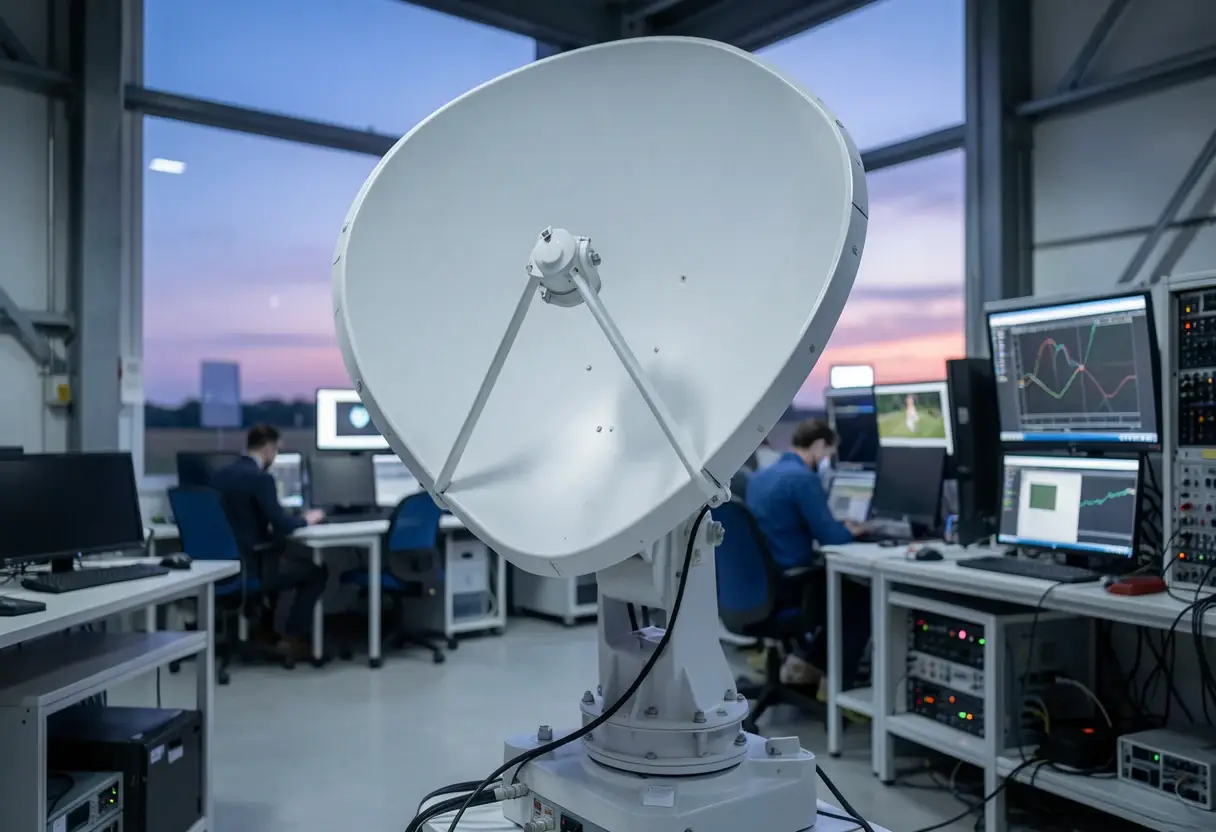
Vodafone and AST open Europe's first Earth-space D2D station in Málaga
Vodafone and AST SpaceMobile open Europe's first Earth-space station in Málaga to validate D2D satellite broadband, as fiber prices spike sixfold and African phone shipments fall 40%.
 Networks & Infrastructure
Why it matters
- Vodafone and AST opened Europe's first 'Earth-space station' at the Málaga Satellite Centre in Spain for D2D research.
- Optical fiber prices rose more than sixfold, from about $4 to almost $30 per kilometer, driven by tethered drone demand.
- African smartphone shipments fell 40% year-over-year in Q3, with Nigeria down 47% and Egypt down 41%, per Omdia.
- 44% of high-status Swiss households hold an AI subscription versus 23% of low-status households, per Swisscom study.
- Openreach says over 2 million Scottish premises, more than two-thirds of properties, can now access gigabit broadband.
The story
Vodafone and AST SpaceMobile have opened what they call Europe's first "Earth-space station," a facility at the Málaga Satellite Centre in Spain dedicated to validating direct-to-device (D2D) smartphone broadband over integrated terrestrial and low-Earth orbit satellite networks. The two companies will use the site, together with partners, to test D2D broadband access and applications in areas with little or no terrestrial coverage.
What will the Málaga facility actually test?
The station will support live field operation of applications that need connectivity beyond the reach of mobile networks. The named use cases are autonomous robots, connected vehicles and safety drones, along with the chipsets and software that power them.
This matters for practitioners because D2D validation has mostly happened in the United States, where AST has its anchor commercial agreements. Europe now has a dedicated research site, and it sits inside a facility that can test the full stack, from silicon to application, under real field conditions rather than lab simulations.
The commercial backdrop is Satellite Europe Connect, the D2D joint venture Vodafone and AST created last year to challenge Elon Musk's Starlink in European markets with "sovereign" satellite services. The venture's pitch is regulatory and political as much as technical: European operators and governments want satellite capacity that is not controlled from outside the bloc.
The marketing language around "first" claims deserves scrutiny, as always. Vodafone and AST describe the facility as Europe's first Earth-space station; the precise definition of that term is theirs. The concrete facts are that the site exists, it forms part of the Málaga Satellite Centre, and its stated purpose is D2D validation and field trials.
War drones push optical fiber prices up sixfold
Tethered military drones used in the war between Russia and Ukraine have driven up the price of optical fiber by more than sixfold, according to a Financial Times report. High-quality fiber has risen from about $4 per kilometer to almost $30 per kilometer, and most of it is sourced from China.
The drones use fiber because tethers make them immune to signal jamming. Demand from the battlefield now reaches into telecom supply chains. A Ukrainian trader involved in the business told the FT that Moscow has the upper hand in sourcing because it buys fiber centrally, whereas Ukraine's procurement is more fragmented.
For network operators, the effect is a cost pressure on a component that had been cheap. A fiber route of 100 kilometers that once cost $400 in raw fiber now approaches $3,000 before any other costs are counted.
African smartphone shipments fall 40%
African smartphone shipments fell 40% year-over-year in the third quarter, according to Omdia. Rising component costs and currency pressures drove the decline.
The steepest drops came in Nigeria and Egypt, where shipments fell 47% and 41% respectively. Omdia expects no quick recovery: it forecasts a further 25% decline in 2027.
The number matters for anyone building device-led services on the continent. A 40% shipment drop in a single quarter translates into millions fewer new smartphones reaching users, which in turn constrains mobile data growth and digital inclusion efforts.
AI subscriptions are the new digital divide, says Swisscom study
Access to digital subscription services, rather than device ownership, now defines the digital divide among young people, particularly for AI. That is the finding of a study by Swisscom and Zurich University of Applied Sciences.
The numbers are stark. Some 44% of Swiss households with high socioeconomic status hold an AI subscription of some sort. Among households with low socioeconomic status, the figure is 23%, roughly half the rate.
"There is a risk of a gap opening up between wealthy and poorer families when it comes to AI literacy. Politicians need to pay close attention to ensuring that equal opportunities are maintained," said Michael In Albon, Swisscom's youth media protection officer.
The finding shifts the inclusion debate from hardware subsidies toward recurring service costs, a harder problem for policymakers because it compounds monthly.
Openreach passes 2 million gigabit premises in Scotland
Openreach, the semi-autonomous network access arm of BT, says more than 2 million businesses and households in Scotland can now access its gigabit broadband network. That equals over two-thirds of all Scottish properties.
Take-up varies sharply by exchange. Lundin Links in Fife leads the UK incumbent's full-fiber league table, with 80% take-up, a figure that shows how far adoption can run once a build matures in a willing market.
Openreach continues to extend the build, and the Scottish milestone indicates the pace operators will need to sustain as they push full-fiber coverage toward national targets.
Also reported
Original: ft.com
More from Daniel Okafor
Show full bio
Senior reporter covering regulation, policy and their impact on Carrier business, 5G and 6G, fiber and broadband at Telecom Gazette.
603 articles