Spectrum & PolicySpacexStarlinkFcc5g
SpaceX Buys Grain's 800 MHz Spectrum to Challenge US Carriers
SpaceX agreed to buy Grain Management's national 800 MHz portfolio — up to 14 MHz paired — to power Starlink Mobile's push into US phone service pending FCC approval.
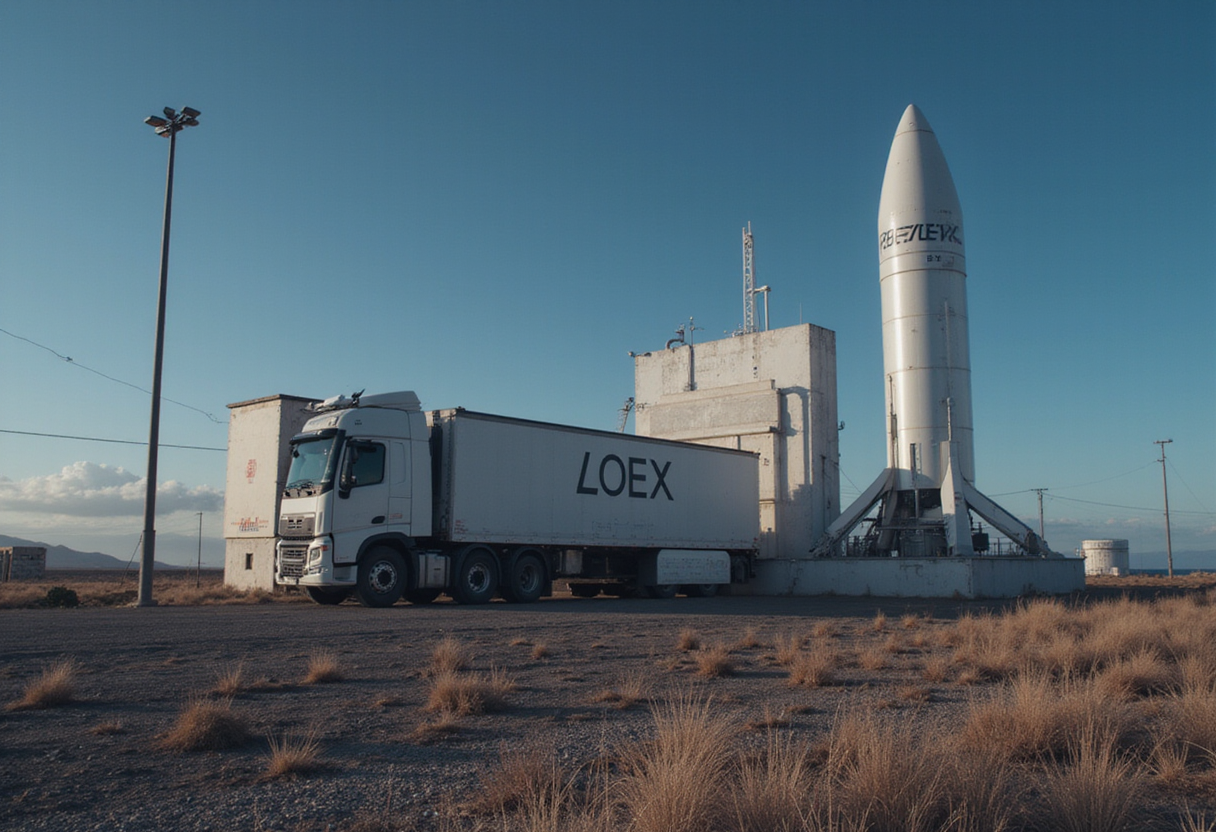 Spectrum & Policy
Why it matters
- SpaceX agreed to buy Grain Management's full national portfolio of up to 14 MHz paired spectrum in the 800 MHz band, pending FCC approval.
- T-Mobile US sold the same 800 MHz portfolio to Grain in August for $2.9 billion plus Grain's 600 MHz licenses.
- The FCC authorized SpaceX earlier this month to launch 15,000 next-generation D2D satellites.
- SpaceX plans to combine satellites with terrestrial femtocells for 5G coverage, an approach many industry executives doubt.
- Musk called the deal "the final piece of the spectrum puzzle" for complete US phone coverage.
The story
SpaceX has signed an agreement to acquire Grain Management's entire national low-band spectrum portfolio — up to 14 MHz of paired spectrum in the 800 MHz band — as it moves to compete head-on with US mobile operators AT&T, Verizon and T-Mobile US.
The transaction requires approval from the Federal Communications Commission (FCC). Neither party has disclosed the financial terms.
The spectrum in question has a traceable price tag from a related deal. T-Mobile US completed the sale of its national 800 MHz portfolio to Grain Management in August for $2.9 billion in cash plus all of Grain's 600 MHz licenses, more than a year after the two sides reached a preliminary agreement.
"This is the final piece of the spectrum puzzle SpaceX needs to provide complete phone coverage in the United States," Elon Musk wrote on X, responding to a post that questioned the company's direct-to-device (D2D) strategy.
What does the spectrum buy SpaceX?
SpaceX argues the deal fills a technical gap in its Starlink Mobile plans. The company already controls 2 GHz mid-band spectrum globally, which it says will deliver high-capacity coverage in the US. Low-band 800 MHz frequencies penetrate walls and other obstacles far better, allowing Starlink Mobile to reach devices indoors.
The company adds that most current handsets already support this underused band, removing a device-compatibility barrier that often slows new spectrum deployments.
SpaceX says the acquisition would let Starlink Mobile operate as a full mobile phone operator in the US. Once approval arrives, it "will deploy a flexible architecture combining our satellite constellation for mobiles in space with an advanced terrestrial deployment that can connect devices seamlessly anywhere," the company stated.
The plan pairs satellites with terrestrial femtocells to deliver 5G coverage — an approach many industry executives consider unrealistic.
Is Starlink Mobile becoming a fourth national operator?
The spectrum purchase is the latest in a series of moves pointing that way. Earlier this month, the FCC authorized SpaceX to launch 15,000 next-generation satellites for direct-to-device communications.
SpaceX is also preparing to launch a home broadband service that would compete with offerings from T-Mobile US, Verizon and AT&T.
For its part, Grain Management had already drawn up plans to work with energy and infrastructure specialist Black & Veatch to supply the radio spectrum to utilities, critical infrastructure operators and rural and regional carriers. That strategy now appears overtaken by the sale to SpaceX.
Whether the femtocell-plus-satellite architecture can deliver carrier-grade 5G service remains the central question for rivals and regulators alike. What is certain is the scale of commitment: 15,000 authorized D2D satellites, a global 2 GHz footprint, and now nationwide US low-band spectrum pending FCC sign-off.
Also reported
Source: Mobile World Live
More from Rebecca Stone
Show full bio
Correspondent covering technology and product news in Carrier business, 5G and 6G, fiber and broadband at Telecom Gazette.
162 articles