Carriers & OperatorsSesSatellite LaunchesIris2C Band Spectrum
SES locks in launch contracts for 53 satellites, all airborne by 2030
SES has firm launch contracts for 53 satellites — seven GEO, 28 MEO and 18 for IRIS2 — all due to fly by 2030, with US C-band clearing on track and up to $5.6bn in proceeds ahead.
 Carriers & Operators
Why it matters
- SES has firm launch contracts for 53 satellites, all launching by 2030: 7 GEO, 28 MEO and 18 for the EU's IRIS2 constellation.
- IRIS2 satellites begin launching in 2029 and enter service in 2030–2031; SES's own satellite assembly facility will be fully operational by 2028.
- US upper C-band clearing of 160 MHz costs about $3.6bn reimbursable and will earn SES up to $5.6bn; seven replacement satellites launch by 2029.
- SES will compete for European S-band spectrum, partnering with Elveo Mobikle, with Al-Saleh expecting a highly competitive process.
- SES's 2026 revenue guidance remains in place.
The story
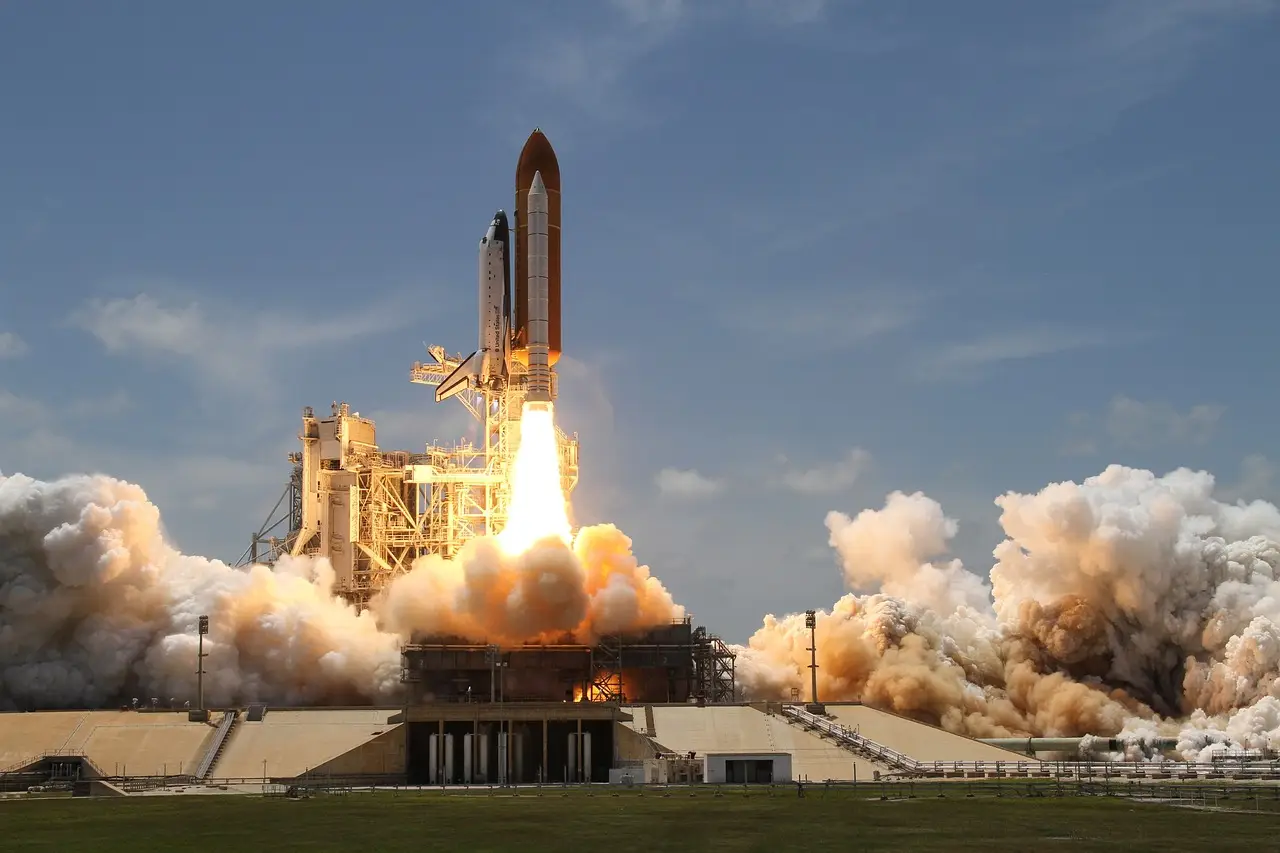
SES has secured firm launch contracts covering 53 satellites — seven geostationary craft, 28 MEO satellites and 18 satellites for the European IRIS2 constellation — with every one of those launches due to take place by 2030, the operator announced on November 6 alongside its Q3 results.
CEO Adel Al-Saleh laid out the commitments on the post-results analyst call. The 28 MEO satellites will fly four at a time — four launches carrying seven satellites each — while the 18 IRIS2 spacecraft, part of the European Union's sovereign connectivity constellation, will begin their launch missions in 2029 and enter service in 2030 and 2031.
The timing matters. Launch capacity is scarce across the industry, and a firm manifest through the end of the decade removes one of the largest execution risks from SES's multi-orbit build-out. What Al-Saleh did not specify was which launch providers hold the contracts, or what the commitments cost — details analysts will press for in coming quarters.
How firm is the ground segment?
SES also confirmed that its own building for satellite construction and assembly is progressing to schedule and will be fully operational by 2028. The Luxembourg-based operator will handle assembly, integration and testing at the new facility itself, rather than relying solely on manufacturers — a shift that in theory gives it tighter control over delivery timelines, though the plant's actual throughput remains unproven until it is running.
What happens to US C-band?
The FCC-mandated clearance of 160 MHz of upper C-band spectrum over the US is on track, Al-Saleh said. The mechanics are significant for SES's balance sheet:
- The FCC will compensate SES, funding seven new replacement satellites — five active plus two back-ups — to be launched by 2029.
- The reimbursable cost of the C-band effort, including purchase and launch of the seven craft, will be approximately $3.6 billion (€3.2 billion) — roughly $514 million per satellite.
- Once clearing is complete, SES will earn up to $5.6 billion.
Al-Saleh addressed the customer-transition question directly, saying: "We have developed a compelling solution that transitions our C-band customers to a new hybrid Ku solution, augmented by terrestrial recovery network that will provide our clients with substantially the same service as they enjoy today. As a result, we expect our US media clients to continue to use satellite services for their content distribution post the Upper C-band clearance."
The deadline to submit the transition plan to the FCC fell on the day of the call, and Al-Saleh said SES was on track to deliver it. He also flagged a financial upside: "We're exploring a path to bring forward a portion of the C-band proceeds. This work is already underway. If we're successful, we intend to accelerate our deleveraging and investor returns." The conditional phrasing is worth noting — acceleration of returns depends on success that is not yet assured.
Is SES bidding for European S-band?
Yes. Al-Saleh confirmed SES will compete for European S-band spectrum, partnering with Elveo Mobikle and potentially other players to gain access. He was candid about the competitive risk: "I suspect that spectrum is going to be highly sought after and quite competitive."
That is a rare public acknowledgement that a strategic ambition may not convert into an award, and it sets expectations for a contested licensing process rather than a formality.
What about guidance?
Al-Saleh stressed that this year's revenue guidance remains in place — the clearest signal that the launch commitments and spectrum manoeuvres have not disrupted the operating business in the near term.
With 53 satellites under firm launch contract, a satellite facility due online in 2028 and up to $5.6 billion in C-band proceeds ahead, SES heads into 2027 with a fully scheduled decade — provided the launch market delivers on its side of the manifest.
Also reported
Source: Advanced Television
More from Rebecca Stone
Show full bio
Correspondent covering technology and product news in Carrier business, 5G and 6G, fiber and broadband at Telecom Gazette.
435 articles