Telecom BusinessOvzonSatellite CommunicationsNatoUS Government
Ovzon posts 9% revenue rise and wins NATO, US orders
Ovzon reported SEK220 million in quarterly revenue, up 9%, plus NATO and US orders, while pitching its T8 terminal and sovereign satellite links to governments.
 Telecom Business
Why it matters
- October 23, 2026: Ovzon reported SEK220 million in quarterly revenue, up 9% year over year.
- By October 2026, Ovzon had won new NATO and US government orders and claimed a first entry into Germany.
- January 2024: Ovzon’s Maxar-built geostationary satellite launched and now operates at 59.7 degrees East.
- The satellite is specified at 100 Mbps uplink, up to 200 Mbps downlink and five steerable Ku-band spot beams.
- 2029 and onwards: Per Norén said Europe’s IRIS2 network will not be available before then.
The story
By Rebecca Stone
Ovzon reported SEK220 million in revenue for the quarter ended September 30, 2026, a 9% year-on-year increase, alongside fresh orders from NATO and the US government. The October 23 results also brought a claimed first entry into Germany and higher order activity, although neither the order values nor details of the German business were disclosed.
Sweden- and US-based Ovzon sells high-speed mobile satellite communications under a Satcom-as-a-service model. Its results carried the headline New Customers, New Countries, More Orders, but Ovzon disclosed no order backlog, subscriber count, terminal shipment total or forecast.
What is Ovzon selling to European governments?
At an October 21 presentation for analysts, Ovzon showed an example of how European governments and satellite system providers could avoid the recent communications problems seen in Ukraine by adopting technology they control. The presentation formed the commercial bridge between the quarter’s named orders and the company’s broader argument for sovereign, resilient connectivity.
CEO Per Norén cited news that Starlink had stopped use of its system for anything moving above 160 km/h, referring specifically to Starshield. The announcement did not identify the regulator, decision date or legal scope, so the restriction cannot be treated as a settled, broader European policy.
Per Norén said: “We are not part of that and we can deliver in any of those cases. We have been supporting Ukraine’s sovereignty.” That remains a company assertion: Ovzon supplied no named deployment, measured performance record or independent evidence for its work in Ukraine.
What does the T8 terminal change?
Ovzon said its latest terrestrial terminal, the T8, was drawing solid interest, but did not name customers or quantify inquiries, orders or unit shipments. The absence leaves T8’s commercial scale unproven even as Ovzon positions it as a controlled alternative for governments seeking sovereign, resilient connectivity.
Europe’s IRIS2 multi-orbit secure connectivity network, now under construction, is the benchmark in Ovzon’s argument.
Per Norén said: “Most countries looking at this are in Europe and first they look at IRIS2. But it’s not available until 2029 and onwards. Countries that don’t have a capability now — and most don’t — are considering us.”
The stated schedules place Ovzon’s satellite launch roughly five years before IRIS2’s earliest availability, creating a potential near-term opening if governments need capacity sooner. Norén did not quantify how many countries fit that description, and Ovzon supplied no procurement timetable, T8 unit price or buyer list.
What does the satellite provide?
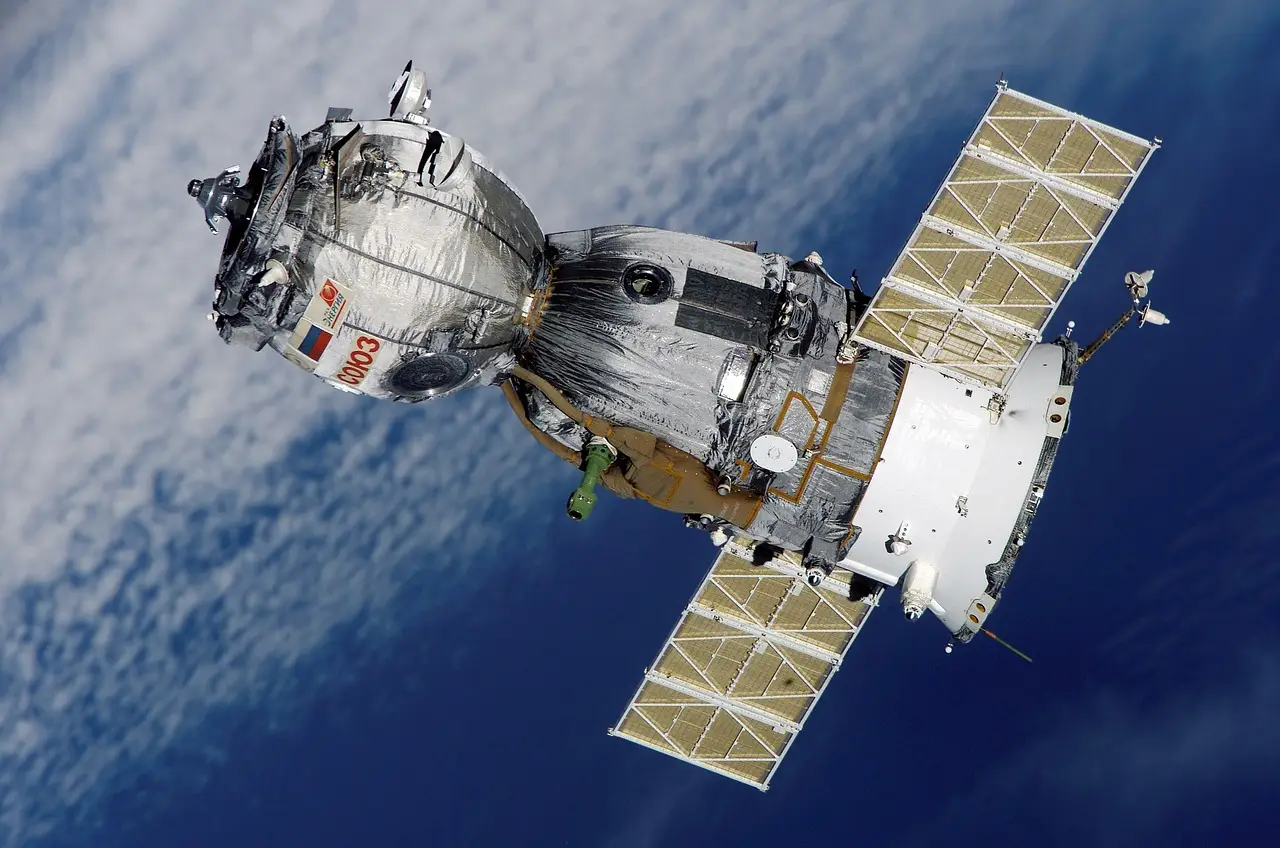
Maxar Technologies built Ovzon’s geostationary satellite, which launched in January 2024 and now operates at 59.7 degrees East. Ovzon says the craft supplies 100 Mbps uplink and up to 200 Mbps downlink.
- Five high-power, steerable Ku-band spot beams.
- An in-house, software-defined On-Board Processor enables direct terminal-to-terminal, single-hop communications.
- Ovzon claims anti-jamming resiliency but publishes no test results, performance thresholds or threat model.
These are provider-supplied system figures rather than measured user results. Ovzon did not publish latency, actual throughput by customer, concurrent-user capacity, coverage maps, service availability or installed-terminal numbers, so the headline speeds cannot establish delivered experience. The distinction between architecture and operations remains important for a service marketed on control and resilience.
What does the commercial evidence show?\n
The strongest quantified result is the 9% revenue increase. New orders from NATO and the US government broaden the customer list, while Germany adds a new named market. Ovzon disclosed no contract values, deployment schedules, revenue recognition dates or subscriber data, and announced no investment plan for T8 or satellite capacity.
Consequently, Ovzon has shown a larger revenue base and entry into more government business, but not the scale or unit economics of a T8 rollout. Those omissions matter for a supplier of resilience-focused connectivity: deployment evidence is needed alongside the autonomy argument.
Over the next reporting periods, the relevant milestones are disclosed order values, T8 shipments, German deployment scale and evidence of customers using the service before IRIS2’s stated 2029-and-onwards availability.
Also reported
Source: Advanced Television
More from Rebecca Stone
Show full bio
Correspondent covering technology and product news in Carrier business, 5G and 6G, fiber and broadband at Telecom Gazette.
411 articles