Networks & InfrastructureMicrosoftData CentersAmsterdamData Center Protests
Over 100 Activists Storm Microsoft Amsterdam Data Center Site
More than 100 Geef Tegengas activists entered the 78MW Amsterdam site Microsoft will solely occupy — the third protest there this year, and one arrest so far.
 Networks & Infrastructure
Why it matters
- More than 100 protesters broke into the 78MW Pure Data Centres site in Amsterdam; activists claim 500 entered.
- Microsoft will be the facility's sole tenant; one person was arrested.
- Third action at the site this year, after June (Geef Tegengas) and July (Extinction Rebellion) incidents.
- The project was approved before the 2019 Amsterdam moratorium and the 2022 national ban.
- The facility sits below the floor-area threshold of the national hyperscale restriction.
The story
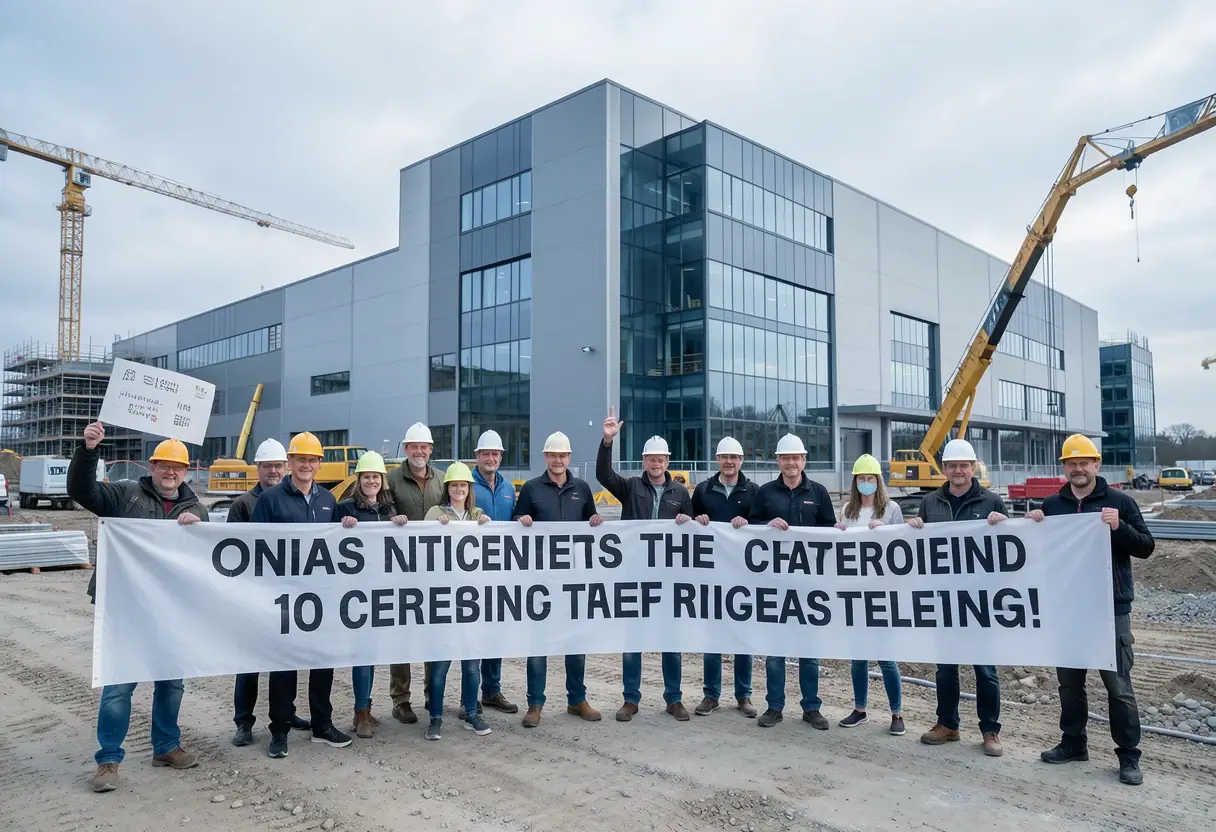
More than 100 protesters broke into the construction site of a 78MW data center in Amsterdam that will serve Microsoft as its sole tenant, in the third protest action at the facility this year.
The break-in on Saturday was carried out by activists linked to Geef Tegengas, a Dutch climate and justice direct action collective. Across the street, hundreds more demonstrated peacefully against the facility and its future occupant as part of a wider anti-data center march planned across Europe this weekend. Amsterdam police said in a statement that one person was arrested following the protests.
The facility belongs to Pure Data Centres, not Microsoft itself — a distinction the protesters largely ignore but one that matters for how the project was approved. Microsoft will be the building's only customer.
How many times has this site been targeted?
Geef Tegengas, which claims 500 individuals entered the site this weekend, broke into the same construction site in June and briefly disrupted work. In July, Extinction Rebellion activists threw acid- and paint-filled balloons over the facility's fence. Pure DC said at the time that the incident had no impact on construction.
The group is not new to confrontational tactics. It has previously blocked railway tracks and focused on ports it says help support Israel.
For the two Microsoft-focused actions, the activists cited the company's work with US Immigration and Customs Enforcement and the Israel Defense Forces, broader AI surveillance concerns, climate change, and water use. Those grievances sit uneasily beside the group's other campaigns, which center on climate and the Israel-Palestine conflict rather than technology policy — a breadth that makes its demands harder for any single operator to answer.
Microsoft drew a firm line between speech and trespass. "We understand that people feel strongly about the project, and we respect their right to express those views peacefully," a Microsoft spokesperson said in a statement. "However, we do not condone any actions that are unlawful or that put people's safety at risk."
Is the project actually legal?
The most serious accusation against the facility — that it circumvents Dutch planning law — does not survive scrutiny. Critics, including local campaigners, have accused the project of dodging a nationwide ban on large hyperscale developments by splitting into three smaller facilities.
The timeline does not support that claim. The project received approval before the national ban took effect in 2022, and before Amsterdam's temporary moratorium on data center construction, imposed in 2019. When Amsterdam renewed its restrictions in 2025, it allowed certain older projects to continue, including this site. The facility also falls below the floor-area threshold set by the national restriction, meaning it would not have been caught by the size cap in any case.
So the site occupies a regulatory gray zone in public perception only: legally grandfathered, politically contested. The protesters' argument rests less on the letter of Dutch planning law than on whether tech infrastructure should expand at all given its energy and water footprint.
What happens next?
One arrest and a spokesperson's statement aside, neither Microsoft nor Pure Data Centres has signaled any change to the build. Construction continues at a facility that has now drawn three direct actions in roughly five months, and with a Europe-wide anti-data center march running through the weekend, similar pressure on hyperscale construction sites appears likely to recur.
Also reported
Source: datacenterdynamics.com
More from Rebecca Stone
Show full bio
Correspondent covering technology and product news in Carrier business, 5G and 6G, fiber and broadband at Telecom Gazette.
459 articles