Vendors & EquipmentNokiaStarlinkAI Ran5g Ran
Nokia Courts Starlink: Why a Musk AI-RAN Deal Matters Now
Starlink has talked to Crown Castle about up to 80,000 tower sites, and Nokia's Nvidia-based AI-RAN strategy makes it the natural vendor candidate for a Musk terrestrial network.
 Vendors & Equipment
Why it matters
- Starlink has discussed access to up to 80,000 tower sites with companies including Crown Castle
- Nvidia invested $1 billion in Nokia about a year ago to underpin GPU-based 5G and 6G RAN
- Starlink holds roughly 80MHz of spectrum in total versus almost 400MHz at T-Mobile
- FCC plans to auction 3.98-4.2GHz upper C-Band spectrum as soon as next year
- T-Mobile expects no major network spending increase before 6G arrives in 2030
The story
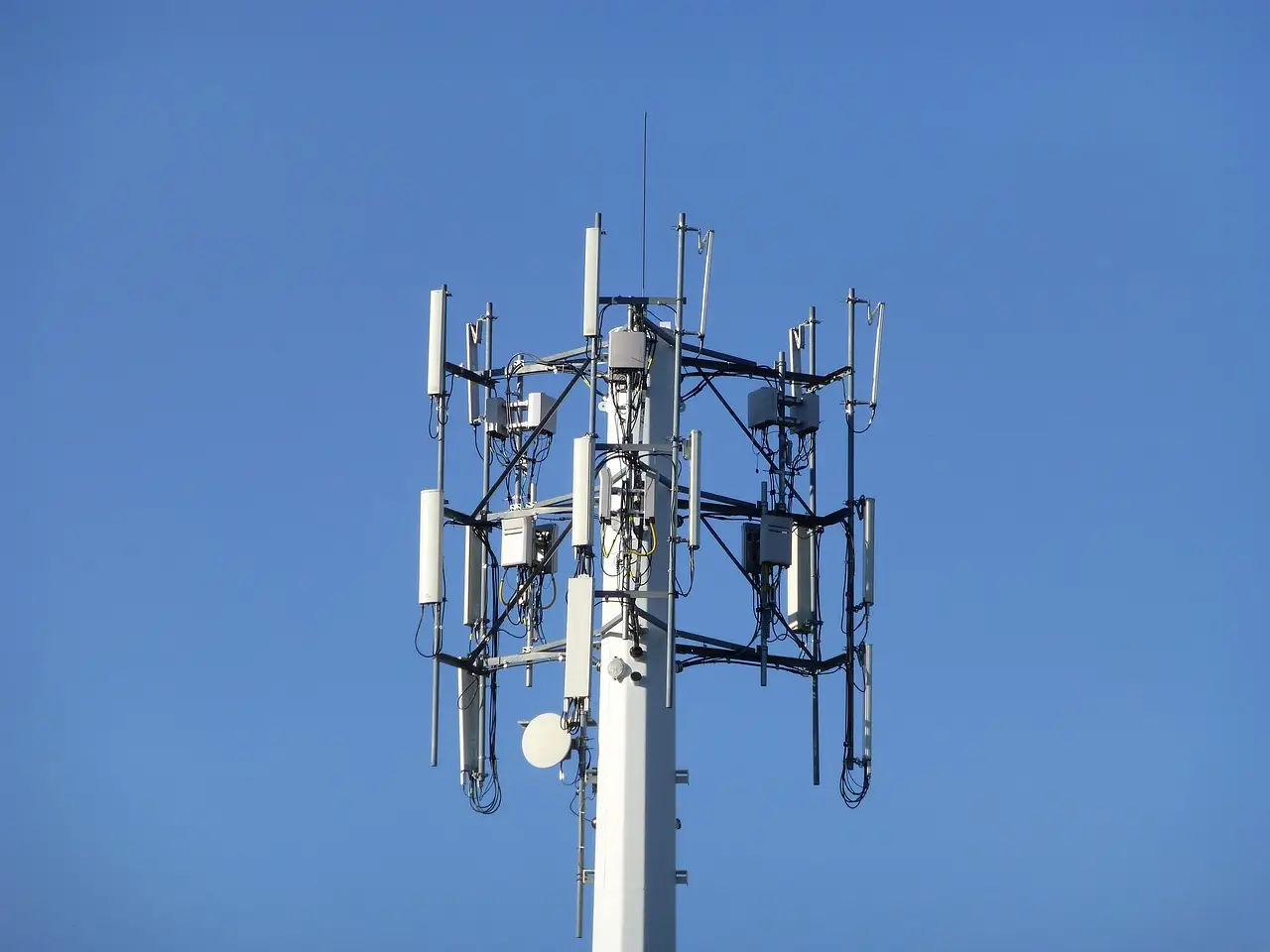
Starlink has approached tower companies including Crown Castle about access to as many as 80,000 US sites, a number roughly equal to the macro footprint of one of the big three American mobile operators, and Nokia has emerged as the most plausible vendor should Elon Musk build a terrestrial network.
The satellite operator, owned by SpaceX, has shifted its language in recent weeks. A filing with the Federal Communications Commission referred to "towers" and "other structures," a departure from earlier schemes built around satellites and customer-rooftop small cells. Musk's main constraint is no longer steel but spectrum and electronics.
What does this change for the vendor market? A greenfield builder must spend billions on radio access network equipment, far more than any brownfield operator, and the pool of credible suppliers is thin. Nokia ranks as the world's second-biggest 5G RAN maker outside China, behind Sweden's Ericsson, yet its RAN sales have fallen and flattened since the early 2020s and it has lost US share to Ericsson and South Korea's Samsung. A Starlink contract would reverse that trajectory.
Why Nokia fits the Musk profile
Under CEO Justin Hotard, who joined from Intel in April 2024, Nokia has replaced several top European telecom executives with outsiders. CTO Pallavi Mahajan and mobile business CTO Udayan Mukherjee both came from Intel. The pivotal move is the Nvidia tie-up.
Nvidia invested $1 billion in Nokia about a year ago. In return, Nokia committed to developing 5G and future 6G products on Nvidia GPUs rather than custom silicon. The rationale is twofold: GPUs could support more adaptive, spectrally efficient AI-driven RAN computation, and spare GPU capacity could be sold for AI inference close to end users, minimizing latency. Critics question whether GPUs are necessary or economical, but numerous telcos have joined trials.
The vision aligns with SpaceX messaging. "We expect the market for communications to grow far beyond just human communication that we traditionally think about," SpaceX president Gwynne Shotwell said on a recent earnings call. "Connecting cars, robots, and the adoption of super intelligence will increase communication demands, not in percentages, but in many orders of magnitude."
Musk is thought to have a good relationship with Nvidia CEO Jensen Huang, which strengthens Nokia's hand against rival vendors.
The spectrum gap
Starlink's holdings remain thin for a nationwide service:
- 14MHz of 800MHz spectrum acquired earlier this month, suited to wide-area and in-building coverage
- 2GHz spectrum acquired from Echostar last year, better for speed, worse for coverage
- About 80MHz in total, by the estimate of T-Mobile CTO John Saw, against almost 400MHz held by T-Mobile
The FCC reportedly plans to auction upper C-Band spectrum between 3.98GHz and 4.2GHz as soon as next year, airwaves suited to dense urban 6G services. FCC chair Brendan Carr is another Musk ally. A mix of satellites, small cells, macro sites and possibly wholesale deals would likely carry a nationwide launch.
The commercial risk for Nokia
Nokia's current products run on custom Marvell silicon with CEVA intellectual property. The final custom design, codenamed ABIP, is already in market; the GPU successor, ABIG, will be Nokia's last chance to prove the strategy. Nokia has promised ABIG at the same price as non-GPU products despite AI-driven component inflation.
"A few hundred million dollars of revenue from Nokia's use of Nvidia's GPUs for baseband is not even a rounding error for Nvidia," independent analyst Alok Tripathi, a former Huawei technology expert, wrote on LinkedIn. "I therefore believe Nvidia is willing to subsidize Nokia (as long as it stays away from Marvell-CEVA) so that GPU cost never becomes a factor."
Power consumption is the harder problem. "[A] subsidy cannot fix operating costs," Tripathi said. "A GPU baseband directly affects operators' opex, starting with power, and it must also meet each site's space and cooling limits." ABIG must fit the same Airscale chassis and power envelope as the Marvell products it replaces.
T-Mobile, Nokia's only remaining US mobile customer and its most important client, has been the most vocal GPU-RAN advocate and has completed a first AI-RAN call with Nokia and Nvidia. But T-Mobile does not foresee a major increase in network spending before 6G arrives in 2030, so any GPU rollout next year would be targeted rather than widespread.
A Starlink deal would be different in scale. If Hotard and Huang persuade Musk to invest in a GPU RAN and its advantages over incumbent 5G networks prove out, other operators would face pressure to follow, and Nokia's shareholder impatience with trials would ease.
Also reported
Original: linkedin.com
More from James Calloway
Show full bio
Staff writer covering companies, deals and strategy in Carrier business, 5G and 6G, fiber and broadband at Telecom Gazette.
396 articles