Carriers & OperatorsGsmaIndiaCybersecurityDigital Inclusion
Modi tells GSMA Board: fight cyber fraud, close digital divide
Modi pressed GSMA Board members in New Delhi on October 7 for cheaper digital services, tech-based defences against fraud calls and global rules to expose AI-generated content.
 Carriers & Operators
Why it matters
- Modi met the GSMA Board in New Delhi on October 7, ahead of India Mobile Congress 2026.
- Ministers Jyotiraditya Scindia and Chandra Sekhar Pemmasani attended the meeting.
- Modi called for common global standards and rules for emerging technologies, including AI content provenance.
- GSMA Board members cited cooperation opportunities in 5G, 6G, AI, cybersecurity, digital inclusion and satellite connectivity.
- The meeting preceded the tenth India Mobile Congress.
The story
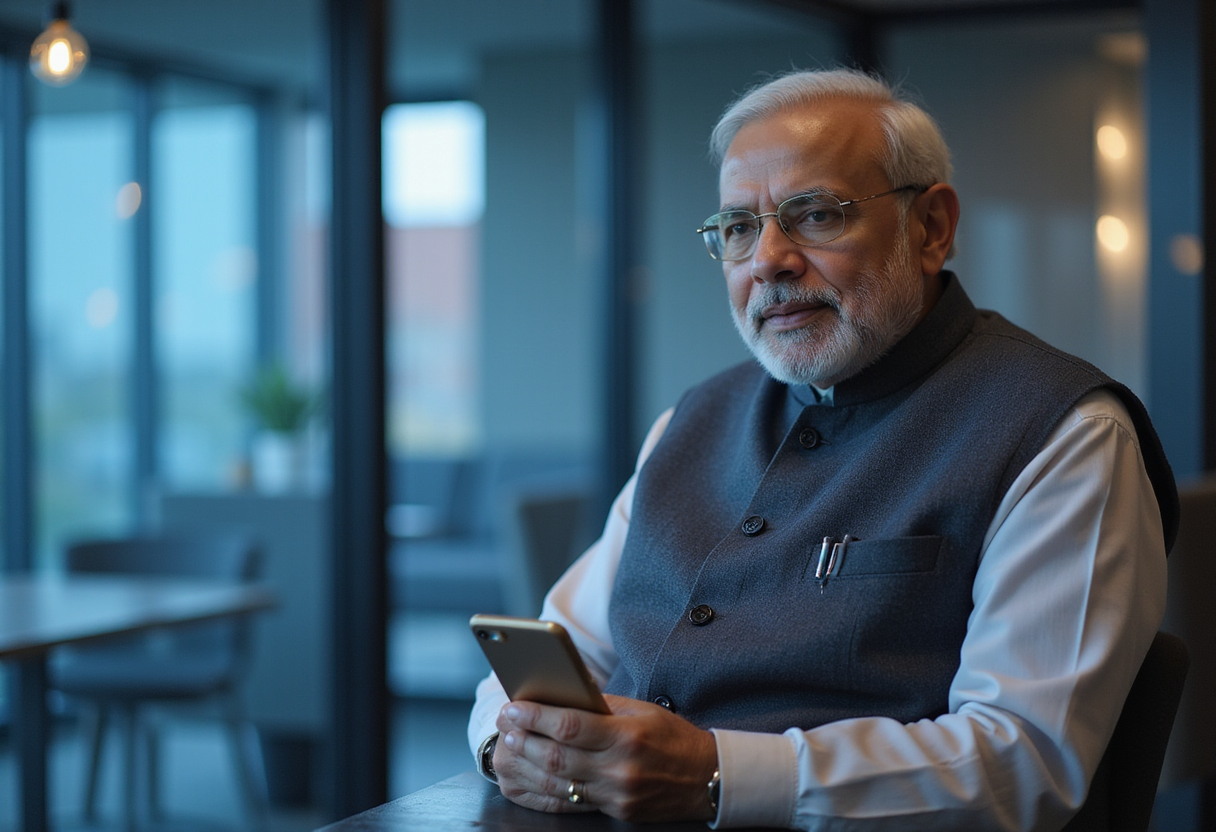
Indian Prime Minister Narendra Modi has urged GSMA Board members to cut the cost of digital services and build technology-based defences against cyber fraud, in a meeting in New Delhi on October 7 ahead of the India Mobile Congress 2026.
Communications Minister Jyotiraditya Scindia and Minister of State for Communications Chandra Sekhar Pemmasani also attended. The meeting brought the leadership of the global mobile industry body face to face with India's most senior policymaker days before the tenth edition of the country's flagship telecom event.
Modi set out three demands. First, affordability: technology, he said, should support inclusive and sustainable development, with particular attention to affordability and access in developing countries. Second, security: he called for technology-based solutions against cyber fraud, paired with sustained public awareness campaigns to warn users about fraudulent calls. Third, provenance: he flagged the risks of deepfakes and AI-generated content and suggested exploring mechanisms that let users identify the origin of digital material.
He also pressed for common global standards and rules for emerging technologies — a position that aligns with India's broader effort to shape international debate rather than follow it.
What does this change for operators?
For GSMA members, the message lands on commercial ground they already know. Modi highlighted the role of digital public infrastructure (DPI) in helping countries across the Global South expand access to digital services, a model India has exported as a low-cost template for identity and payments rails.
The board's response was conciliatory and commercial. GSMA Board members welcomed India's expansion of 4G and 5G connectivity, its digital public infrastructure and its telecoms manufacturing base. They also pointed to opportunities for international cooperation in 5G, 6G, artificial intelligence, cybersecurity, digital inclusion and satellite connectivity.
The list reads like a vendor and operator pipeline: India is both a growth market and, increasingly, a manufacturing and standards participant rather than a passive buyer.
The standards context
Modi's call for common global rules on emerging technologies matters because standards bodies are now drafting the ground rules for AI content provenance and 6G. Countries that weigh in early gain influence over how those specifications are written. India has increasingly sought to position itself as a contributor to international discussions on next-generation connectivity, digital infrastructure and technology standards, and the October 7 meeting extended that campaign to the industry's governing board.
The immediate venue is the tenth India Mobile Congress, which brings together telecoms operators, technology companies and policymakers. Expect fraud prevention, deepfake detection and 6G cooperation to surface again on its agenda, with operators under pressure to show concrete measures rather than pledges.
Also reported
Source: Developing Telecoms
More from James Calloway
Show full bio
Staff writer covering companies, deals and strategy in Carrier business, 5G and 6G, fiber and broadband at Telecom Gazette.
237 articles