5G & 6GLmt Defence5g DronesPrivate 5g NetworksIntegrated Sensing And Communication
Latvia's LMT Defence pitches 5G drones as Europe's Starlink hedge
Russia has jammed even Starlink in Ukraine, says LMT Defence, whose 5G drone module and Open5GS core point to a mobile-network answer to Europe's sovereignty problem.
 5G & 6G
Why it matters
- LMT Defence grew from 8 staff in mid-2024 to 80-90 today, including about 40 engineers.
- Its mature 4G/5G drone module prototype takes any country's SIM; 5G drones already serve Norway's armed forces.
- NATO's Hague Commitment targets 5% of GDP defense spending by 2035, up from about 2%.
- LMT Defence has tested private 5G built on Open5GS with Latvian and Ukrainian armed forces.
- LMT Defence was founded in 2018, before 5G commercial launch.
The story
Russia can jam every type of signal in Ukraine, including, on occasion, Elon Musk's Starlink. "Russia has the ability to interfere with and jam every type of signal," said Salvis Skladovs, director of Latvia's LMT Defence, at last month's Techritory event in Riga. "There have also been cases where Russia has successfully jammed the Starlink signal."
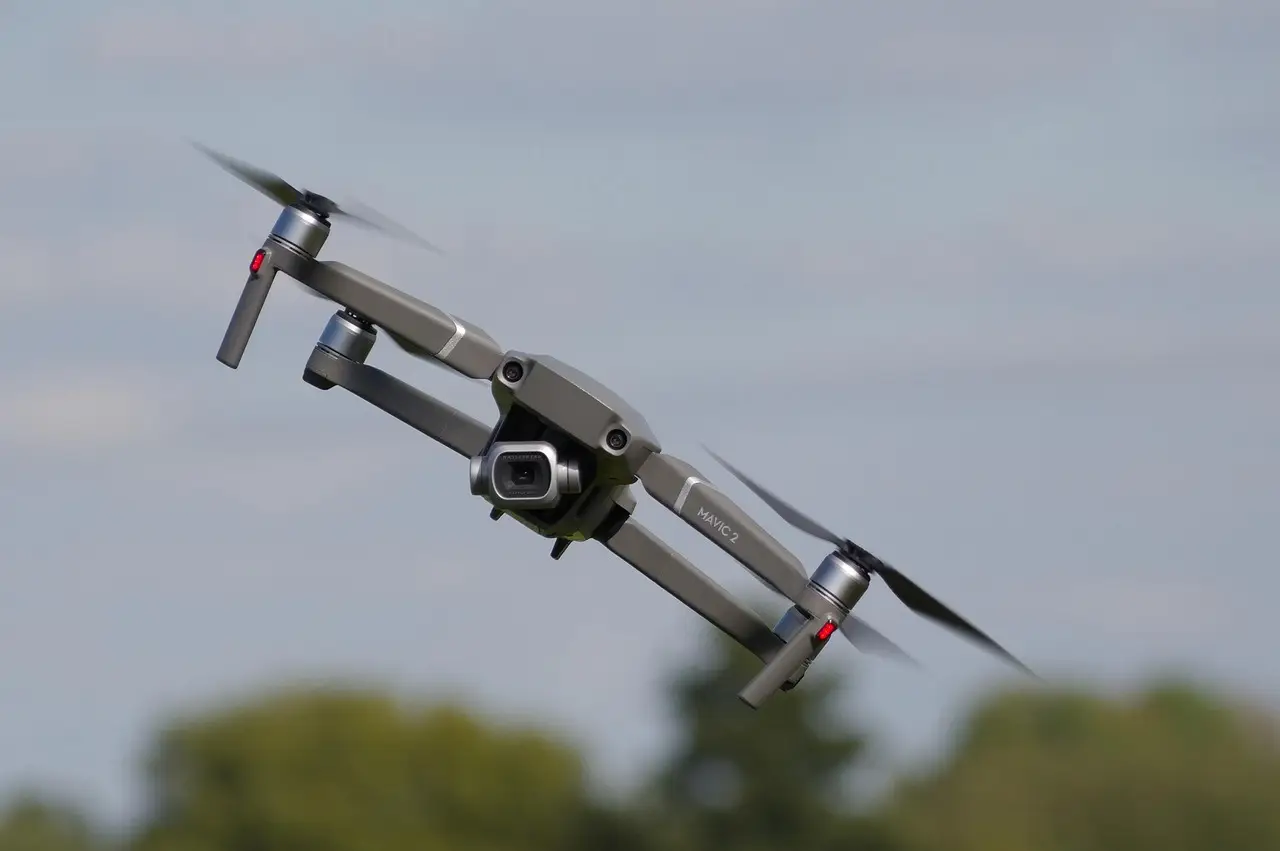
His unit's answer is not satellites but the same 4G and 5G networks that connect billions of smartphones. LMT Defence, a subsidiary of Latvian mobile operator Latvijas Mobilais Telefons, has built what Skladovs calls a "mature" prototype of a 4G/5G module for military drones. It works in public or private networks and takes any country's SIM card. "From Riga, you can operate the drone through the network far away," he said.
Why hide drones in a mobile network?
The logic is blunt. Russian forces avoid destroying mobile infrastructure because they need it themselves, according to Skladovs. Better still, a connected drone can vanish into the crowd. "You can hide from the jamming in the noise of devices in the network, so that it becomes one of the many things in the network," he said.
That model appears to underpin Operation Spiderweb, the June 2025 drone attack by Ukraine's security service on several air bases deep inside Russia. LMT's own 5G drones have already gone to the Norwegian armed forces, which run them in a tactical mobile network reserved for defense.
The business case gets a helpful nudge from Nokia's former mobile networks chief. "If they complement those systems with dual-use 4G and 5G technologies, they get ten times the performance for one tenth of the cost," Tommi Uitto said at MWC in early 2025, noting that NATO's bespoke radio systems currently deliver data capability on a par with 3G. "Defense is such a no brainer," he observed.
How big has LMT Defence become?
LMT spotted the opportunity before 5G had even launched and set up the defense unit in 2018. When Skladovs joined in mid-2024, it employed eight people. Today it has between 80 and 90 staff, including around 40 engineers.
That headcount is unusual for a European telco. LMT, one of Latvia's three mobile operators, also runs an IoT hardware and software design subsidiary, a more serious stab at diversification than most of its peers manage. And drones were never the only focus. In Latvia, LMT Defence acts as an integrator, helping the military run command-and-control systems on a 5G platform — a role that Nikita Kazakevics, head of the innovation department division at LMT Group, calls a "cornerstone" of the business.
For roughly two years the company has also developed its own 5G core based on Open5GS, the open-source codebase. It has run private 5G tests with the armed forces of both Latvia and Ukraine. Unlike Nokia's khaki 5G backpacks shown at MWC, LMT's kit would sit in stationary command centers connected to wide-area networks.
What is ISAC, and why does Skladovs like it?
Next on the roadmap is integrated sensing and communication, an emerging 6G technology that turns mobile networks into radars capable of pinpointing drones and mapping their dimensions. Skladovs calls it a priority. "Being able to leverage existing mobile infrastructure for air defense or critical infrastructure defense – this is really the direction in which we are going," he said.
Skeptics exist. Some critics question whether ISAC is needed given LiDAR and other sensors, and point to rollout and commercial challenges for operators. Skladovs is unmoved. "Deploying additional layers of sensors is expensive," he said, and current sensing technologies have not proven themselves for drone detection. "Adding another layer with ISAC is a game changer."
Will the money actually arrive?
The limiting factor may be NATO's pace. After pressure from Trump, European members pledged at the Hague Commitment to raise defense spending to 5% of GDP by 2035, up from recent levels of about 2%. Roughly 1.5% is earmarked for infrastructure, R&D, cyber capabilities and mobility corridors, according to the Review of Economic Policy — though many commentators doubt Europe's ailing economies can sustain it.
Appetite varies by country, Skladovs noted. "It's high on the agenda in the US, it's high on the agenda at the eastern flank of NATO. It's high on the agenda in Spain. But for some it's at a different level of interest," he said. With Starlink's restricted service still prompting complaints in Ukraine, LMT and its peers are betting that commitment — where it exists — lands before the next outage does.
Also reported
Original: bbc.co.uk
More from Amara Osei
Show full bio
News editor covering technology and product news in Carrier business, 5G and 6G, fiber and broadband at Telecom Gazette.
529 articles