Carriers & OperatorsJio5gIndiaBharti Airtel
Jio claims one telecom tower per minute during 5G rollout
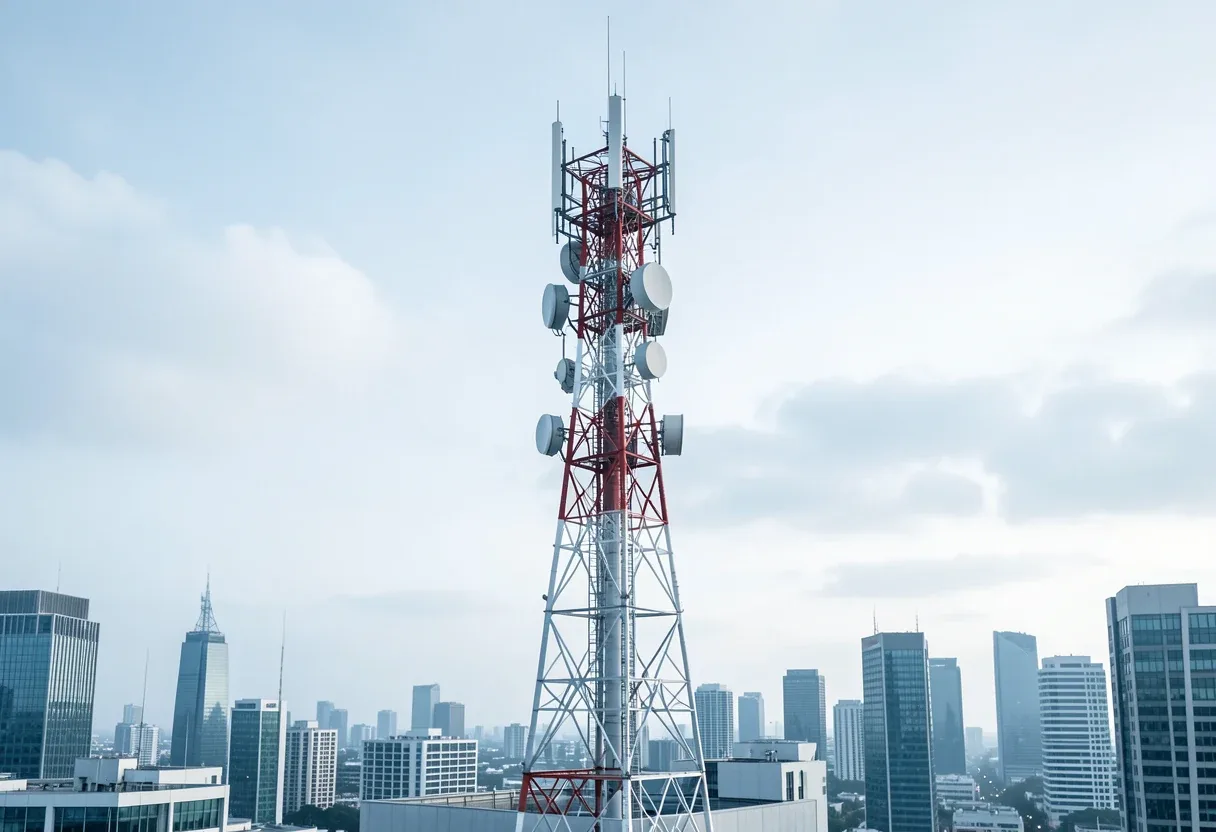
Reliance Jio chairman Akash Ambani says the operator built a telecom tower every minute during its 5G rollout, framing the pace as the fastest in Indian telecom history.
 Carriers & Operators
Why it matters
- Jio launched 5G services in October 2022 and has not disclosed a total 5G site count
- Ambani's 'one tower per minute' claim works out to roughly 1,440 new sites a day, or just over half a million across a 12-month stretch
- Independent estimates put Jio's 5G site count in the 400,000-500,000 range
- Jio ended its most recent reported quarter with close to 490 million wireless subscribers
- Jio runs a standalone 5G architecture; Airtel initially launched on non-standalone before shifting
The story
Jio built a telecom tower every minute during its 5G rollout, Reliance Jio chairman Akash Ambani said, framing the buildout tempo as the fastest in Indian telecom history.
The figure, reported by CNBC TV18, translates to roughly 1,440 new sites a day, or just over half a million towers across a 12-month stretch of continuous construction. Jio has not disclosed a total 5G site count, but the claimed tempo is consistent with the public timeline: the operator launched 5G services in October 2022 and has since pushed coverage across the bulk of India's urban geography.
"Built a telecom tower every minute during 5G rollout," Ambani said, in remarks that function as both construction report and competitive barb aimed at rivals Bharti Airtel and Vodafone Idea.
How does the claim stack up?
The pace matters because Jio's network runs on a standalone 5G architecture, which requires denser cell-site deployment than the non-standalone route Bharti Airtel initially adopted at launch. Airtel has since shifted to standalone, but Jio's head start on the more capital-intensive model is the principal source of its coverage lead.
Whether the tower-per-minute figure survives scrutiny depends on the period Ambani has in mind. A 12-month sprint of round-the-clock construction would clear half a million sites; a two-year buildout at the same average pace would double that. Independent estimates place Jio's 5G site count in the 400,000-500,000 range, which suggests the chairman is quoting a peak-phase figure rather than a steady-state average.
What is the wider context?
The wider buildout is harder to dispute. India added more 5G base stations in 2023 than Europe and the United States combined, by industry reckoning, with Jio carrying the heaviest load. The operator ended its most recently reported quarter with close to 490 million wireless subscribers, a base that gives the buildout direct commercial grounding that few other greenfield 5G projects can match.
Rivals have not stood still. Bharti Airtel has converted most of its mid-band 4G sites to 5G and now claims coverage across most of urban India. Vodafone Idea launched limited 5G services in 2024, completing the trio of private operators on the new generation. The market now offers 5G tariffs in every circle, even if actual 5G traffic remains a small share of the total data load on Indian networks.
The commercial backdrop is what investors will watch. Jio's 5G tariffs carry a small premium over 4G but still undercut the data-only mobile broadband plans common in Europe, and the operator has been pushing 5G fixed wireless access through its Jio AirFiber brand as a substitute for fibre in smaller cities and towns.
What comes next?
The next stress test for the buildout tempo is 5G Advanced, the 3GPP Release 18 feature set that operators worldwide are starting to deploy. Jio has been running trials with its equipment vendors, and the Department of Telecommunications is expected to put additional mid-band spectrum on the block in the next auction cycle.
Ambani's tower-per-minute claim is, in the end, a useful sound bite for a sector that loves round numbers. The harder question — whether India's 5G buildout is now shifting from coverage race to monetisation race — is the one the operator has not yet answered in public, and the one investors will start asking once the 5G Advanced capex bill lands.
By Amara Osei
Also reported
Source: Google News: 5G network
More from Amara Osei
Show full bio
News editor covering technology and product news in Carrier business, 5G and 6G, fiber and broadband at Telecom Gazette.
340 articles