Emerging MarketsGsmaPdaaDigital DivideMobile Internet
GSMA and PDAA target 1 billion connected Africans by 2030
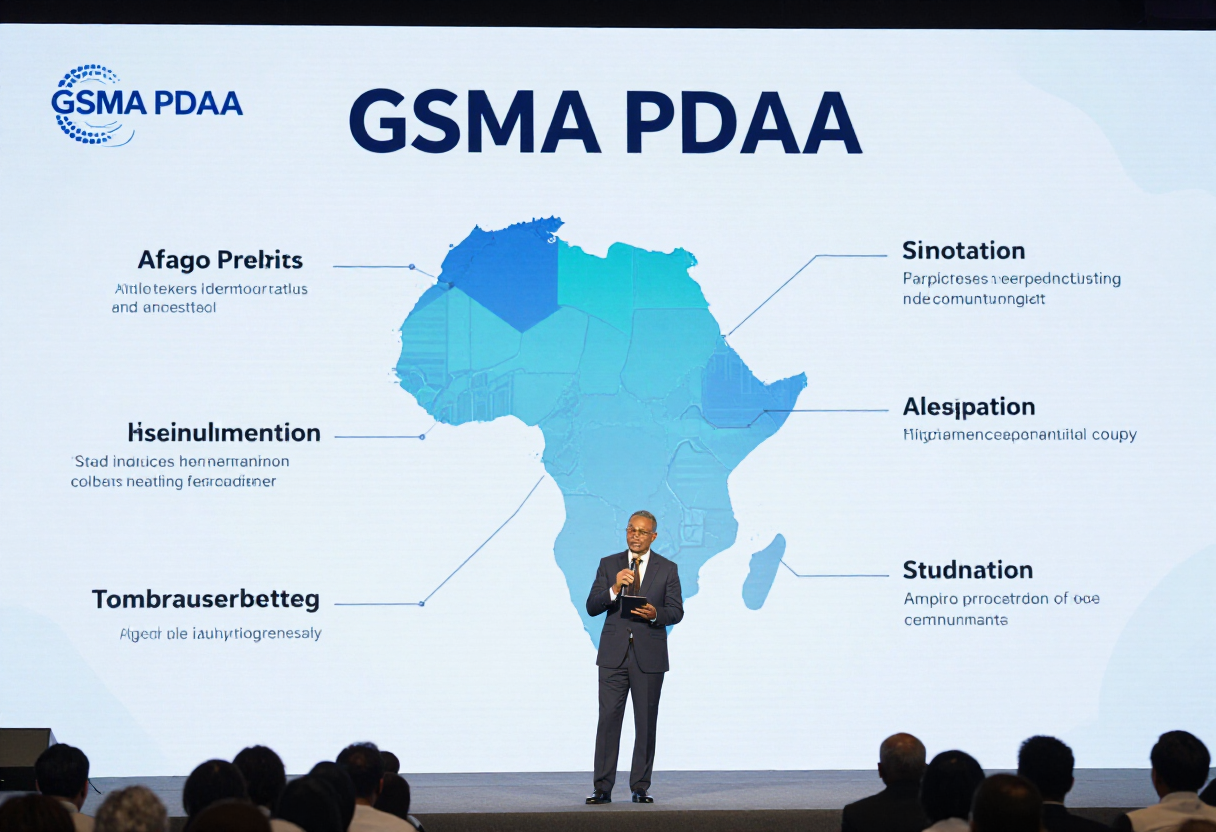
GSMA and PDAA have launched a roadmap to connect 1 billion Africans by 2030, targeting a usage gap of 906 million people who have coverage but don't use mobile internet.
 Emerging Markets
Why it matters
- 906 million Africans (~60% of the population) live within mobile broadband coverage but do not use mobile internet; 122 million have no coverage at all.
- The GSMA/PDAA roadmap sets three priorities: migrating users from 2G/3G to 4G/5G smartphones, integrating energy and connectivity investment, and cutting rural connection costs.
- Halving the usage gap across 11 analysed African markets would bring 245 million additional people online, according to GSMA Intelligence.
The story
Around 906 million Africans — almost 60% of the continent's population — live within mobile broadband coverage but do not use mobile internet. That single figure frames the challenge the GSMA and the Partnership for Digital Access in Africa (PDAA) took aim at on Monday, when they launched a roadmap designed to connect 1 billion people across the continent by 2030.
The document, Advancing Digital Connectivity in Africa: Charting Africa's Path to 1 Billion Connected People by 2030, was developed for the PDAA by GSMA Intelligence. It sets out three priorities. The first is accelerating the migration of mobile users from 2G and 3G handsets to 4G and 5G smartphones — a shift operators across the continent have pursued unevenly, with several markets still carrying large legacy-device bases.
The second priority calls for integrating investments in energy and connectivity, reflecting the reality that unreliable electricity remains a binding constraint on both network economics and handset charging in much of rural Africa. The third focuses on cutting the cost of connecting rural and underserved communities, whether through shared infrastructure, technology innovations, outcome-based public funding, or anchor demand from schools, healthcare facilities and other public institutions.
The roadmap states that progress on any of these fronts needs reinforcement from "access to affordable, quality smartphones; practical digital skills; safe and trusted services; locally relevant content; digital public infrastructure; and policies that promote investment and inclusion."
Sequencing will differ by market. Some countries need to concentrate on expanding rural coverage and reliable electricity access, the roadmap notes, while others must prioritise smartphone affordability, digital skills, or building digital services compelling enough to give people a reason to connect in the first place.
"A network can reach a community, but meaningful participation depends on the conditions around it: reliable energy, affordable devices, digital skills and services people have a reason to use," said PDAA CEO Ibrahima Guimba-Saïdou. "This roadmap gives us a practical framework for bringing those conditions together and turning access into opportunity at scale."
The size of the gap
The roadmap builds on the GSMA's State of Mobile Internet Connectivity Report 2026, published earlier this month. That report counted 3.1 billion people globally who live within mobile broadband coverage but do not use mobile internet. Africa accounts for roughly 906 million of them. A further 122 million Africans — 8% of the population — live in areas with no mobile broadband coverage at all, meaning outright network expansion, not just adoption, remains part of the agenda.
GSMA Intelligence grounded its analysis in 11 African markets: the Democratic Republic of the Congo, Egypt, Ethiopia, Ghana, Kenya, Niger, Nigeria, Rwanda, Senegal, South Africa and Uganda. Halving the mobile internet usage gap across just those 11 markets would bring 245 million additional people online, the GSMA calculated — a figure that indicates where the PDAA's 2030 target is most achievable.
"Africa has already built much of the network foundation for its digital future. The urgent task now is to close the usage gap by making smartphones and services affordable, equipping people with practical skills, building trust and ensuring connectivity delivers visible value in people's daily lives," said John Giusti, GSMA chief regulatory officer and president of GSMA Foundation.
His framing is notable for what it concedes: the coverage buildout, the part of the equation operators control most directly, is largely done. The remaining work — device affordability, skills, trust, content — sits in the domain of policy, financing and cross-sector coordination rather than network capex alone.
Public-private structure
The PDAA brings together governments, philanthropy, the private sector and civil society to advance digital access across the continent. Ellen Johnson Sirleaf, PDAA co-chair, former president of Liberia and Nobel Peace Prize laureate, called the 1 billion target ambitious but achievable.
"If we bring together connectivity, electrification, affordable devices and digital skills — and if we match Africa's many promising programmes with the power of genuine public-private partnership — we can ensure that the continent's digital transformation leaves no community behind," she said in a statement.
The roadmap is a framework rather than a funded programme, and its success will hinge on whether the named levers — outcome-based public funding, shared infrastructure, anchor demand from public institutions — translate into national policy and commercial commitments. With a 2030 deadline and nearly a billion people to connect, the next test is which of the 11 analysed markets moves first on halving their usage gap.
Also reported
Source: Developing Telecoms
More from Elena Vasquez
Show full bio
Market editor covering consumer brands and retail at Telecom Gazette.
94 articles