Emerging MarketsEast AfricaEacDigital IntegrationEardip
Five East African States Meet in Nairobi on Digital Integration
Djibouti, Ethiopia, Kenya, Somalia and South Sudan meet in Nairobi under EARDIP to align World Bank-funded digital projects and push cross-border connectivity.
 Emerging Markets
Why it matters
- The three-day Regional Coordination Workshop on Accelerating Regional Digital Integration runs in Nairobi from 22 to 24 September 2026.
- Djibouti, Ethiopia, Somalia and South Sudan implement World Bank-funded projects under EARDIP; Kenya participates via the Kenya Digital Economy Acceleration Project (KDEAP).
- Earlier in 2026, the EAC began regional engagements on a harmonised Regional Mobile Roaming Framework.
The story
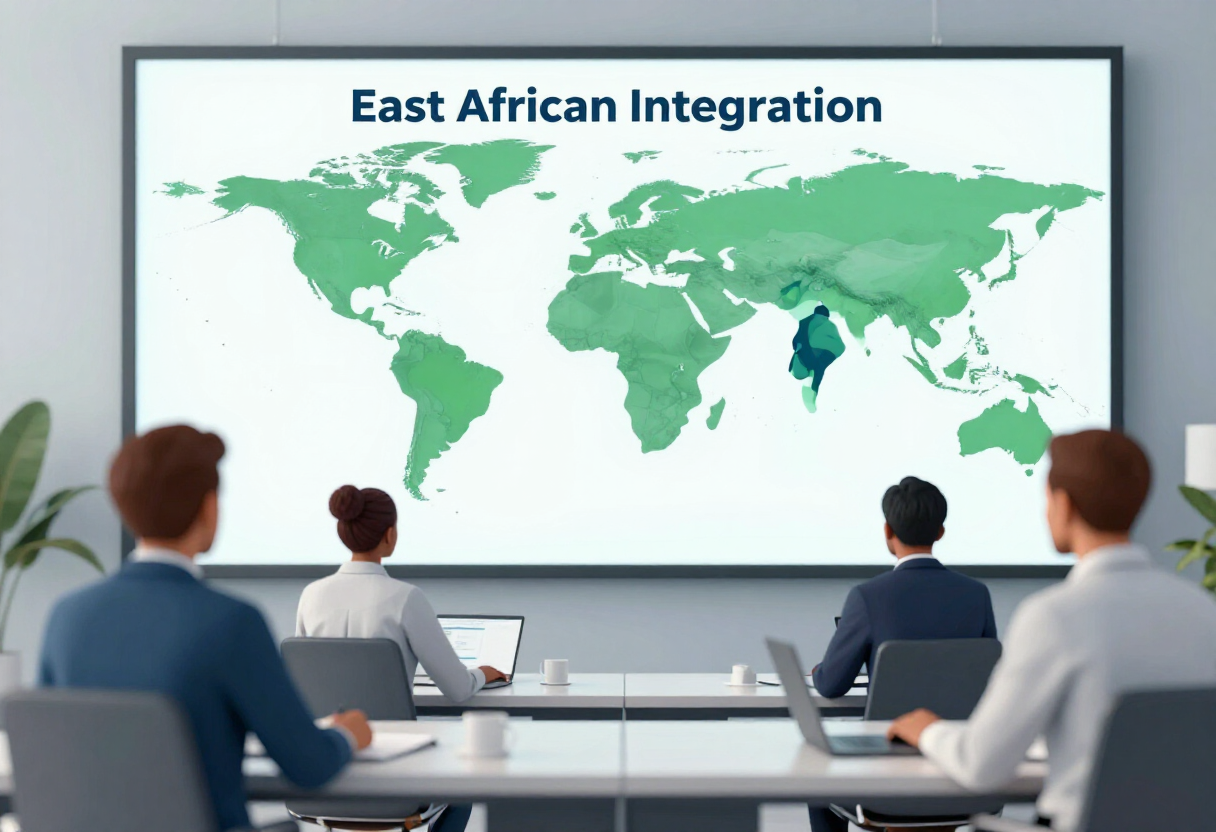
Representatives from Djibouti, Ethiopia, Kenya, Somalia and South Sudan gathered in Nairobi this week for a three-day workshop on accelerating regional digital integration, as the East African Community (EAC) pushes to move member states beyond fragmented national digital strategies.
The Regional Coordination Workshop on Accelerating Regional Digital Integration and Connectivity Across Eastern Africa runs from 22 to 24 September 2026. It brings together the EAC, the Intergovernmental Authority on Development (IGAD) — the East African trade bloc — and the World Bank, which funds the national digital projects at the centre of the discussions.
The meeting's core business is practical coordination. Four of the five participating countries are implementing World Bank-funded national digital integration and connectivity projects under the Eastern Africa Regional Digital Integration Project (EARDIP) and related programmes. Kenya sits outside the direct EARDIP beneficiary list, but its World Bank-funded Kenya Digital Economy Acceleration Project (KDEAP) supports regional activities aligned with EARDIP objectives.
The EAC and IGAD are running complementary regional initiatives focused on cross-border digital connectivity, policy harmonisation and regional digital integration. The workshop gives both bodies a venue to align those efforts with what national governments are building on the ground.
The EAC frames the timing as critical. Countries across Eastern Africa are investing heavily in broadband infrastructure, digital public services, cybersecurity, digital inclusion and broader digital economy development. Regional coordination, the bloc argues, is the mechanism to accelerate implementation, address shared challenges and maximise the return on those investments.
Participants at the Nairobi meeting have been explicit about what they see as the problem: national approaches that work in isolation. They have emphasised the need for coordinated regional solutions delivering seamless connectivity, interoperable digital services and trusted digital ecosystems across borders.
The discussion agenda reflects that ambition. Delegates have focused on aligning investment and policy to speed up cross-border broadband connectivity, strengthen cybersecurity cooperation, expand digital public infrastructure and services, and open opportunities in cross-border digital trade and e-commerce. Deepening coordination among the participating countries and regional institutions has been a running theme.
The workshop is also reviewing progress from earlier rounds of regional coordination, treating continuity rather than one-off summitry as the working model.
Roaming framework in parallel
The Nairobi event is not an isolated effort. Earlier this year, the EAC began a series of regional engagements aimed at developing a harmonised Regional Mobile Roaming Framework — a measure that would directly affect operators and subscribers across the bloc by standardising cross-border roaming terms.
Taken together, the two workstreams signal that the EAC is trying to consolidate telecoms and digital policy at regional level rather than leave integration to bilateral agreements between individual operators and governments.
For operators in the region, harmonised policy frameworks and cross-border digital infrastructure would reduce the cost and complexity of serving fragmented national markets. For governments, the EAC's argument is that regional digital markets amplify the impact of national investments in broadband and digital public services.
The expected outcomes of the workshop, as set out by the organisers, are concrete in direction if not yet in figures: a more connected Eastern Africa in which citizens, businesses and governments can access secure digital services, participate in regional markets and benefit from expanded digital economy opportunities.
Whether that translates into measurable progress will depend on how quickly the EAC and IGAD can convert workshop conclusions into harmonised regulation — starting with the Regional Mobile Roaming Framework the bloc has already put in motion this year.
Also reported
Source: Developing Telecoms
More from Daniel Okafor
Show full bio
Senior reporter covering marketplaces and e-commerce at Telecom Gazette.
74 articles