Video & BroadcastEitbLawoIp AudioSmpte St 2110
EITB commissions Lawo IP audio in five-studio Bilbao renewal
EITB has commissioned Lawo’s HOME mc² in Studio 3, the first phase of a five-studio audio renewal across Bilbao and Miramon, with 512 DSP channels and phase two underway.
 Video & Broadcast
Why it matters
- EITB commissioned Lawo HOME mc² in Studio 3 as phase one of a five-studio renewal.
- The project is believed to be Spain's first HOME mc² DSP application deployment.
- The current configuration provides 512 fully equipped DSP channels, expandable by license to 2,048.
- A 58-fader mc²56 MkIII surface runs on redundant COTS servers without a dedicated DSP core.
- Phase two is underway across the Bilbao and Miramon sites, with no completion date disclosed.
The story
Euskal Irrati Telebista (EITB) has commissioned Lawo’s HOME mc² IP audio platform in Studio 3 at its Bilbao headquarters, opening the first phase of a five-studio renewal across its Bilbao and Miramon sites, with phase two already underway.
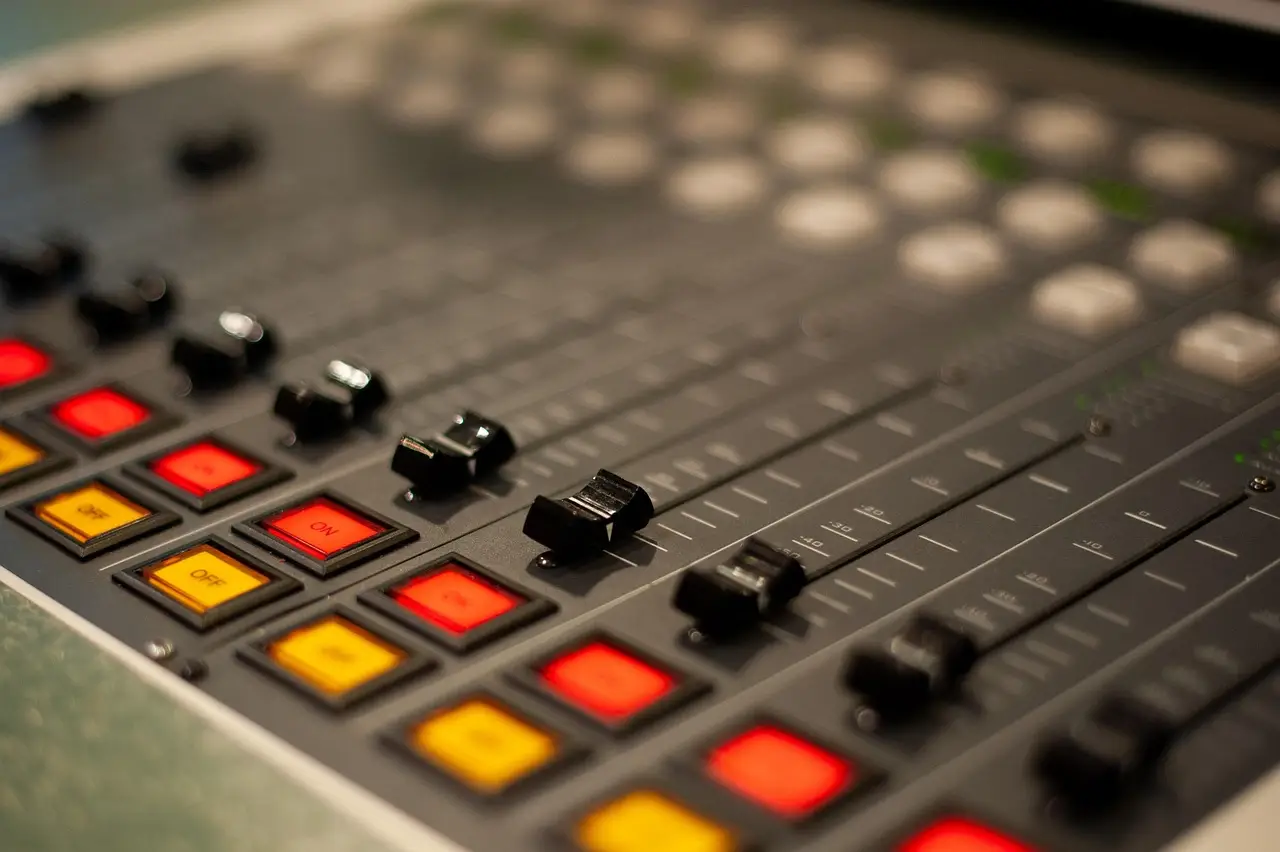
The commissioned configuration supplies 512 fully equipped DSP channels and centers on a 58-fader Lawo mc²56 MkIII console. Project documentation calls the installation “believed to be the first in Spain,” a qualified market-first claim rather than an independently verified national inventory.
Telefónica’s Servicios Audiovisuales (TSA), the project’s systems integrator, has led deployment and commissioning across both sites. Its architecture uses SMPTE ST 2110 for packet-based media transport over a dedicated network, with separate synchronization and control layers integrating processing, input/output and management functions. The design also underpins EITB’s transition toward software-defined production workflows.
What does “IP-native” mean in practice?
The mc²56 MkIII surface does not rely on a traditional dedicated DSP core. Instead, HOME mc² executes mixing, routing and signal processing on redundant commercial off-the-shelf, or COTS, servers, turning the fader surface into an IP-native control layer tied to virtualized compute. The console supports ST 2110 natively, alongside AES67 and RAVENNA.
That separation should let EITB pool DSP resources and shift capacity among studios as demand changes. Lawo also says the model simplifies operation and supports rapid workflow reconfiguration, but the deployment materials provide no commissioning-time comparison or production evidence of studio-to-studio reallocation.
A redundant HOME platform cluster supplies management and orchestration. Its cloud-native microservices architecture handles device discovery, authentication, parameter control and secure stream routing, with native support for SMPTE ST 2110, AES67 and NMOS IS-04/05 for Lawo-native and third-party devices.
ST 2110 provides the media transport framework, AES67 and RAVENNA address interoperable audio, and NMOS IS-04/05 cover discovery and control. They define common interfaces, not guaranteed interoperability with every third-party device.
How does the system bridge legacy equipment?
Multiple Lawo Power Core Gateway nodes bridge legacy and IP audio domains. Each node provides up to 512 channels across RAVENNA, AES67 and ST 2110-30, plus 256 MADI channels and modular slots for MIC, line, AES3, Dante and GPIO connections.
The gateways support hybrid operation during the migration. AIOX extender frames add 64 channels per unit and scale to 1,280 channels per Power Core for large ingest or multi-studio scenarios; Lawo says that capacity gives EITB headroom without an architectural change.
How much DSP capacity can EITB add?
The HOME mc² app currently delivers 512 fully equipped DSP channels and can expand by license to 2,048, quadrupling the current pool. Lawo says future Bilbao studios can come online “without additional hardware.” That is a software-capacity claim, and the announcement leaves license cost, compute allocation and upgrade timing unspecified.
The deployment details do not include a bill of materials, server specification or licensing cost, so they do not demonstrate that a full five-studio rollout will avoid all rack, network or power work.
That matters because the platform’s value rests on shared compute rather than dedicated processors in each studio. EITB still needs enough server capacity, redundant infrastructure and network bandwidth to sustain the licensed ceiling; EITB has not quantified those requirements.
Where does EBU’s Dynamic Media Facility fit?
Lawo positions the architecture as aligned with the EBU’s Dynamic Media Facility vision, which uses modular microservices and shared compute clusters to support agile production. Lawo presents its HOME Apps ecosystem as able to switch and scale complete processing environments at the software layer.
That is an architectural framework rather than an announced EITB compliance timetable. The deployment cites shorter commissioning, fewer physical failure points and faster reconfiguration as expected benefits, but reports no figures against which to test them.
What is deployed, and what remains unproven?
On commercial delivery, EITB has completed phase one in Studio 3 and started phase two. TSA has engineered a redundant, segmented network using PTP synchronization, dual network topologies and high-availability design principles, intended to support dynamic resource allocation across studios.
EITB has not disclosed a phase-two completion date or identified which studios come next. It also provides no contract value, measured latency, failover performance or audited uptime, while offering no indication of how many of the 512 commissioned channels carry live traffic.
No EITB, Lawo or TSA executive appears in the deployment account. For a public broadcaster, that leaves the practical claims untested by customer testimony: software-defined production can defer dedicated DSP purchases, but it also makes server administration, licensing, network design and interoperability testing part of the operating model.
With phase two underway and no timetable disclosed, the next rollout test is whether EITB can commission the remaining studios in the five-studio renewal while expanding from 512 channels toward its licensed 2,048-channel ceiling.
Also reported
Source: tvtechnology.com
More from Rebecca Stone
Show full bio
Correspondent covering technology and product news in Carrier business, 5G and 6G, fiber and broadband at Telecom Gazette.
539 articles