Spectrum & PolicyLs TelcomSpectrum SummitIris2Gnss Interference
Defence and resilience take focus at LS telcom's 30th Spectrum Summit
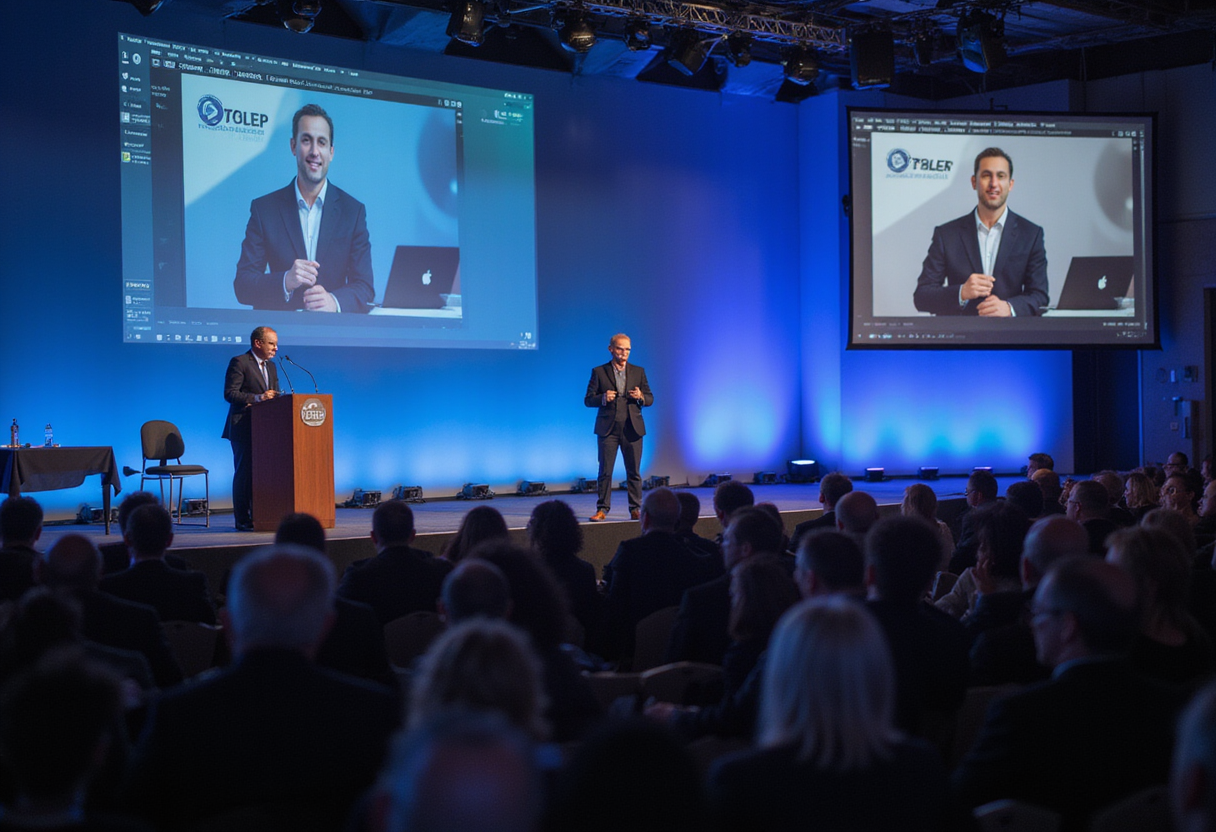
LS telcom's 30th Spectrum Summit put resilience, defence and sovereignty on the agenda. Speakers cited 100,000 ships hit by GNSS jamming and warned IRIS² cannot use the 2 GHz MSS band as currently organised.
 Spectrum & Policy
Why it matters
- LS telcom held its 30th annual Spectrum Summit during the week of the event, focused on defence, resilience and sovereignty.
- Retired general Christopher Badia reported 100,000 ships had been affected by GNSS interference so far in 2025.
- European Defence Agency's Peter Op de Beek said the European Commission is 'biting its own tail' over how IRIS² and the 2 GHz MSS band are structured.
- The UK government's 2023 call for input on smart-grid spectrum covered 400 MHz, 450 MHz, 700 MHz, 800/900 MHz and 1900 MHz ranges.
- The European Commission has put forward Critical Communications System legislation proposing a TETRA-to-LTE/5G transition with possible 2 x 8 MHz in the 700 MHz band.
The story
Resilience and defence dominate LS telcom's 30th annual Spectrum Summit
LS telcom convened its 30th annual Spectrum Summit this week, drawing speakers from the military, the European Defence Agency and the energy sector. The agenda centred on three words: defence, resilience, sovereignty.
Retired general Christopher Badia opened with a fighter-pilot lesson. "If you lose comms, you lose the fight," he told the audience.
How is spectrum being weaponised today?
Badia cited one concrete figure: 100,000 ships have suffered GNSS interference so far in 2025. "Spectrum is used as a war tool, targeting global trade," he said. He went on to warn that future conflict may be transmitted rather than fired, since communications and interference with communications are becoming central factors in modern warfare.
The retired general then proposed a three-layered architecture of visual dominance, decision dominance and engagement dominance, applied across space, cyberspace and spectrum. For the spectrum layer, he favours dynamic management that adapts minute by minute to changing conditions. "Spectrum management must evolve from regulation to the operational domain," Badia said.
What is broken about IRIS²'s spectrum plan?
Peter Op de Beek, Project Officer Satellite Communications and Radio Spectrum at the European Defence Agency, turned the criticism toward Brussels. He said the European Commission was "biting its own tail" by structuring IRIS² and the 2 GHz MSS band as it has. IRIS² is the EU's secure governmental satellite project, designed to provide resilient encrypted communications for public authorities using a mix of LEO and GEO satellites, operating in mobile-satellite service spectrum around 2 GHz.
"IRIS² can't use the MSS band effectively the way the band is now organised, which compromises security targets," Op de Beek said. The 2 GHz MSS band, the upper C band and the UHF band dominated hallway debate among summit speakers drawn from defence, mobile, utilities and critical communications.
Where does the energy sector fit?
Cristina Data, head of Energy Connect (previously JRC), framed energy as the foundational infrastructure of digital society. "Communication is critical to support the resilient and secure energy transition, and access to spectrum is fundamental to support a variety of energy network use cases," she said.
Data described how energy networks are evolving from centralised power stations to distributed low-carbon generation across transmission and distribution layers. As more solar panels and windmills are embedded across the grid, she said, the requirement for resilient and secure communications rises in lockstep.
The UK government responded in 2023 with a call for input on spectrum for smart grids, listing candidate bands:
- 400 MHz (Northern Ireland only): 410-412 MHz paired with 420-422 MHz; 412-414 MHz paired with 422-424 MHz
- 450 MHz: within 450-470 MHz, part or all of 451-456/461-466 MHz or 452.5-457.5/462.5-467.5 MHz
- 700 MHz: 733-736 MHz paired with 788-791 MHz
- 800/900 MHz (Northern Ireland only): 876-880 MHz paired with 921-925 MHz
- 1900 MHz: 1900-1920 MHz
What is Brussels proposing for EU critical communications?
Peter Clemons, head of Quixoticity-EU consultancy, addressed the European Commission's newly proposed Critical Communications System legislation. The proposal moves public safety radio from TETRA toward an LTE/5G system operating across borders, ideally on harmonised airwaves. One option under discussion is 2 x 8 MHz in the 700 MHz band, structured as 2 x 5 MHz in 698-703/753-758 MHz plus 2 x 3 MHz in 703-748/758-803 MHz. That range is not yet harmonised across Europe.
Clemons identified additional capacity elsewhere. He pointed to 2 x 35 MHz in the lower UHF band (617-652/663-698 MHz), already allocated in the USA and Saudi Arabia for 5G and 6G coverage. That block is also used by digital terrestrial TV and the PMSE sector, and will be examined for IMT identification at WRC-31.
Clemons closed his intervention by flagging spectrum for device-to-device sidelink technology, mid-band capacity around 3-7 GHz for extra throughput, and existing 450 MHz utility networks in certain European markets. WRC-31 sits roughly four years out, and the European Defence Agency's MSS band critique will inform the EU's preparatory positions before that conference convenes.
Also reported
Source: Policy Tracker
More from Daniel Okafor
Show full bio
Senior reporter covering regulation, policy and their impact on Carrier business, 5G and 6G, fiber and broadband at Telecom Gazette.
271 articles