Networks & InfrastructureCopper TheftOpenreachBroadband OutageFiber Rollout
Copper thieves knock out broadband across Bedfordshire and M1 signs
Copper thieves cut broadband to four Bedfordshire villages and darkened M1 gantry signs between junctions 12 and 13, the latest in a national wave of Openreach cable thefts.
 Networks & Infrastructure
Why it matters
- Copper theft on Luton Road near Toddington cut Internet to Harlington, Toddington, Chalton and Tebworth on 5 November
- M1 overhead gantry signs between junctions 12 and 13 were knocked out, National Highways said
- Openreach's fiber network passes 24 million UK premises, yet copper thefts divert engineers to legacy repairs
- Openreach has reported copper theft in Yorkshire, Durham, Hampshire, Oxfordshire, Essex and at least six other counties
The story
Copper thieves cut off broadband to at least four Bedfordshire communities late last week and took down overhead gantry signs on the M1 between junctions 12 and 13, according to the BBC and National Highways.
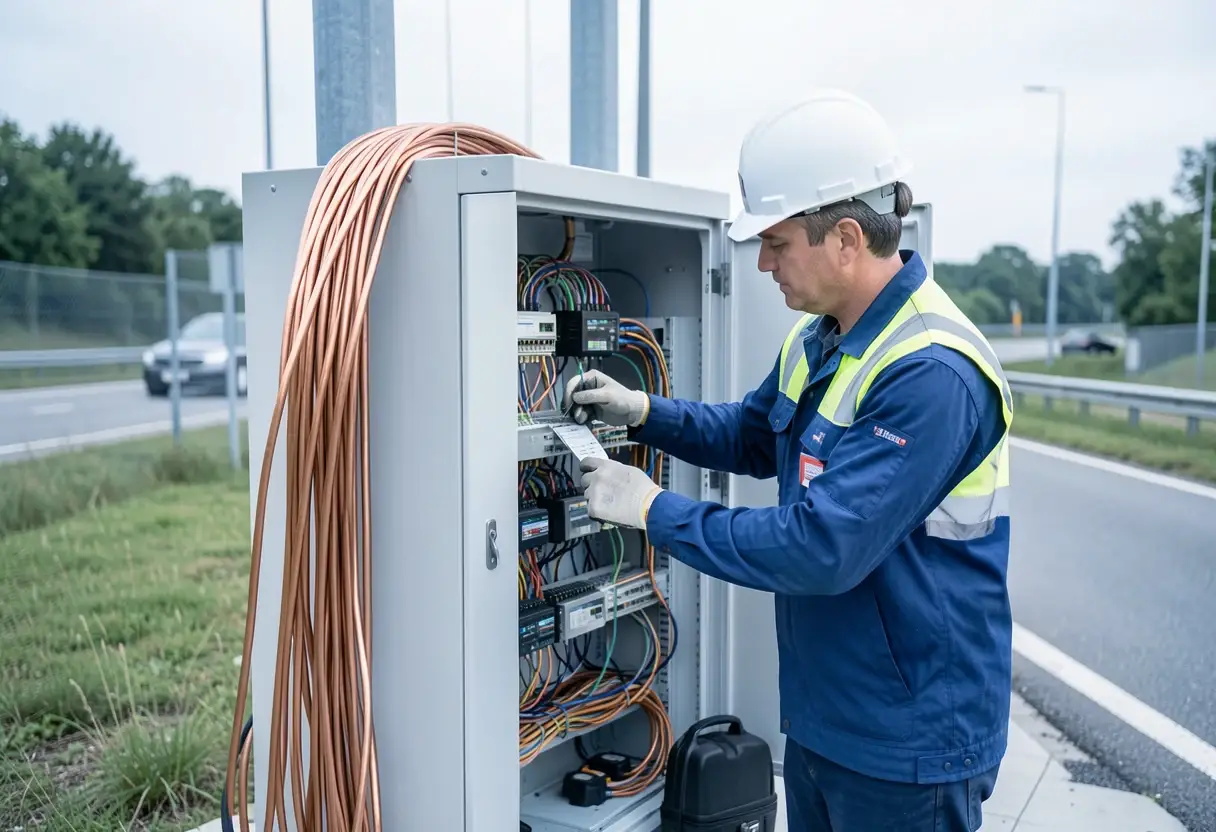
The theft targeted Openreach's copper telecom cables on Luton Road, near Toddington, north of London. Police responded to reports of criminal damage at around 11:30 am on Thursday, 5 November. The road remains closed while engineers work to restore services.
Which communities lost service?
The disruption hit Harlington, Toddington, Chalton and Tebworth — a cluster of villages in Central Bedfordshire. National Highways separately confirmed that the theft knocked out its overhead gantry signage on the M1, the UK's main north-south motorway, between junctions 12 (Flitwick) and 13 (Bedford) in the affected corridor.
DCD has contacted Openreach for comment. The operator had not, at the time of reporting, given a figure for how many households lost connectivity or an estimate for full restoration — a gap worth noting, since the difference between "several communities" and a precise premises count is what turns an anecdote into a measurable outage.
Why does Openreach keep getting hit?
This is not an isolated incident. Openreach has been a regular victim of copper theft in recent years, and the damage routinely spreads beyond the copper plant itself: fiber cables are often mistakenly cut by thieves digging for copper, taking out the newer services as collateral damage.
The pattern is national. Only last month Openreach logged a theft incident in Yorkshire, and the company has reported copper theft in Durham, Hampshire, Oxfordshire, Hertfordshire, Cambridgeshire, North Yorkshire, Lincolnshire, Essex, Shropshire and beyond. In effect, one operator's legacy network has become a recurring target across most of England.
What does this cost the fiber rollout?
The commercial irony is sharp. Openreach's full-fiber rollout now passes 24 million UK premises — roughly the scale of the entire national housing stock's majority — yet attacks on the legacy copper network are slowing that progress down. Engineers who should be extending fiber are instead spending their hours repairing copper lines that the company ultimately intends to retire.
That diversion carries a real, if unquantified, opportunity cost. Openreach has not said how many engineer-hours the Bedfordshire repair will consume, nor how the Luton Road closure affects its build schedule in the region. The company also has not published a cumulative figure for theft-related losses across the counties it listed.
Is regulation doing anything about it?
Copper theft in the UK sits in an awkward regulatory middle ground. Scrap metal dealing is licensed and cash purchases are banned under existing legislation, but cable theft from operational telecom networks is prosecuted as criminal damage or theft — charges that rarely reflect the downstream cost of the service outages they cause. No new measure specific to telecom cable theft appears to be in play here.
What is clear is that until the copper-to-fiber transition completes, the old network stays in the ground, stays valuable as scrap, and stays exposed. Openreach's fiber build continues, but each theft like this one pulls engineers back onto the copper it is trying to leave behind.
Also reported
Source: datacenterdynamics.com
More from Rebecca Stone
Show full bio
Correspondent covering technology and product news in Carrier business, 5G and 6G, fiber and broadband at Telecom Gazette.
459 articles