Networks & InfrastructureSubsea CablesPhilippinesTaiwanChina
Chinese survey ship held station in Luzon Strait for three days, PCG says
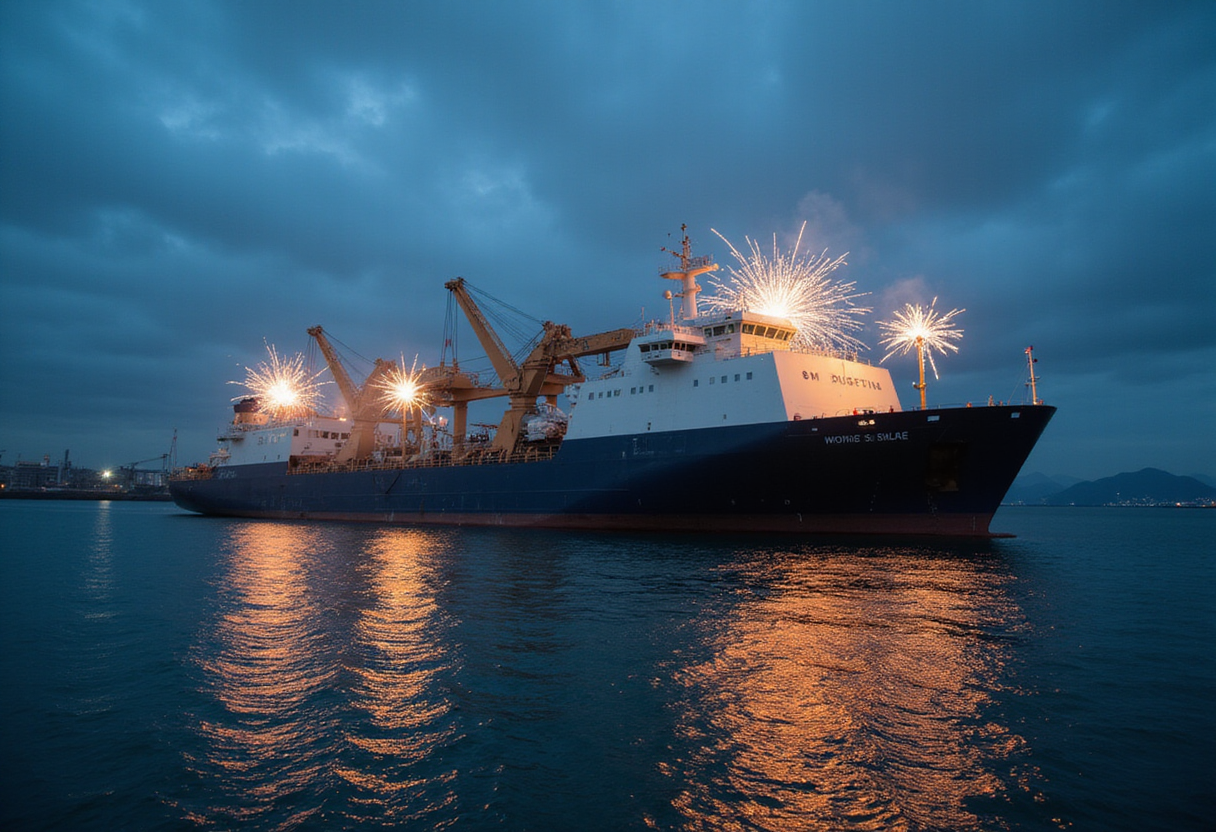
A Chinese survey vessel loitered for three days in the Luzon Strait while transmitting a false AIS position, the Philippines Coast Guard said, raising fresh concerns about the security of trans-Pacific subsea cables.
 Networks & Infrastructure
Why it matters
- Jia Hai Ke 7 loitered in the Luzon Strait for three days while its AIS showed a position near Papua New Guinea.
- The Philippines Coast Guard drove the vessel away on Thursday despite escort by the Chinese Coast Guard.
- A Chinese national is serving a three-year prison sentence for severing a subsea cable to Penghu Island.
- Taiwan throttled mobile internet in an August civilian-military drill to test resilience to cable sabotage.
- The US-China Economic and Security Review Commission reported China is building 10,000-meter-class submersibles to target undersea cables.
The story
A Chinese-flagged survey vessel loitered in the Luzon Strait for three days while transmitting a false AIS position near Papua New Guinea, the Philippines Coast Guard (PCG) said, raising fresh alarms about the security of subsea cables linking the archipelago to global networks.
PCG spokesperson Jay Tariela identified the ship as Jia Hai Ke 7. Posting on X, Tariela said the vessel "has been loitering and holding position in the same area – the movement pattern of a vessel conducting marine scientific research (MSR), not transit."
What did the AIS data show?
The PCG tracked Jia Hai Ke 7 in the far north of the Philippines even as the vessel's Automatic Identification System placed it near Papua New Guinea. Coast Guard personnel drove the ship away on Thursday, but Tariela noted it continued to operate under escort from the Chinese Coast Guard despite presenting itself as privately owned.
The PCG, in a statement carried by Reuters, said a survey vessel concealing its location in waters between the Philippines and Taiwan raised "serious concerns about the security of the country's undersea communications infrastructure and the potential military use of any data collected."
Why does this matter for subsea cable security?
The Philippines sits astride several trans-Pacific cable routes that carry traffic between Southeast Asia, the US and the rest of the Indo-Pacific. Any capacity loss along those corridors would force operators to reroute traffic across longer paths, raising latency and reducing redundancy on systems that already carry the bulk of intercontinental data.
The incident follows a string of suspected cable cuts in the Taiwan Strait in 2024 and 2025. One severing, on a link to Penghu Island, led Taiwanese prosecutors to charge a Chinese national who is now serving a three-year prison sentence.
Is Taiwan preparing for an internet blackout?
Taipei ran a civilian-military drill in August in which it deliberately throttled mobile internet speeds, leaving only basic voice and text services operational. Some residents communicated via Bluetooth and Wi-Fi mesh networks. ATMs and fixed-line services were not affected.
The exercise signalled that policymakers in Taipei now treat undersea cable sabotage as a plausible contingency, not a theoretical one.
What did the US commission warn about?
Last week the US-China Economic and Security Review Commission published a report stating that China was "rapidly building capabilities to disrupt undersea cables," including 10,000-meter-class submersibles and "swarming" systems of linked uncrewed platforms.
The report cited Chinese scholars arguing that "cutting undersea cables is the most effective way to strike at the opponent's vital points" because of the low military cost and high impact on enemy command and intelligence systems.
The commission warned that scenarios such as an attack on Taiwan "could significantly reduce headroom and even overwhelm trans-Pacific capacity as a whole, forcing communications between the United States and the Indo-Pacific to re-route on longer, slower routes across the globe."
What is the broader context?
China has formally objected to recent efforts by the Philippines and Japan to codify their maritime economic zones, arguing the agreements could infringe on its claimed territory east and south of Taiwan. The Jia Hai Ke 7 incident lands inside that diplomatic dispute, with the PCG framing the ship's behaviour as evidence of an intelligence-gathering posture rather than innocent scientific transit.
Operators across the region will be watching the Luzon Strait closely as the Philippines, Taiwan and Japan weigh additional cable routes and terrestrial backhaul options to harden their networks against future disruption.
Also reported
Original: x.com
More from Daniel Okafor
Show full bio
Senior reporter covering marketplaces and e-commerce at Telecom Gazette.
148 articles