Carriers & OperatorsBsnl4g Rollout5gIndia Telecom
BSNL says 4G rollout is hitting targets, clearing path to 5G
BSNL says its 4G network is delivering expected results and the state-owned operator is now prepared to expand into 5G, a senior official told The Tribune.
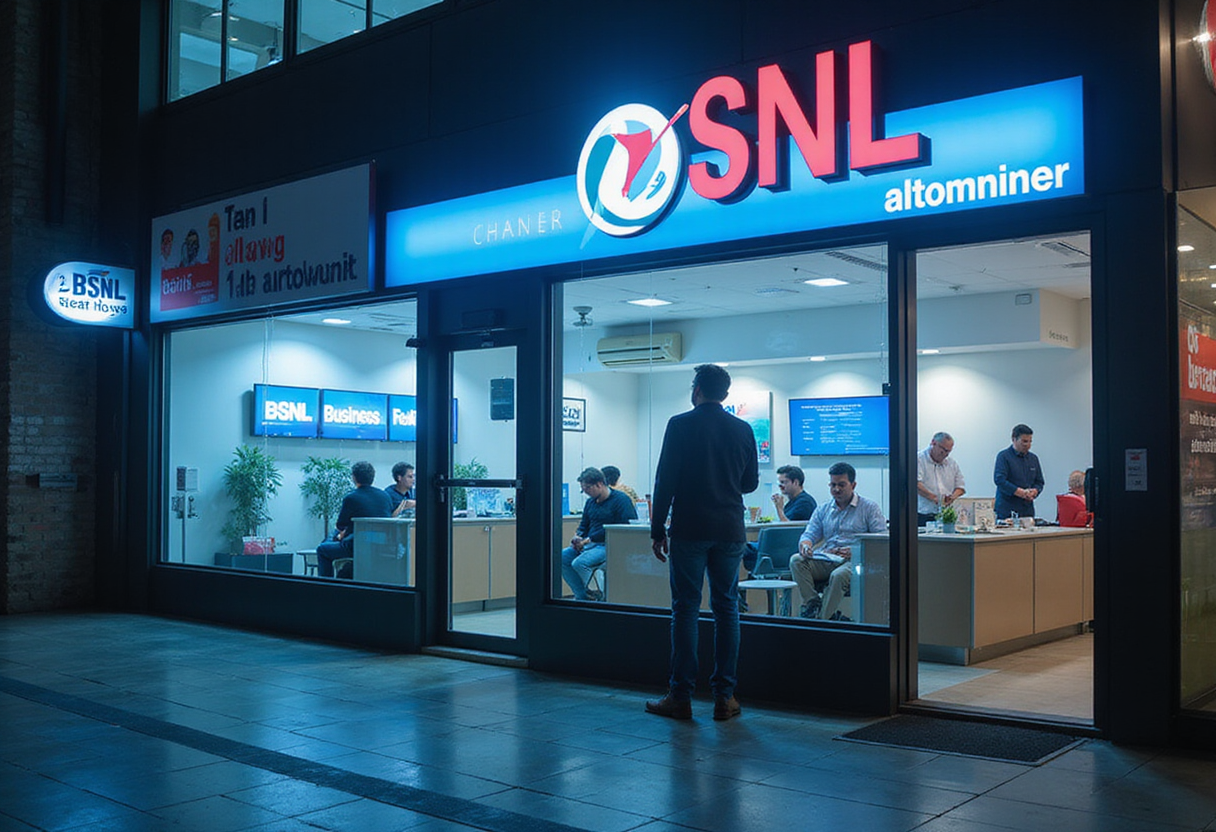 Carriers & Operators
Why it matters
- A senior BSNL official said the operator's 4G network is delivering desired results
- BSNL says it is geared up for 5G expansion following the 4G performance milestone
- BSNL is India's state-owned carrier and lags private rivals Jio and Airtel, which launched 5G in 2022
- The statement was made to The Tribune; no launch date, sites or investment figures were disclosed
The story
State-run Bharat Sanchar Nigam Limited (BSNL) says its 4G network is now delivering the results the operator expected, and the company is preparing to move on to 5G expansion, a senior official told The Tribune.
The statement marks a shift in tone for an operator that has spent years trailing India's private carriers in mobile broadband. BSNL's 4G buildout, which relies on an indigenous technology stack, has been the subject of intense scrutiny in India, where policymakers have pushed the operator to use domestic equipment as a testbed for homegrown telecom manufacturing.
What did the official actually say?
The senior official's core message was twofold: the 4G network is performing to expectations, and that performance has given BSNL the foundation — technically and commercially — to begin planning 5G expansion on top of it.
That framing matters because BSNL's 5G ambitions have long been contingent on getting 4G right first. A stable 4G layer, in the operator's own telling, is the prerequisite for a cost-effective 5G overlay rather than a parallel greenfield build.
Why the 4G result matters for 5G timing
India's private operators — Reliance Jio and Bharti Airtel — have rolled out 5G at scale since 2022, leaving BSNL as the country's only major carrier without a commercial next-generation network. The state-owned operator has instead focused on completing its 4G footprint, a strategy that officials have repeatedly defended as necessary before committing 5G capital.
The Tribune report does not attach specific subscriber, site-count or throughput figures to the 4G performance claim, and BSNL has not tied its statement to a dated commercial 5G launch. Readers should therefore treat "geared up for 5G expansion" as a readiness declaration by the operator rather than a confirmed deployment schedule.
The indigenous equipment angle
BSNL's 4G network is closely watched in India for reasons beyond coverage. The operator has been the flagship customer for domestically developed core and radio technology, an approach championed by the government as part of its push to build a local telecom equipment industry and reduce import dependence.
A senior official now certifying that the network "delivers desired results" is a significant data point for that policy experiment, because BSNL's 4G performance is effectively the proof case for whether the indigenous stack can carry a national-scale network — and eventually a 5G one.
Commercial reality versus readiness talk
The gap between the official's statement and a market launch remains the key caveat. India's telecom market is among the world's most price-competitive, and BSNL has historically struggled to convert network availability into subscriber share against Jio and Airtel. A successful 4G network and a declared readiness for 5G do not, by themselves, translate into a competitive 5G proposition.
No vendor contracts, spectrum commitments or investment figures accompanied the official's remarks, so the cost and phasing of the prospective 5G expansion remain open questions.
For now, BSNL's position is that the technical groundwork is done and the operator is ready to scale to 5G when it moves — a claim the market will judge on the timing and terms of an actual rollout announcement.
Also reported
Source: Google News: 5G network